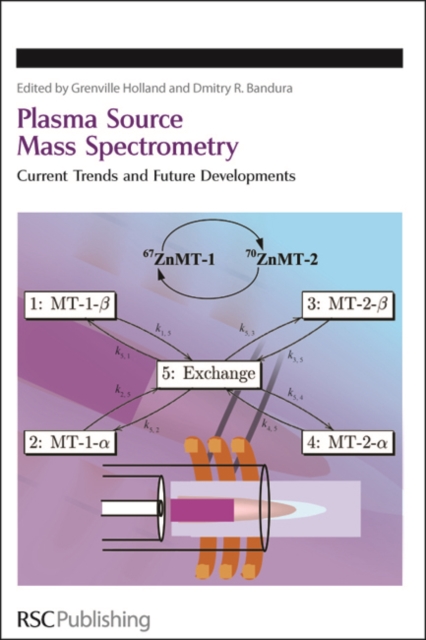
Atomic spectrometry has exciting new bio-analytical horizons open to it, principally through the developments in the capabilities of ICP-MS coupled with the inventiveness of experimentalists.
The Analytical Methods Committee of the Royal Society of Chemistry has for many years been involved in national and international efforts to establish a comprehensive framework for achieving appropriate quality in chemical measurement.
The ongoing progress of science has shown that it is important for analytical scientists to determine not only the presence of particular elements, but also their species.
This book discusses, in relatively simple language, the importance of even minute amounts of certain trace elements for the protection of human health and how insufficiency or excess may produce serious diseases.
Many forms of chemical experimentation generate data needing analysis and interpretation in respect of the goals of the experiment and also the chemical factors which may influence the outcome.
This book describes both the theory of atomic spectroscopy and all the major atomic spectrometric techniques (AAS, Flame-AES, Plasma AES, AFS, and ICP-MS), including basic concepts, instrumentation and applications.
The detection of harmful chemicals and microbial pathogens in food and water destined for consumers is of paramount importance the world over and it is vital that new techniques and discoveries are widely disseminated.
This unique book demonstrates the current status, and future potential, of millimetre wavelength (MMW) spectrometry as a means of quantitative analysis of gaseous mixtures.
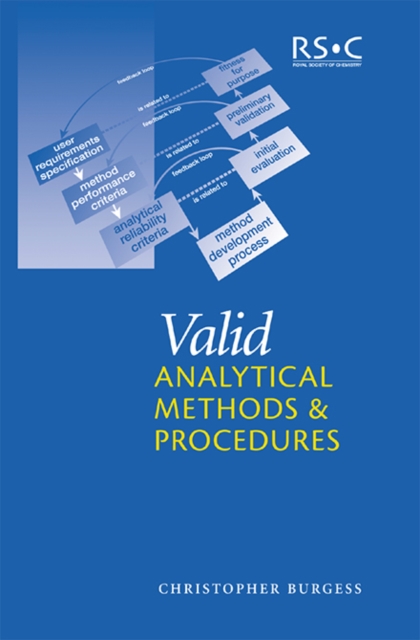
Fit-for-purpose is a phrase familiar to all users of analytical data, who need to be assured that data provided by laboratories is both appropriate and of the required quality.
Principles and Practices of Method Validation is an overview of the most recent approaches used for method validation in cases when a large number of analytes are determined from a single aliquot and where a large number of samples are to be analysed.
The understanding of the principles of ICP-MS and its application as an analytical technique is continually evolving and this book provides a unique snapshot of the current state-of-the-art.
This book provides a snapshot of the current state-of-the-art of the understanding of the fundamentals of ICPMS, instrumental development, methods development, spectral interpretation and applications.
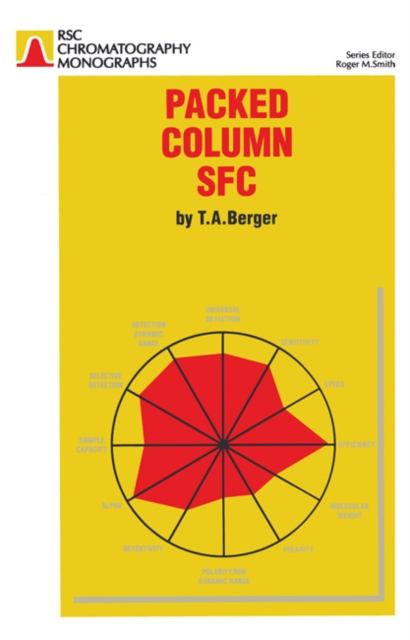
Packed Column SFC is the third title to be published in this series and has been produced as a result of the dramatic re-emergence, in the last three years, of packed column instrumentation.
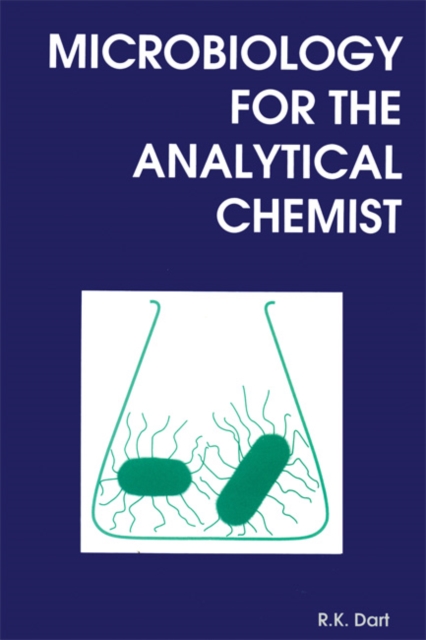
Analytical chemists in industry are frequently faced with situations where a basic understanding of microbiology would be an advantage, for instance in the analysis of bacteria in food.
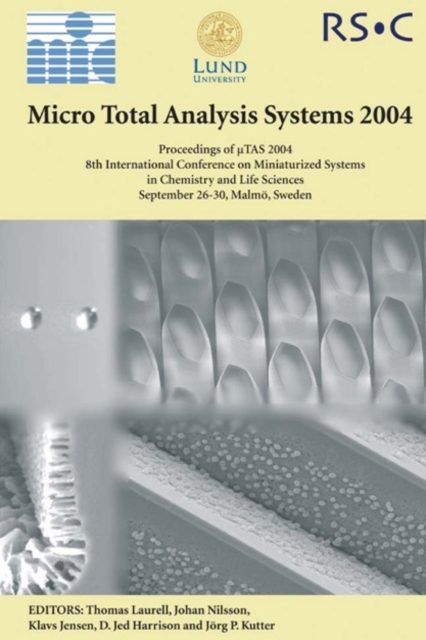
The Eighth International Conference on Miniaturized Systems in Chemistry and Life Science - MicroTas 2004 - is an annual meeting focusing on the research, development and application of miniaturized technologies and methodologies in chemistry and life science.
The Eighth International Conference on Miniaturized Systems in Chemistry and Life Science - MicroTas 2004 - is an annual meeting focusing on the research, development and application of miniaturized technologies and methodologies in chemistry and life science.
Mass Spectrometry: A Foundation Course is a textbook covering the field of mass spectrometry across the chemical, physical, biological, medical and environmental sciences.
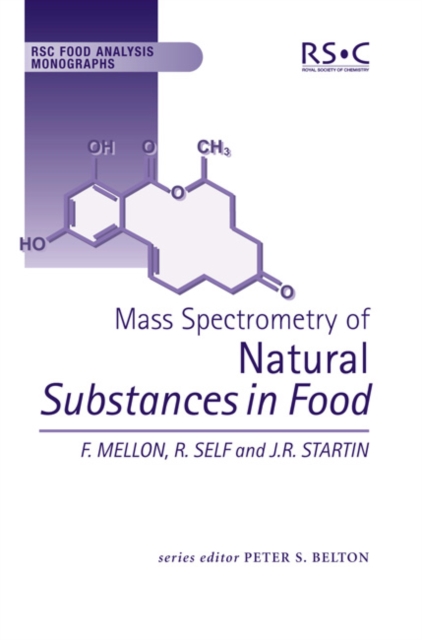
Introducing the principles, practice and applications of mass spectrometric techniques in the study of natural substances in foods, this book conveys the depth and breadth of modern mass spectrometry in relation to food analysis.
Ionization Methods in Organic Mass Spectrometry is a basic practical guide for scientists of all disciplines who wish to analyse samples by organic mass spectrometry.
Speciation analysis is a field of trace element analytical chemistry that deals with detection, identification and determination of individual chemical forms of metals and metalloids.
Glow discharge optical emission spectroscopy (GDOES) is an essential technique for the direct analysis of bulk solids, for elemental surface analysis and for the depth profiling of thin films and industrial coatings.
Electrochemical Detection in HPLC: Analysis of Drugs and Poisons is the first monograph devoted to the application of this mode of analysis to the assay of exogenous compounds such as drugs in biological fluids and associated areas.
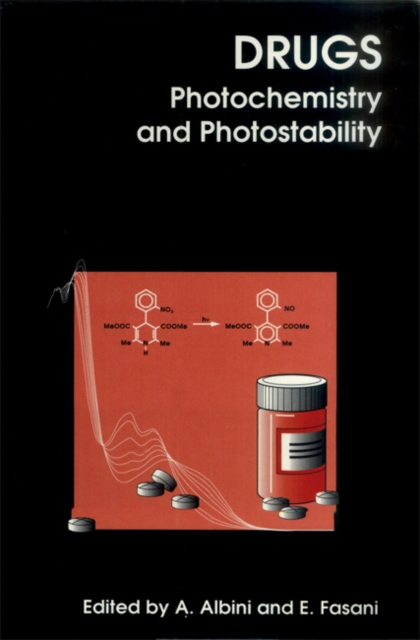
Since Pasteur in 1846, scientists have been aware that many drugs are photoreactive, but until recently research in this area had been somewhat limited.
Chemometrics in Analytical Spectroscopy provides students and practising analysts with a tutorial guide to the use and application of the more commonly encountered techniques used in processing and interpreting analytical spectroscopic data.
Since its inception in the early 1980s, capillary electrophoresis (CE) offers a great deal of flexibility as a modern analytical technique, and has found applications within many fields of analysis, particularly pharmaceutical science and biochemistry.
Capillary electrochromatography (CEC) is a new and exciting hybrid separation technique that seeks to exploit the combined advantages of both capillary electrophoresis (high efficiencies) and HPLC (mobile and stationary phase selectivity).
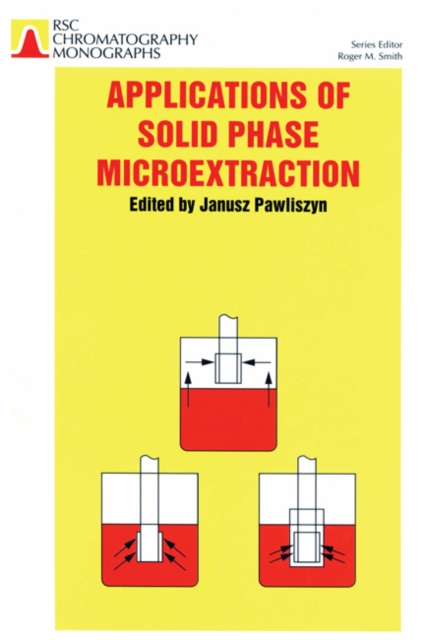
Solid Phase Microextraction (SPME) has been introduced as a modern alternative to current sample preparation technology, and has a wide range of applications.
Inductively Coupled Plasma-Atomic Emission Spectroscopy (ICP-AES) has been widely adopted as a routine analytical technique for elemental analysis in both industry and academia.