Volume 14 of Reviews in Mineralogy covers a short course about the relations among the microscopic structure of minerals and their macroscopic thermodynamic properties.
Volume 13 of Reviews in Mineralogy attempts to gather together much of our knowledge of micas, the most abundant phyllosilicate, and to indicate promising areas of future research.
Volume 44 of Reviews in Mineralogy and Geochemistry contains descriptions of the inorganic and biological processes by which nanoparticles form, information about the distribution of nanoparticles in the atmosphere, aqueous environments, and soils, discussion of the impact of size on nanoparticle structure, thermodynamics, and reaction kinetics, consideration of the nature of the smallest nanoparticles and molecular clusters, pathways for crystal growth and colloid formation, analysis of the size-dependence of phase stability and magnetic properties, and descriptions of methods for the study of nanoparticles.
Volume 24 of Reviews in Mineralogy attempted to bring together the basic data and fundamental theoretical constraints on magmatic processes with applications to specific problems in igneous petrology.
Volume 41 of Reviews in Mineralogy and Geochemistry introduces to the field of high-temperature and high-pressure crystal chemistry, both as a guide to the dramatically improved techniques and as a summary of the voluminous crystal chemical literature on minerals at high temperature and pressure.
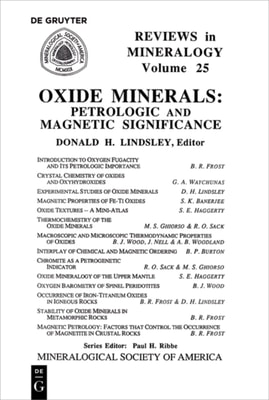
Volume 25 of Reviews in Mineralogy was published to be used as the textbook for the Short Course on Fe-Ti Oxides: Their Petrologic and Magnetic Significance, held May 24-27, 1991, organized by B.
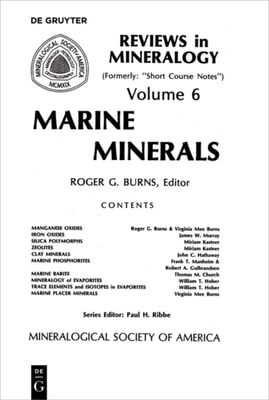
Volume 6 of Reviews in Mineralogy was originated from notes prepared for a short course on Marine Minerals held in La Jolla, California, November 2-3, 1979.
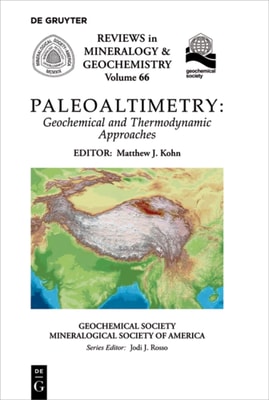
Volume 66 of Reviews in Mineralogy and Geochemistry is based on a two day short course entitled Paleoaltimetry: Geochemical and Thermodynamic Approaches held prior to the Geological Society of American annual meeting in Denver, Colorado (October 26-27, 2007).
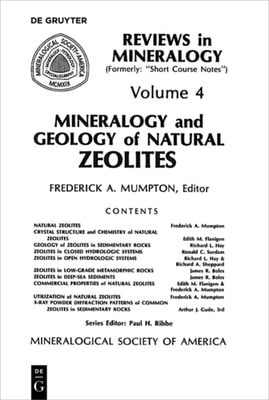
Volume 4 of Reviews in Mineralogy was prepared to serve as notes for a short course on the Mineralogy and Geology of Natural Zeolites held in Seattle, Washington, November 4-6, 1977.
Volume 40 of Reviews in Mineralogy and Geochemistry compiles and synthesizes current information on sulfate minerals from a variety of perspectives, including crystallography, geochemical properties, geological environments of formation, thermodynamic stability relations, kinetics of formation and dissolution, and environmental aspects.
Volume 68 of Reviews in Mineralogy and Geochemistry reviews Oxygen in the Solar System, an element that is so critically important in so many ways to planetary science.
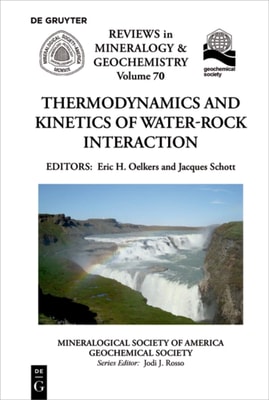
Volume 70 of Reviews in Mineralogy and Geochemistry represents an extensive review of the material presented by the invited speakers at a short course on Thermodynamics and Kinetics of Water-Rock Interaction held prior to the 19th annual V.
Volume 71 of Reviews in Mineralogy and Geochemistry represents an extensive review of the material presented by the invited speakers at a short course on Theoretical and Computational Methods in Mineral Physics held prior (December 10-12, 2009) to the Annual fall meeting of the American Geophysical Union in San Francisco, California.
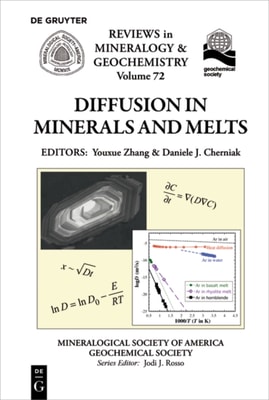
Volume 72 of Reviews in Mineralogy and Geochemistry represents an extensive compilation of the material presented by the invited speakers at a short course on Diffusion in Minerals and Melts held prior (December 11-12, 2010) to the Annual fall meeting of the American Geophysical Union in San Francisco, California.
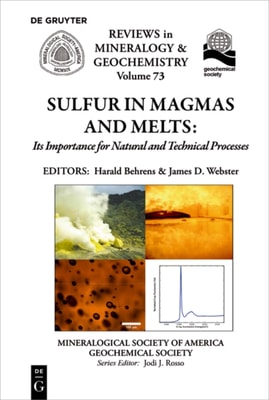
Volume 73 of Reviews in Mineralogy and Geochemistry represents a compilation of the material presented by the invited speakers at a short course on August 21-23, 2011 called Sulfur in Magmas and Melts and its Importance for Natural and Technical Processes held at the Hotel der Achtermann, in Goslar, Germany following the 2011 Goldschmidt Conference in Prague, Czech Republic.
Volume 74 of Reviews in Mineralogy and Geochemistry contains a selection of papers on the applied mineralogy of cement and concrete, by far the most popular modern building material by volume, with an annual production exceeding 9 billion cubic meters, and steadily growing.
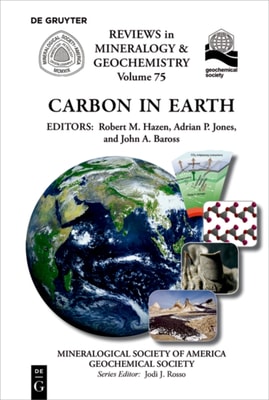
Volume 75 of Reviews in Mineralogy and Geochemistry addresses a range of questions that were articulated in May 2008 at the First Deep Carbon Cycle Workshop in Washington, DC.
Volume 76 of Reviews in Mineralogy and Geochemistry presents an extended review of the topics conveyed in a short course on Geothermal Fluid Thermodynamics held prior to the 23rd Annual V.
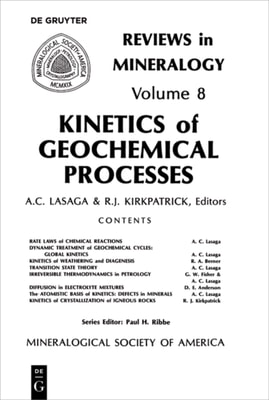
Volume 8 of Reviews in Mineralogy treats a Short Course in Kinetics, which brings together the fundamentals needed to explain field observations using kinetic data.
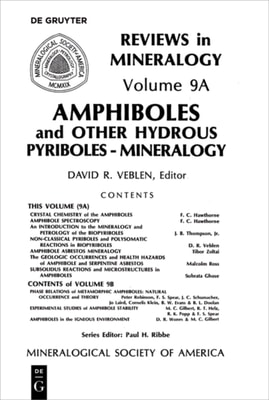
Volume 9B of Reviews in Mineralogy is dedicated more to an exploration of the social life of amphiboles and the amphibole personality in real rocks and in the experimental petrology laboratory.
Volume 11 of Reviews in Mineralogy attempts to synthesize our present understanding of certain aspects of the mineralogy and chemistry of the rock-forming carbonates.
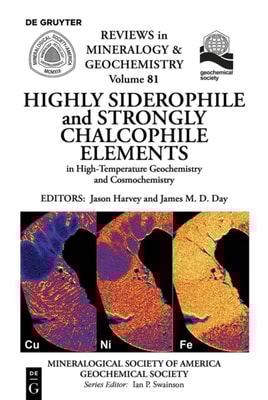
Highly Siderophile and Strongly Chalcophile Elements in High Temperature Geochemistry and Cosmochemistry, Volume 81 This RiMG (Reviews in Mineralogy & Geochemistry) volume investigates the application of highly siderophile (HSE) and strongly chalcophile elements.
The structure of the central part of the Soviet Arctic is a result of prolonged tectonic development which took place in seven main stages (tectonic periods).
The structure of the central part of the Soviet Arctic is a result of prolonged tectonic development which took place in seven main stages (tectonic periods).
In June 1967, the Earth Science Division of the Royal Society of Canada held a symposium to assess the country's activities and accomplishments in the earth sciences and to provide some guidelines and predictions for the future.
This volume, the third in a series on the Canadian Precambrian Shield presented by the Royal Society of Canada, was prepared by Fellows of the Geological Sciences Section, in response to their desire to bring up to date and to synthesize information available on the structures present in the Shield.
Starting from the basic features of crystal morphology and symmetry without assuming that the reader knows anything about crystals this textbook shows how they provide an insight into the way in which crystals are based on a repeating pattern of atoms.
Infrared and Raman Spectroscopy of Lunar and Terrestrial Minerals makes available in a single reference work original descriptions and summaries of the research on infrared and Raman spectroscopy of lunar and terrestrial minerals so that this information will be readily available not only to those researchers in the continuing programs on lunar samples from the completed Apollo series and on the remote sensing of solar system objects, but, in particular, to that much larger group of researchers in government, industry, and universities involved in the many programs on terrestrial minerals and earth sciences by remote sensing.
Earth Sciences, Volume 11: Clays and Clay Minerals covers the proceedings of the Ninth National Conference on Clays and Clay Minerals, held at the Purdue University, Lafayette, Indiana on October 5-8, 1960, sponsored by the Committee on Clay Minerals of the National Academy of Sciences - National Research Council.