Nanomaterials have been part of our world for centuries, although it is only in the last thirty years that we have come to understand that the color of nanomaterials, for example, is tied directly to their size, opening up a new realm of discovery.
This book aims to review the field of lyotropic liquid crystals from amphiphilic to colloidal systems, bridging the gap between the two worlds of lyotropics and thermotropics by showing that many of the features observed in standard thermotropic liquid crystals may also be observed in lyotropic systems and vice versa.
The book presents a unified and self-sufficient and reader-friendly introduction to the anisotropic elasticity theory necessary to model a wide range of point, line, planar and volume type crystal defects (e.
The book presents a unified and self-sufficient and reader-friendly introduction to the anisotropic elasticity theory necessary to model a wide range of point, line, planar and volume type crystal defects (e.
'To summarise, Professor Ladd has written a highly engaging text designed to provide the underlying principles of crystal structure determination through X-ray diffraction data.
'To summarise, Professor Ladd has written a highly engaging text designed to provide the underlying principles of crystal structure determination through X-ray diffraction data.
Diffuse X-ray scattering is a rich source of local structural information over and above that obtained by conventional crystal structure determination.
Newcomers to the field of structural biology, which aims to understand life at the molecular level, see a vast number of existing results and are faced with a diverse range of experimental methods.
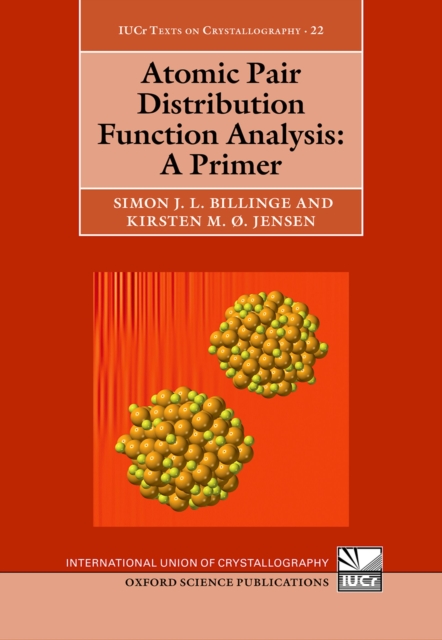
Since the early 1990s the atomic pair distribution function (PDF) analysis of powder diffraction data has undergone something of a revolution in its ability to do just that: yield important structural information beyond the average crystal structure of a material.
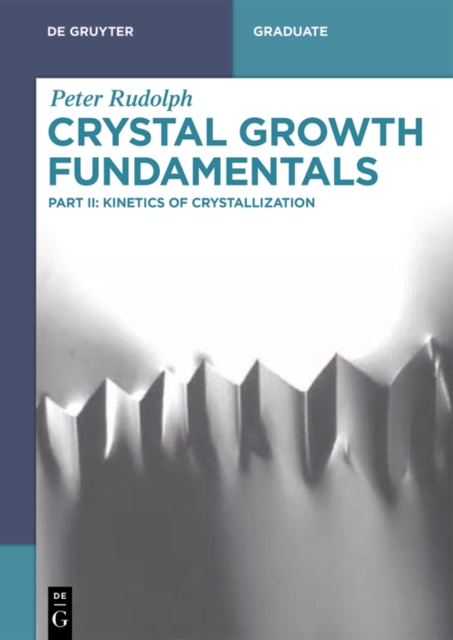
A profound knowledge about crystal growth fundamentals and processes is needed for nanocrystals, epitaxial thin films and bulk crystals which became significant as the centerpieces of micro- and optoelectronics, photonics, computing.
Progress in Medicinal Chemistry, Volume 64 highlights new advances in the field, with this new volume presenting interesting chapters written by an international board of authors.
A profound knowledge about crystal growth fundamentals and processes is needed for nanocrystals, epitaxial thin films and bulk crystals which became significant as the centerpieces of micro- and optoelectronics, photonics, computing.
Volume 39: Molybdenum and Tungsten: Their Roles in Biological Processes is devoted soley to the vital research area on molybdenum and tungsten and their role in biology.
Understand the Physics of the Solid StateUpdated and expanded with new topics, The Materials Physics Companion, 2nd Edition puts the physics of the solid state within the reach of students by offering an easy-to-navigate pathway from basic knowledge through to advanced concepts.
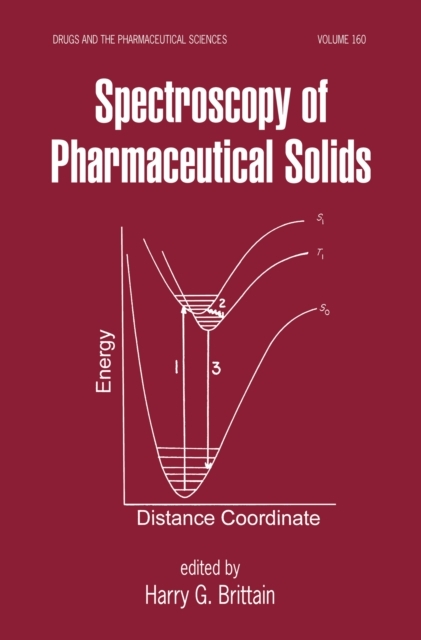
Selecting illustrative examples from the recent literature, this reference studies the underlying principles and physics of a wide range of spectroscopic techniques utilized in the pharmaceutical sciences and demonstrates various applications for each method analyzed in the text-showing how knowledge of the mechanisms of spectroscopic phenomena may
One of the Top Selling Physics Books according to YBP Library ServicesOrder can be found in all the structures unfolding around us at different scales, including in the arrangements of matter and in energy flow patterns.
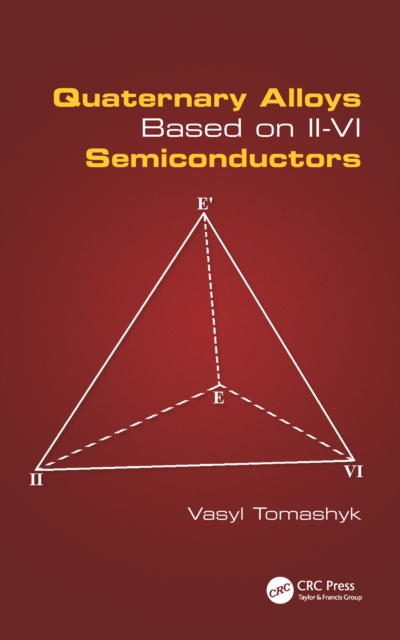
Doped by isovalent or heterovalent foreign impurities, II-VI semiconductor compounds enable control of optical and electronic properties, making them ideal in detectors, solar cells, and other precise device applications.
The science of ceramic interfaces is multidisciplinary, overlapping several existing, well-established disciplines such as solid-state chemistry, high-temperature chemistry, solid-state electrochemistry, surface science, catalysis and metallurgy.
The science of ceramic interfaces is multidisciplinary, overlapping several existing, well-established disciplines such as solid-state chemistry, high-temperature chemistry, solid-state electrochemistry, surface science, catalysis and metallurgy.