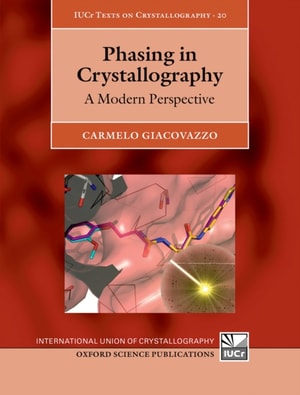
The art of solving a structure from powder diffraction data has developed rapidly over the last ten years to the point where numerous crystal structures, both organic and inorganic, have been solved directly from powder data.
"e;Light is a Messenger"e; is the first biography of William Lawrence Bragg, who was only 25 when he won the 1915 Nobel Prize in Physics - the youngest person ever to win a Nobel Prize.
By considering the solid state packing of linear chain wax components, this book aims at understanding three things: firstly, which modifications of molecular components are allowed for maintaining stable solid solutions; secondly, what happens when stability conditions are traversed and fractionation begins and thirdly, the structure of fractionated arrays.
Diffuse X-ray scattering is a rich (virtually untapped) source of local structural information over and above that obtained by conventional crystal structure determination (crystallography).
Macromolecular Crystallography is the study of macromolecules (proteins and nucleic acids) using X-ray crystallographic techniques in order to determine their molecular structure.
This new fourth edition of the standard text on atomic-resolution transmission electron microscopy (TEM) retains previous material on the fundamentals of electron optics and aberration correction, linear imaging theory (including wave aberrations to fifth order) with partial coherence, and multiple-scattering theory.
Small-angle scattering of X-rays (SAXS) and neutrons (SANS) is an established method for the structural characterization of biological objects in a broad size range from individual macromolecules (proteins, nucleic acids, lipids) to large macromolecular complexes.
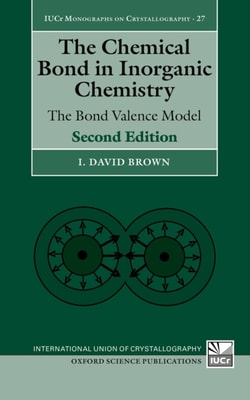
The bond valence model, a description of acid-base bonding, is widely used for analysing and modelling the structures and properties of solids and liquids.
Crystal Clear takes you behind the scenes in the life of one of the most prominent scientists of the twentieth century, William Lawrence Bragg (WLB) - an innovative genius, who together with his father, William Henry Bragg (WHB) founded and developed a whole new branch of science, X-ray Crystallography.
Crystal Clear takes you behind the scenes in the life of one of the most prominent scientists of the twentieth century, William Lawrence Bragg (WLB) - an innovative genius, who together with his father, William Henry Bragg (WHB) founded and developed a whole new branch of science, X-ray Crystallography.
This comprehensive text covers the basic physics of the solid state starting at an elementary level suitable for undergraduates but then advancing, in stages, to a graduate and advanced graduate level.
The bond valence model, a description of acid-base bonding, is widely used for analysing and modelling the structures and properties of solids and liquids.
This book provides a clear and very broadly based introduction to crystallography, light, X-ray and electron diffraction - a knowledge which is essential to students in a wide range of scientific disciplines but which is otherwise generally covered in subject-specific and more mathematically detailed texts.
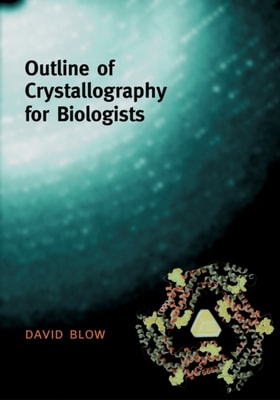
Outline of Crystallography for Biologists is intended for researchers and students in the biological sciences who require an insight into the methods of X-ray crystallography without needing to learn all the relevant theory.
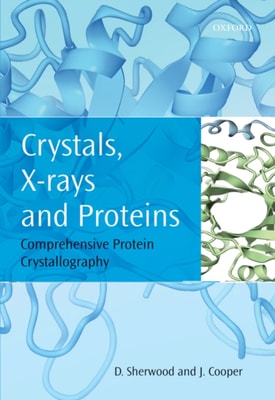
A complete account of the theory of the diffraction of X-rays by crystals, with particular reference to the processes of determining the structures of protein molecules.
In 1984 physicists discovered a monster in the world of crystallography, a structure that appeared to contain five-fold symmetry axes, which cannot exist in strictly periodic structures.
In the modern world of ever smaller devices and nanotechnology, electron crystallography emerges as the most important method capable of determining the structure of minute objects down to the size of individual atoms.
Handbook on the Physics and Chemistry of Rare Earths: Including Actinides, Volume 58, the latest release in this continuous series that covers all aspects of rare earth science, including chemistry, life sciences, materials science and physics, presents interesting chapters on Forensic applications of rare earth materials, and Rare earths, the seventeen-position nob.
Handbook on the Physics and Chemistry of Rare Earths: Including Actinides, Volume 57, is a continuous series of books covering all aspects of rare earth science, including chemistry, life sciences, materials science and physics.
Superplasticity and Grain Boundaries in Ultrafine-Grained Materials, Second Edition, provides cutting-edge modeling solutions surrounding the role of grain boundaries in processes such as grain boundary diffusion, relaxation and grain growth.
This second edition of Nanocrystalline Materials provides updated information on the development and experimental work on the synthesis, properties, and applications of nanocrystalline materials.
The third edition of the Encyclopedia of Analytical Science, Ten Volume Set is a definitive collection of articles covering the latest technologies in application areas such as medicine, environmental science, food science and geology.
Volume IIIA Basic TechniquesHandbook of Crystal Growth, Second Edition Volume IIIA (Basic Techniques), edited by chemical and biological engineering expert Thomas F.
Volume IAHandbook of Crystal Growth, 2nd Edition (Fundamentals: Thermodynamics and Kinetics) Volume IA addresses the present status of crystal growth science, and provides scientific tools for the following volumes: Volume II (Bulk Crystal Growth) and III (Thin Film Growth and Epitaxy).
Recrystallization and Related Annealing Phenomena, Third Edition, fulfills the information needs of materials scientists in both industry and academia.
New models for dislocation structure and motion are presented for nanocrystals, nucleation at grain boundaries, shocked crystals, interphase interfaces, quasicrystals, complex structures with non-planar dislocation cores, and colloidal crystals.
This book is aimed at researchers who are working in a field of quasicrystals to provide a reference to recent developments and ideas in the field and also at graduate students, who intend to study quasicrystals, to provide introduction of ideas.
The series Advances in Dendritic Macromolecules aims to cover the synthesis and supramolecular chemistry of dendritic or cascade super-molecules as well as their less perfect hyperbranched cousins.
Designed for easy use by both beginning and experienced protein crystallographers, the second edition of Practical Protein Crystallography is an essential handbook for any scientist interested in solving a protein structure.
As it results from the very nature of things, the spherical symmetry of the surrounding of a site in a crystal lattice or an atom in a molecule can never occur.