Scanning Transmission Electron Microscopy is focused on discussing the latest approaches in the recording of high-fidelity quantitative annular dark-field (ADF) data.
Scanning Transmission Electron Microscopy is focused on discussing the latest approaches in the recording of high-fidelity quantitative annular dark-field (ADF) data.
Theory of Particulate Processes: Analysis and Techniques of Continuous Crystallization, Second Edition covers the numerous population balance-based particulate studies.
Physical Acoustics: Principles and Methods, Volume V focuses on high frequency sound waves in liquids, solids, and gases, which are powerful tools for analyzing the molecular, domain wall, defect, and other types of motions that can take place in these media.
Epitaxial Growth, Part A is a compilation of review articles that describe various aspects of the growth of single-crystal films on single-crystal substrates.
Keeping the mathematics to a minimum yet losing none of the required rigor, Understanding Solid State Physics, Second Edition clearly explains basic physics principles to provide a firm grounding in the subject.
This second edition of Nanocrystalline Materials provides updated information on the development and experimental work on the synthesis, properties, and applications of nanocrystalline materials.
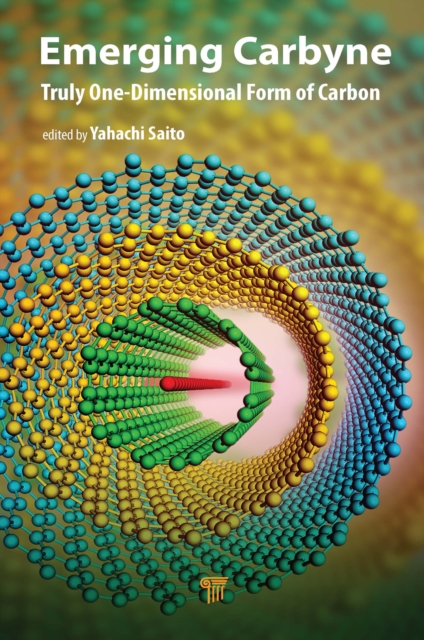
Molecular carbon chains have attracted much interest for more than 130 years, but the length of chains is limited to 44 atoms even by sophisticated chemical synthesis.
Volume 39: Molybdenum and Tungsten: Their Roles in Biological Processes is devoted soley to the vital research area on molybdenum and tungsten and their role in biology.
In the vein of A Beautiful Mind, The Man Who Loved Only Numbers, and Rosalind Franklin: The Dark Lady of DNA, this volume tells the poignant story of the brilliant, colorful, controversial mathematician named Dorothy Wrinch.
In the vein of A Beautiful Mind, The Man Who Loved Only Numbers, and Rosalind Franklin: The Dark Lady of DNA, this volume tells the poignant story of the brilliant, colorful, controversial mathematician named Dorothy Wrinch.
Due to its nondestructive imaging power, scanning tunneling microscopy has found major applications in the fields of physics, chemistry, engineering, and materials science.
Architects of Structural Biology is an amalgam of memoirs, biography, and intellectual history of the personalities and single-minded devotion of four scientists who are among the greatest in modern times.
Most people are familiar with the fact that diamond and graphite are both composed only of carbon; yet they have very different properties which result from the very different structures of the two solids - they are polymorphs of carbon.
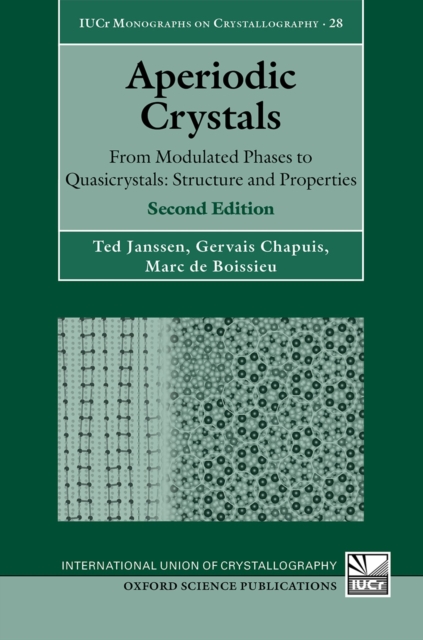
Over the past several decades, aThis book deals with the characterisation of the structure, the structure determination and the study of the physical properties, especially dynamical and electronic properties of aperiodic crystals.
This book consists of over 422 problems and their acceptable answers on structural inorganic chemistry at the senior undergraduate and beginning graduate level.
The year 2012 marked the centenary of one of the most significant discoveries of the early twentieth century, the discovery of X-ray diffraction (March 1912, by Laue, Friedrich and Knipping) and of Bragg's law (November 1912).
The year 2012 marked the centenary of one of the most significant discoveries of the early twentieth century, the discovery of X-ray diffraction (March 1912, by Laue, Friedrich and Knipping) and of Bragg's law (November 1912).
In 1912 Lawrence Bragg explained the interaction of X-rays with crystals, and he and his father, William thereby pioneered X-ray spectroscopy and X-ray crystallography.
Outline of Crystallography for Biologists is intended for researchers and students in the biological sciences who require an insight into the methods of X-ray crystallography without needing to learn all the relevant theory.
Hydrogen bond (H-bond) effects are known: it makes sea water liquid, joins cellulose microfibrils in trees, shapes DNA into genes and polypeptide chains into wool, hair, muscles or enzymes.
Atomic force microscopy (AFM) is an amazing technique that allies a versatile methodology (that allows measurement of samples in liquid, vacuum or air) to imaging with unprecedented resolution.
This text focuses on the practical aspects of crystal structure analysis, and provides the necessary conceptual framework for understanding and applying the technique.
Hydrogen bond (H-bond) effects are known: it makes sea water liquid, joins cellulose microfibrils in trees, shapes DNA into genes and polypeptide chains into wool, hair, muscles or enzymes.
The crystallization of proteins and nucleic acids and/or their complexes has become more highly automated but is still often a trial and error based approach.