Occupational workers frequently use, store, and dispose of toxic chemicals without knowing the possible consequences, both for the workplace and the environment.
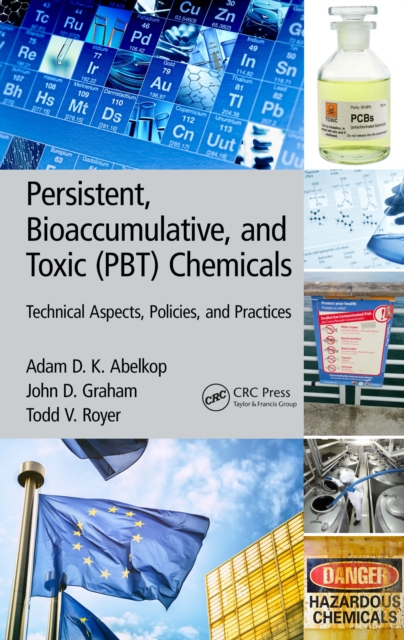
Developed from the efforts of a multiyear, international project examining how persistent, bioaccumulative, and toxic (PBT) chemicals are evaluated and managed, Persistent, Bioaccumulative, and Toxic (PBT) Chemicals: Technical Aspects, Policies, and Practices focuses on improving the processes that govern PBTs.
Tremendous improvements in ground-water sampling methodologies and analytical technologies have made it possible to collect and analyze truly representative samples to detect increasingly lower levels of contaminants-now in the sub-parts-per-billion range.
Building on the success of its 1993 predecessor, this second edition of Geochemistry, Groundwater and Pollution has been thoroughly re-written, updated and extended to provide a complete and authoritative account of modern hydrogeochemistry.
The increasing awareness of the effects of pollutants in the eco-system and on the development of suitable methods of analysis has stimulated a lot of research recently.
This handbook provides a systematic description of the principles, procedures, and technology of the modern analytical techniques used in the detection, extraction, clean up, and determination of pesticide residues present in the environment.
Based on the work and contributions of 46 scientists, managers, and policymakers, Ecological Assessment of Selenium in the Aquatic Environment documents the state of the science and explores how to use this information when assessing and managing the environmental effects of Se.
This book thoroughly explores strategies and greener methods, chemical and biological treatments, sustainable chemistry, and technological advancements aimed at mitigating the harmful effects of chemicals on the environment.
This book thoroughly explores strategies and greener methods, chemical and biological treatments, sustainable chemistry, and technological advancements aimed at mitigating the harmful effects of chemicals on the environment.
A volume that includes examples of the newest ideas and practices how green chemistry and green science can be applied - in the classroom, but also in the connections between classes and the work place.
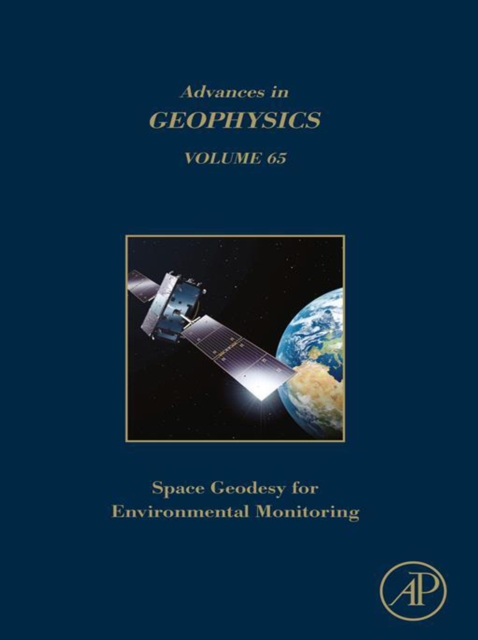
Space Geodesy for Environmental Monitoring Volume, Volume 65 in the Advances in Geophysics series, highlights new advances in the field, with this new volume presenting interesting chapters written by an international board of authors and covering topics such as GNSS for natural hazard mitigation, Space & Earth Data for Global Sea level change monitoring: Current Approaches, Challenges, and Future Prospects, and Crowdsourcing GNSS for geophysical applications.
Space Geodesy for Environmental Monitoring Volume, Volume 65 in the Advances in Geophysics series, highlights new advances in the field, with this new volume presenting interesting chapters written by an international board of authors and covering topics such as GNSS for natural hazard mitigation, Space & Earth Data for Global Sea level change monitoring: Current Approaches, Challenges, and Future Prospects, and Crowdsourcing GNSS for geophysical applications.
Chemistry for Environmental and Earth Sciences focuses on the chemistry and processes behind environmental issues such as global warming, ozone depletion, acid rain, water pollution, and soil contamination.
Carefully crafted to provide a comprehensive overview of the chemistry of water in the environment, Water Chemistry: Green Science and Technology of Nature's Most Renewable Resource examines water issues within the broad framework of sustainability, an issue of increasing importance as the demands of Earth's human population threaten to overwhelm t
MXenes as Emerging Modalities for Environmental and Sensing Applications: Theories, Design and Approach explores how MXene-based hybrid nanostructures are used to remedy environmental pollutants.
MXenes as Emerging Modalities for Environmental and Sensing Applications: Theories, Design and Approach explores how MXene-based hybrid nanostructures are used to remedy environmental pollutants.
Chemical substances, physical agents and built structures exhibit various types of hazard due to their inherent toxic, mutagenic, carcinogenic, reprotoxic and sensitizing character or damaging to the immune and hormone system.
Many new methods directed to organic and inorganic syntheses of useful intermediates are being developed to specifically address green and sustainable chemistry principles.
Water scarcity affects around 40% of the world's population and, to make the situation worse, 80% of wastewater enters water bodies without being adequately treated.
This book provides a multidisciplinary coverage of all manifestations of antimicrobials and antimicrobial resistance technology to promote eco-friendly processes and techniques for environmental sustainability.
This volume of the series Fundamentals of Organic Geochemistry provides an overview of isotope analysis in organic geochemistry and related fields of applied sciences.
This volume of the series Fundamentals of Organic Geochemistry provides an overview of isotope analysis in organic geochemistry and related fields of applied sciences.
The detection of pharmaceutical residues remained elusive until instruments such as liquid chromatography and mass spectrometry became commonplace in environmental laboratories.
A volume that includes examples of the newest ideas and practices how green chemistry and green science can be applied - in the classroom, but also in the connections between classes and the work place.
Water scarcity affects around 40% of the world's population and, to make the situation worse, 80% of wastewater enters water bodies without being adequately treated.
Multivariate, heterogeneous data has been traditionally analyzed using the "e;one at a time"e; variable approach, often missing the main objective of discovering the relationships among multiple variables and samples.
Hazardous Air Pollutant Handbook: Measurements, Properties, and Fate in Ambient Air provides a comprehensive review of the 188 compounds and compound classes designated as Hazardous Air Pollutants (HAPs) by the Clean Air Act Amendments of 1990, with a specific focus on their potential presence in ambient air.
Green chemistry involves designing novel ways to create and synthesize products and implement processes that will eliminate or greatly reduce negative environmental impacts.
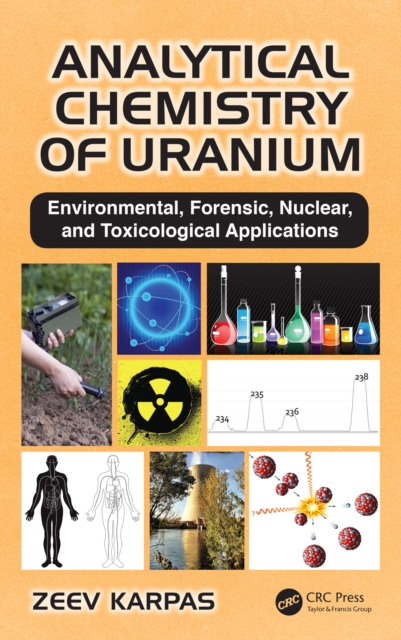
Accurate uranium analysis, and particularly for isotope measurements, is essential in many fields, including environmental studies, geology, hydrogeology, the nuclear industry, health physics, and homeland security.