In many parts of the world, weather and climate are one of the biggest production risks and uncertainty factors impacting on agricultural systems performance and management.
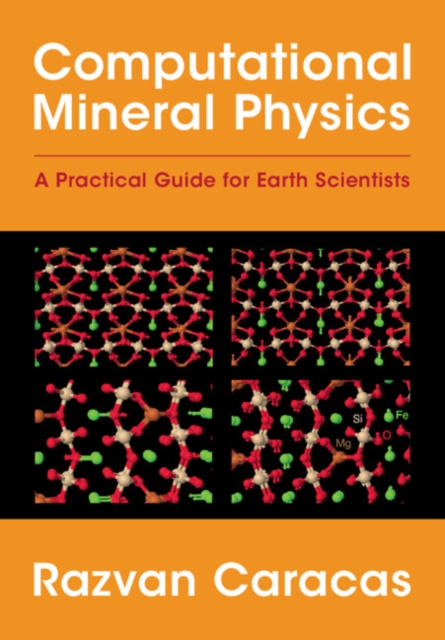
Scientific drilling is an indispensable tool of modern Earth science - search, as it provides the only means of obtaining direct information on processes operating at depth.
The particular behavior of trace metals in the environment is determined by their specific physico-chemical form rather than by their total concentration.
Sediments are increasingly recognized as both a carrier and a possible source of contaminants in aquatic systems, and they may also affect groundwater quality and agricultural products when disposed on land.
Improved adaptation of food production, particularly in areas where climate variability is large, holds the key to improving food security for human populations.
The accompanying ecological research for using wind energy in the German North and Baltic Seas is part of a series of research projects in the German Government's Investment Programme for the Future.
In industrialisierten Ländern ist der Einsatz synthetischer Pharmaka für die Diagnose und Therapie von Krankheiten, für das Wohlbefinden der Bevölkerung und für die Fertilitätskontrolle zum festen Bestandteil des Alltags geworden.
The understanding of fundamental principles and phenomena that control the tra- fer of trace elements in soil-plant-human chain can contribute to the protection of the environment and human health.
It is known for milleniums, that water is forming the principle base for the total biosphere including human beings ('Thales [of Milet] says that it [the nature of things] is water' Aristoteles, Metaph.
The former Working Party, and currently Division, of Analytical Chemistry of the Federation of European Chemical Societies made the decision in 1996 to produce this book, which lists a large number of European analytical chemists together with their addresses and fields of interest.
During 1978-1982 the International Institute for Applied Systems Analysis (IIASA) was responsible for a research project on Environmental Quality Control and Management.
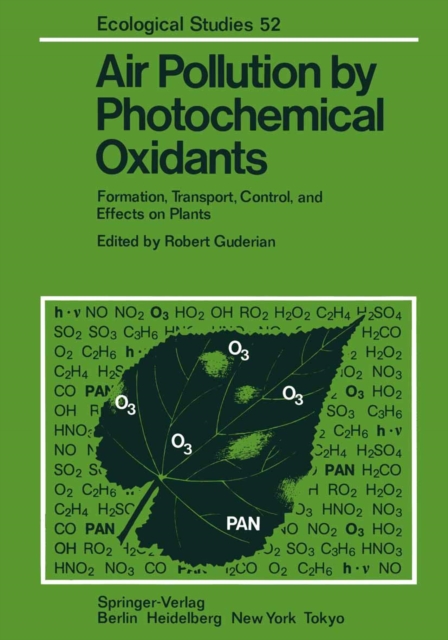
Photochemical oxidants are secondary air pollutants formed under the influence of sunlight by complex photochemical reactions in air which contains nitrogen oxides and reactive hydrocarbons as precursors.
This book covers nanomaterials and smart technologies for environmental remediation, offering a focused and up-to-date perspective on key innovations in sustainable water and wastewater treatment, pollution control, and resource recovery.
This book covers nanomaterials and smart technologies for environmental remediation, offering a focused and up-to-date perspective on key innovations in sustainable water and wastewater treatment, pollution control, and resource recovery.
This book presents an integrated approach to understanding environmental contamination problems through the use of techniques from environmental chemistry, toxicology, ecology, and ecotoxicology.
Every Molecule Tells a Story, Second Edition continues the celebration of molecules responsible for the experiences of everyday life: the air we breathe, the water we drink, the chemicals that fuel our living, the steroids that give us sex, the colours of the seasons, the drugs that heal us, and the scented molecules that enrich our diet and our encounters with each other.
Every Molecule Tells a Story, Second Edition continues the celebration of molecules responsible for the experiences of everyday life: the air we breathe, the water we drink, the chemicals that fuel our living, the steroids that give us sex, the colours of the seasons, the drugs that heal us, and the scented molecules that enrich our diet and our encounters with each other.
A successful modern heavy metal control program for any industry will include not only traditional water pollution control, but also air pollution control, soil conservation, site remediation, groundwater protection, public health management, solid waste disposal, and combined industrial-municipal heavy metal waste management.
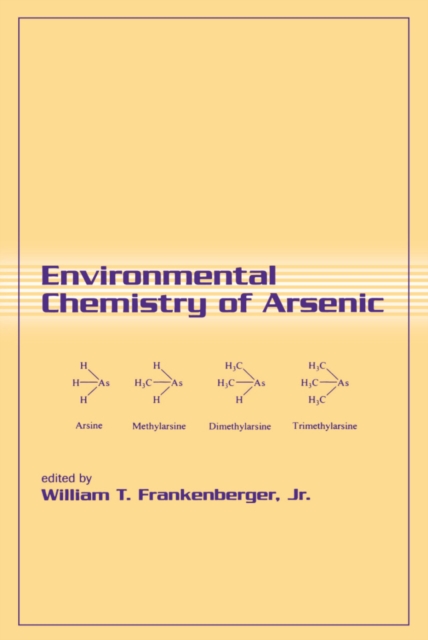
With contributions from world-renowned experts in the field, this book explores developments in the transport kinetics, seasonal cycling, accumulation, geochemistry, transformation, and toxicology of arsenic.