This book presents a unified outlook on counter-current, ion size exclusion, supercritical fluids, high-performance thin layers, and gas and size exclusion chromatographic techniques used for the separation and purification of organic and inorganic analytes.
Synthesizing decades of work, but up-to-date, this book focuses on organism-level responses to pollutants by marine animals, mainly crustaceans, molluscs, and fishes.
Phenology refers to recurring plant and animal life cycle stages, such as leafing and flowering, maturation of agricultural plants, emergence of insects, and migration of birds.
This book documents the history of irrigated agriculture and drainage in the San Joaquin Valley, and describes the hydrology and biogeochemical processes of salts and selenium, remediation technologies for salts and trace elements and policy and management options.
Over the past twenty years, Catalysis by Heteropolyacids (HPAs) has received wide attention and led to new and promising developments both at academic and industrial level.
Plant-driven volatile organic compound (BVOC) emissions play a major role in atmospheric chemistry, including ozone and photochemical smog formation in the troposphere, and they extend the atmospheric lifetime of the key greenhouse gas, methane.
The present work is a fine contribution to the broad field of environmental security in the context of risk assessment and management of obsolete pesticides for the region of Southeast Europe.
Over the past ten years, innovative technologies have shown that advanced oxidation processes are highly promising when applied to the remediation of polluted water or wastewater as they don't generate any sludge or solid material of hazardous nature.
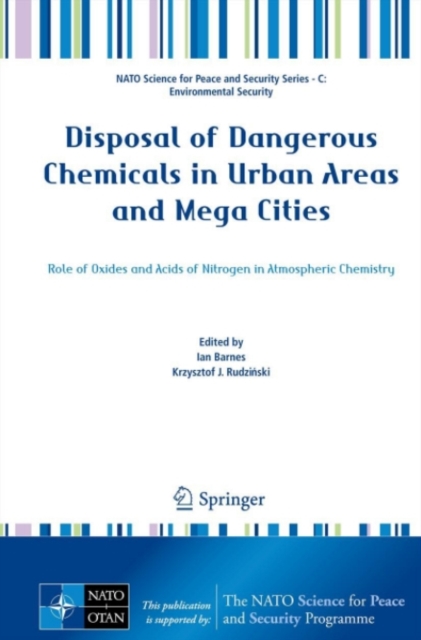
Oxides and acids of nitrogen play an important role in regulating atmospheric radical levels, in particular, that of the OH radical the main initiator of the degradation of chemicals in the atmosphere.
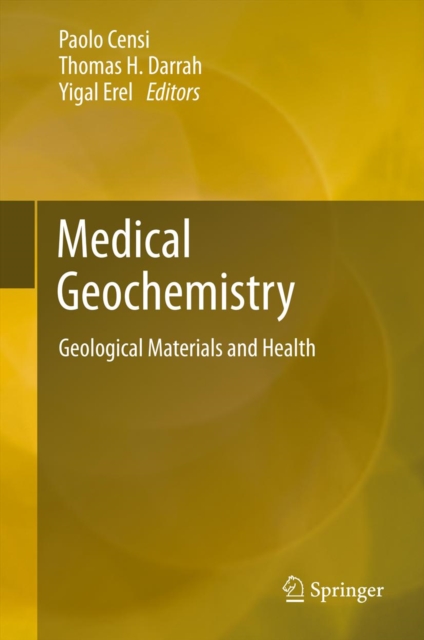
This book includes a collection of chapters illustrating the application of geochemical methods to investigate the interactions between geological materials and fluids with humans.
In the last years the release of emerging pollutants such as Endocrine Disruptors (EDCs), Pharmaceuticals and Personal Care Products (PPCPs) into the environment has raised great concern.
The conventional solvents used in chemical, pharmaceutical, biomedical and separation processes represent a great challenge to green chemistry because of their toxicity and flammability.
Nutrient Indicator Models for Determining Biologically Relevant Levels: A case study based on the Corn Belt and Northern Great Plain Nutrient Ecoregion is the first book to provide answers to the management of nutrients based on changes in biological communities.
Based on the "e;International Symposium of Molecular Environmental Soil Science at the Interfaces in the Earth's Critical Zone,"e; this book focuses on the Critical Zone supporting life at the Earth's surface with emphasis on the new and emerging subject area of molecular environmental soil science.
The conventional solvents used in chemical, pharmaceutical, biomedical and separation processes represent a great challenge to green chemistry because of their toxicity and flammability.
For more than a century, heterocycles have played a crucial role in the biological and industrial development of society, becoming one of the most researched areas within organic chemistry.
Nowadays, chirality is widely accepted as an important factor in molecular recognition processes and the biological activity of many pharmaceutical drugs and agrochemicals; this is confirmed by the continuous need for synthetic methods which lead to single or enriched enantiomers of such compounds.
In order to analyse the challenges posed by the quest for sustainability, Green Technologies for Wastewater treatment: Energy Recovery and Emerging Compounds Removal evaluates water management together with energy use.
This volume - like the NATO Advanced Research Workshop on which it is based - addresses the fundamental science that contributes to our understanding of the potential risks from ecological terrorism, i.
Water resources, both in terms of water quality and water quantity, are of critical importance in planning for sustainable development in Central Asia and the Caucasus, as well as in other parts of the world.
This book offers a comprehensive overview of the various aspects involved in biomass burning, highlighting the complexity of the phenomenon and the ensuing challenges for the design of approaches aimed at reducing fires in the open air.
In an effort to implement conservation measures farmers have used a variety of production methods, including the use of reduced or zero tillage and cover crops.
Recent critiques of air quality management approaches currently employed in developed and many developing countries have suggested that efficiencies could be achieved if air quality management practices shifted from pollutant-by-pollutant approaches to a comprehensive multipollutant approach in which emission reduction decisions are based on relative risk and evaluated on their effectiveness in meeting environmental and health goals.
This book focuses on the engineering aspects of phosphorus (P) recovery and recycling, presenting recent research advances and applications of technologies in this important and challenging area of engineering.
The natural river management (NRM) approach is designed to harness the natural functions of river systems so they sustainably provide important services such as water supply and flood and drought management.
Natural and agro-ecosystems are frequently exposed to natural or synthetic substances, which, while they have no direct nutritional value or significance in metabolism, may negatively affect plant functioning.
The book is the only technical volume that explains how equivalency analysis methods mentioned in Annex II of the European Environmental Liability Directive should be implemented.
This standard work on contaminated site management covers the whole chain of steps involved in dealing with contaminated sites, from site investigation to remediation.
As government and community leaders, private companies, citizens, and applied scientists search for low-cost methods to cleanup environmental pollution, phytotechnologies can contribute to the solution by utilizing natural processes to reduce environmental risk.
Applied Photochemistry encompasses the major applications of the chemical effects resulting from light absorption by atoms and molecules in chemistry, physics, medicine and engineering, and contains contributions from specialists in these key areas.
Radioactive particles have been released to the environment from a number of sources, including nuclear weapon tests, nuclear accidents and discharges from nuclear installations.