Consider the Consequences of Bringing a Chemical to MarketProduct Stewardship: Life Cycle Analysis and the Environment explores the regulatory and scientific aspects of the life-cycle consequences of bringing a chemical to market.
The fifth edition includes new sections on the use of adverse outcome pathways, how climate change changes how we think about toxicology, and a new chapter on contaminants of emerging concern.
The fifth edition includes new sections on the use of adverse outcome pathways, how climate change changes how we think about toxicology, and a new chapter on contaminants of emerging concern.
Ecotoxicology and Chemistry Applications in Environmental Management describes how to set up an integrated, holistic approach to addressing ecotoxicological problems.
Green Organic Chemistry and Its Interdisciplinary Applications covers key developments in green chemistry and demonstrates to students that the developments were most often the result of innovative thinking.
In its second volume, this book aims to link the academic research with development in the real world and provide a historical and institutional background that can enrich more formal research.
This book represents the efforts of over a hundred individuals who planned and executed the NSTS field experiments, analyzed the billions of data points, and distilled their findings and insights into the summaries found here.
This monograph consists of manuscripts submitted by invited speakers who participated in the symposium "e;Industrial Environmental Chemistry: Waste Minimization in Industrial Processes and Remediation of Hazardous Waste,"e; held March 24-26, 1992, at Texas A&M University.
This book originated in a series of cross-disciplinary conversations in the years 1984-1990 between the editor, who is a physician-researcher involved in clinical and laboratory research, and a dioxin toxicologist.
Atmospheric Sulfur and Nitrogen Oxides provides a thorough synthesis of the research on atmospheric sulfur and nitrogen oxide chemistry on geographically large scales, with special emphasis on the methods and difficulties of establishing source-receptor relationships.
Chemical Fate and Transport in the Environment is a textbook for upper division undergraduate and graduate students studying environmental sciences in engineering, hydrology, chemistry, and other related disciplines.
Developed from the efforts of a multiyear, international project examining how persistent, bioaccumulative, and toxic (PBT) chemicals are evaluated and managed, Persistent, Bioaccumulative, and Toxic (PBT) Chemicals: Technical Aspects, Policies, and Practices focuses on improving the processes that govern PBTs.
Chromatography of Natural, Treated and Waste Waters is the first book to bring together information of a range of chromatographic techniques in all types of water, precipitation to sewage effluents.
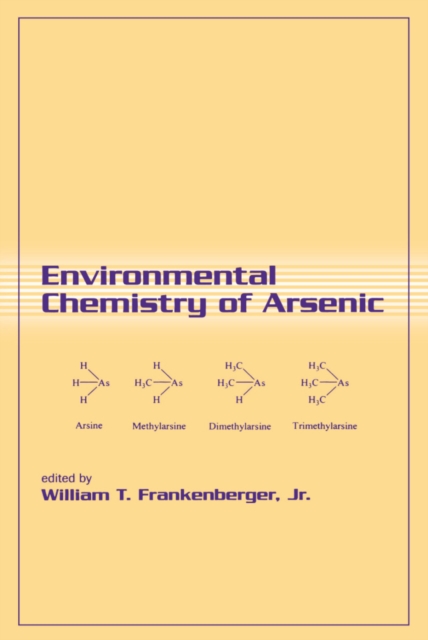
With contributions from world-renowned experts in the field, this book explores developments in the transport kinetics, seasonal cycling, accumulation, geochemistry, transformation, and toxicology of arsenic.
Equipment used for the analysis of water is frequently insufficiently sensitive to be able to detect the low concentrations of organic and inorganic substances present in samples.
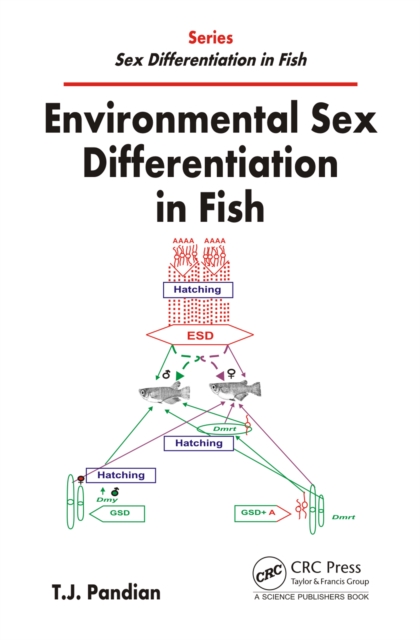
Fish constitute an important natural renewable resource and any reduction in their ability to propagate as a result of human interference may have significant socioeconomic consequences.
Polycyclic Aromatic Hydrocarbons (PAHs) are a group of semi-volatile organic compounds that are formed during the incomplete burning of gas, coal, oil, wood, garbage, or other organic substances.
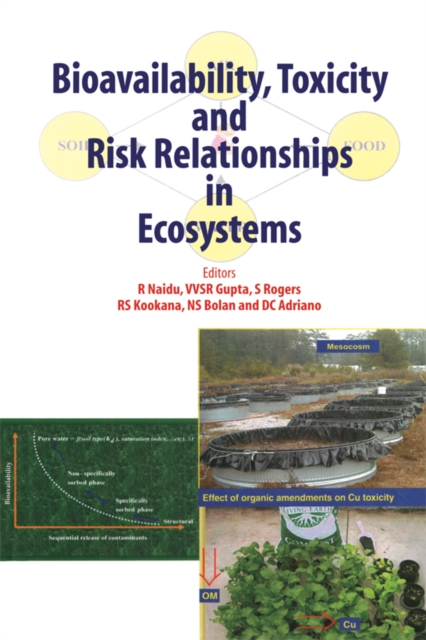
Edited by One of the Best Specialists in Soil ScienceRecent studies reveal that Phosphorus (P) in the form of phosphate, a macronutrient essential for plant growth, and crop yields can influence the bioavailability, retention, and mobility of trace elements, metal(loid)s, and radio nuclides in soils.
Treatment and Utilization of Combustion and Incineration Residues introduces state-of-art strategies for combustion and incineration solid residue management and utilization.
Consider the Consequences of Bringing a Chemical to MarketProduct Stewardship: Life Cycle Analysis and the Environment explores the regulatory and scientific aspects of the life-cycle consequences of bringing a chemical to market.
Green chemistry involves designing novel ways to create and synthesize products and implement processes that will eliminate or greatly reduce negative environmental impacts.
Accurate uranium analysis, and particularly for isotope measurements, is essential in many fields, including environmental studies, geology, hydrogeology, the nuclear industry, health physics, and homeland security.
Once again the present volume contains the majority of the papers presented at the Third Pan-American Biodeterioration Society Meeting held at The George Washington University, Washington, D.
During the past five years increased awareness of environmental contamination by nitroaromatic compounds has led to a dramatic increase in research on their biodegradation.
This book is based on an international meeting organized by the University of Tokyo and the University of Rochester, and is published as one belonging to the series of Rochester International Conferences in Environmental Toxicity.
Reviews of Environmental Contamination and Toxicology provides detailed review articles concerned with aspects of chemical contaminants, including pesticides, in the total environment with toxicological considerations and consequences.
Reviews of Environmental Contamination and Toxicology provides detailed review articles concerned with aspects of chemical contaminants, including pesticides, in the total environment with toxicological considerations and consequences.
International concern in scientific, industrial, and governmental communities over traces of xenobiotics in foods and in both abiotic and biotic environments has justified the present triumvirate of specialized publications in this field: comprehensive reviews, rapidly published research papers and progress reports, and archival documentations.
Biochemistry of Halogenated Organic Compounds has been written as a general reference source for researchers in several related areas, including organic chemists, medicinal chemists, pharmacologists, toxicologists, and medical researchers.
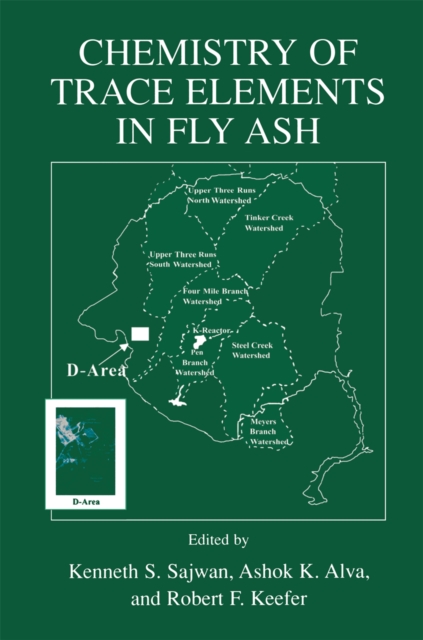
The accumulation of large amounts of ash from fossil fuel combustion for electric power plant generation is becoming a major environmental concern in the United States.
Mathematical Methods of Environmental Risk Modeling provides a working introduction to both the general mathematical methods and specific models used for human health risk assessment.
Spatiotemporal Environmental Health Modelling: A Tractatus Stochasticus provides a holistic, conceptual and quantitative framework for Environmental Health Modelling in space-time.
Metal Metabolism in Aquatic Environments is a synthesis of recent developments in the field of metal ecotoxicology and features a number of contemporary issues arising from the interaction of metals and biota, such as pathways of assimilation and food chain transfer, metal accumulation and detoxification in humans and biotransformation of elements such as mercury and arsenic.
The United States Government, cognizant of its responsibilities to future generations, has been sponsoring research for nine years into the causes, effects, and potential impacts of increased concentrations of carbon dioxide (C0 ) in the atmosphere.
I intend to fill, with this book, a need that has long been felt by students and professionals in many areas of agricultural, biological, natural, and environmental sciences-the need for a comprehensive reference book on many important aspects of trace elements in the "e;land"e; environment.