Microplastics in the Environment: Occurrence, Fate, and Distribution is a comprehensive volume that explores the growing environmental challenge posed by microplastics.
This book explains the latest research on global environmental pollution and health effects caused by polycyclic aromatic hydrocarbons (PAHs) and their derivatives.
This book explains the latest research on global environmental pollution and health effects caused by polycyclic aromatic hydrocarbons (PAHs) and their derivatives.
There has been an explosive growth of methods in recent years for learning (or estimating dependency) from data, where data refers to known samples that are combinations of inputs and corresponding outputs of a given physical system.
There has been an explosive growth of methods in recent years for learning (or estimating dependency) from data, where data refers to known samples that are combinations of inputs and corresponding outputs of a given physical system.
Heavy metals are hazardous environmental pollutants and are becoming one of the most serious environmental problems because of their persistence, toxicity, non-biodegradability, and ability to be incorporated into the food chain.
Heavy metals are hazardous environmental pollutants and are becoming one of the most serious environmental problems because of their persistence, toxicity, non-biodegradability, and ability to be incorporated into the food chain.
This book explores human biomonitoring (HBM) as a method to evaluate chemical exposure and its related health effects, with a specific focus on short half-life chemicals and mycotoxins.
This book explores human biomonitoring (HBM) as a method to evaluate chemical exposure and its related health effects, with a specific focus on short half-life chemicals and mycotoxins.
The book presents the selected papers presented at the 4th International Congress of Applied Chemistry and Environment (ICACE-4) that took place on December 12–14, 2024.
The book presents the selected papers presented at the 4th International Congress of Applied Chemistry and Environment (ICACE-4) that took place on December 12–14, 2024.
This book reviews environmental contaminants in terms of their sources, impacts, and health risk assessment, with a focus on soil pollution, groundwater contamination, and integrated management strategies.
This book explores human biomonitoring (HBM) as a method to evaluate chemical exposure and its related health effects, with a specific focus on environmental and industrial chemicals.
This book reviews environmental contaminants in terms of their sources, impacts, and health risk assessment, with a focus on soil pollution, groundwater contamination, and integrated management strategies.
This book is highly beneficial for a better understanding of the techniques involved in sewage treatment plants and the recovery of components from the contaminated matrix for valuable applications.
This book explores human biomonitoring (HBM) as a method to evaluate chemical exposure and its related health effects, with a specific focus on environmental and industrial chemicals.
This book is highly beneficial for a better understanding of the techniques involved in sewage treatment plants and the recovery of components from the contaminated matrix for valuable applications.
The book presents the entire spectrum of the microplastics problem in our waters, from the collection of water samples to their analysis and interpretation.
The book presents the entire spectrum of the microplastics problem in our waters, from the collection of water samples to their analysis and interpretation.
This book covers the origins, transformations, and interactions of matter—from atoms and molecules to complex biological and composite materials—across abiotic, biotic, and anthropogenic systems.
Wastewater treatment is a process that involves the extraction of pollutants, removal of coarse particles, and elimination of toxicants from wastewater with minimum impact on the environment.
Wastewater treatment is a process that involves the extraction of pollutants, removal of coarse particles, and elimination of toxicants from wastewater with minimum impact on the environment.
This volume includes revised versions of most of the presentations made at the International Conference Understanding the Earth Sys- tem: Compartments, Processes and Interactions"e; held on November 24-26, 1999 in Bonn.
This book covers the origins, transformations, and interactions of matter—from atoms and molecules to complex biological and composite materials—across abiotic, biotic, and anthropogenic systems.
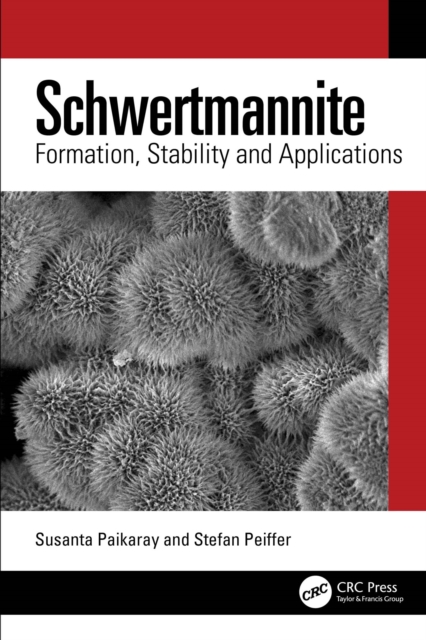
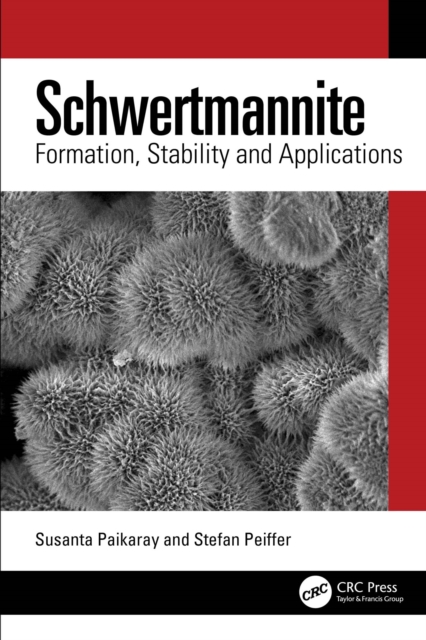
This book offers a comprehensive overview of the structure and solubility of the mineral schwertmannite, while also delving into characterization methods and techniques, environmental stability, and the potential to retain pollutants.
This book offers a comprehensive overview of the structure and solubility of the mineral schwertmannite, while also delving into characterization methods and techniques, environmental stability, and the potential to retain pollutants.
This book provides a thorough examination of the diverse applications of carbon-based materials, including both bulk and nano forms, in the detection and remediation of environmental contaminants.
This book provides a detailed account of the research and applications of hydrothermal reaction technology in the utilization of biomass energy, encompassing processes such as bio-oil and hydrogen production.