There are only few topics in organometallic chemistry, which have stimulated research activities in as many areas, as transition-metal carbene (alkylidene) complexes.
The design, -synthesis, and selective pyrolytic conversion of organo- metallic precursdrs to materials of high purity or specific morphology (for electronic or optical applications), high strength and/or high-temperature stability (for structural or refractory applications) represents a poten- tial area of extreme growth at the overlap of chemistry and materials science (materials chemistry).
The aim of this book is, as its title suggests, to help sOilleone with little or no knowledge of what thermal analysis can do, to find out briefly what the subject is all about, to decide whether it will be of use to him or her, and to help in getting started on the more common techniques.
This volume contains the papers and reports presented at the First International Conference on Dye-Protein Interaction, held 24-28 July 1988 at the University of Compiegne, France.
This book contains the proceedings of the NATO Advanced Study Institute on Surfaces and Interfaces of Ceramic Materials, held on the Oleron island, France, in September 1988.
This volume reports the main lectures and seminars given at the NATO Advanced Study Institute on Vibronic Processes in Inorganic Chemistry held at Riva del Sole, Tuscany, Italy between 7th and 18th September 1988.
Metal-Ligand Interactions - Structure and Reactivity emphasizes the experimental determination of structure and dynamics, supported by the theoretical and computational approaches needed to establish the concepts and guide the experiments.
This book presents the lectures and posters of some of the main leaders in the field of th magnesium research and medical applications delivered at the 8 International Symposium on Magnesium, which took place on 5-9 October, 1997 in Heraklion, Crete under the chairmanship of Professor Theophilos Theophanides.
This book underscores the essential principles of photocatalysis and provides an update on its scientific foundations, research advances, and current opinions, and interpretations.
Chemistry: The Key to our Sustainable Future is a collection of selected contributed papers by participants of the International Conference on Pure and Applied Chemistry (ICPAC 2012) on the theme of "e;Chemistry: The Key for our Future"e; held in Mauritius in July 2012.
A Structural and Vibrational Study of the Chromyl Chlorosulfate, Fluorosulfate and Nitrate Compounds presents important studies related to the structural and vibrational properties on the chromyl compounds based on Ab-initio calculations.
A Structural and Vibrational Investigation into Chromyl Azide, Acetate, Perchlorate and Thiocyanate Compounds reviews the structural and vibrational properties of chromyl azide, acetate, perchlorate, and thiocyanate from a theoretical point of view by using Density Functional Theory (DFT) methods.
Metallomics and the Cell provides in an authoritative and timely manner in 16 stimulating chapters, written by 37 internationally recognized experts from 9 nations, and supported by more than 3000 references, several tables, and 110 illustrations, mostly in color, a most up-to-date view of the "e;metallomes"e; which, as defined in the "e;omics"e; world, describe the entire set of biomolecules that interact with or are affected by each metal ion.
Volume 11 provides in an authoritative and timely manner in 16 stimulating chapters, written by 40 internationally recognized experts from 11 nations, and supported by more than 2600 references, 35 tables, and over 100 illustrations, many in color, a most up-to-date view on the role of cadmium for life, presently a vibrant research area.
Interplay between Metal Ions and Nucleic Acids provides in an authoritative and timely manner in 12 stimulating chapters, written by 24 internationally recognized experts from 8 nations, and supported by nearly 1500 references, about 20 tables, and 125 illustrations, many in color, a most up-to-date view on metal ion-nucleic acid interactions; the characterization of which is covered in solution and in the solid state.
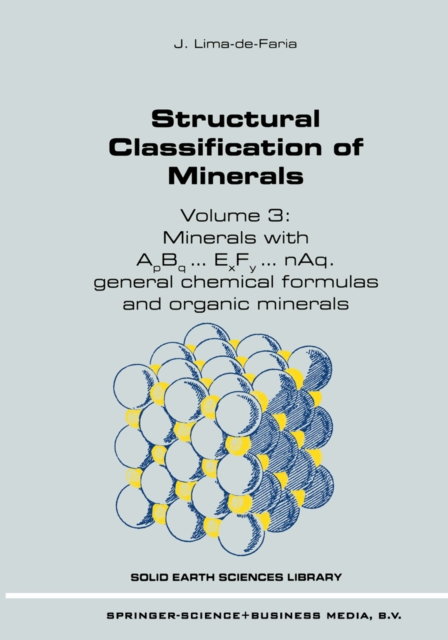
This book presents the third volume of a complete development of the new structural classification of minerals, which is based on the internal crystal structure, and is therefore its natural classification.
This volume contains the proceedings of the third Euroconference on Atomic Phys- ics at Accelerators (APAC 2001), with the title Stored Particles and Fundamental Physics.
In a relatively brief but masterful recounting, Professor Ulf Lagerkvist traces the origins and seminal developments in the field of chemistry, highlighting the discoveries and personalities of the individuals who transformed the ancient myths of the Greeks, the musings of the alchemists, the mystique of phlogiston into the realities and the laws governing the properties and behavior of the elements; in short, how chemistry became a true science.
Despite the fact that chemical applications of ultrasound are now widely acknowledged, a detailed presentation of inorganic systems covering nano-particles, catalysis, aqueous chemistry of metallic solutions and their redox characteristics, both from a theoretical and experimental perspective has eluded researchers of this field.
Each chapter of Phosphorus Compounds: Advanced Tools in Catalysis and Material Sciences have been carefully selected by the editors in order to represent a state-of-the-art overview of how phosphorus chemistry can provide solutions in various fields of applications.
The commercial availability and decreasing cost of polyhedral oligomeric silsesquioxanes in recent years has opened up the field to everybody who wishes to apply these unique properties in their own technologies.
As concerns with the efficient use of energy resources, and the minimization of environmental damage have come to the fore, there has been a renewed interest in the role that thermoelectric devices could play in generating electricity from waste heat, enabling cooling via refrigerators with no moving parts, and many other more specialized applications.
The art of chemistry is to thoroughly understand the properties of molecular compounds and materials and to be able to prepare novel compounds with p- dicted and desirable properties.
Earlier works on plant essential elements have revealed a series of complicated, counter-intuitive relationships among various chemical elements in different plant species, due to both unlike usage of certain elements in plants and to different carriers effecting resorption and transport.
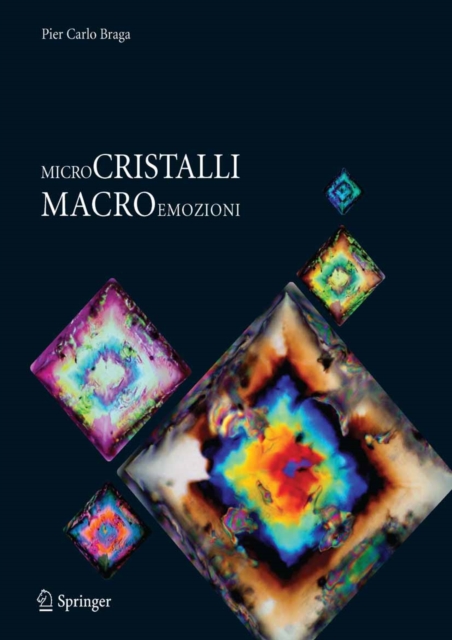
Molte persone hanno avuto occasione di vedere le forme ed i colori dei cristalli formati dalle rocce cristalline, ma forse pochi sanno che le sostanze chimiche possono formare dei microcristalli, visibili al microscopio, con forme e colori altrettanto belli.
Obra clásica dirigida a los químicos analíticos y muy en especial a los estudiantes que se inician en el estudio de esta parte de la Química dedicada al Análisis Químico Inorgánico.