Almost all branches of chemistry and material science now interface with organometallic chemistry--the study of compounds containing carbon-metal bonds.
Almost all branches of chemistry and material science now interface with organometallic chemistry--the study of compounds containing carbon-metal bonds.
Almost all branches of chemistry and material science now interface with organometallic chemistry - the study of compounds containing carbon-metal bonds.
This book discusses recent progress in endohedral fullerenes - their production and separation techniques, as well as their characterization and properties.
This book investigates the use of palladium modified by bulky ligands as catalysts for new chemical transformations that rapidly assemble several classes of complex heterocyles.
This book focuses on direct nitrogenation strategies to incorporate one or more N-atoms into simple substrates especially hydrocarbons via C-H and/or C-C bond cleavage, which is a green and sustainable way to synthesize nitrogen-containing compounds.
This book systematically describes the design and synthesis of MOF-related materials and the electrochemical energy storage-related research in the field of batteries.
The demand for novel efficient and environmentally sustainable chemo, regio- and stereoselective catalyst systems for the oxidation of organic substrates is continuously growing in line with toughening economic and environmental constraints.
This book joins an international and interdisciplinary group of leading experts on the biomedical, energy and environmental applications of Metal-Organic Frameworks (MOFs).
This book summarises the current knowledge on the role played by biologically relevant transition metals (Fe, Mn, Zn, Ni, Co, Cu and Mg) in the basic biology and virulence of bacterial pathogens from the genus Brucella.
This updated, second edition retains its classroom-tested treatment of physical chemistry of metallurgical topics, such as roasting of sulfide minerals, matte smelting, converting, structure, properties and theories of slag, reduction of oxides and reduction smelting, interfacial phenomena, steelmaking, secondary steelmaking, role of halides in extraction of metals, refining, hydrometallurgy and electrometallurgy, and adds new data in worked-out examples as well as up-to-date references to the literature.
This book contains authoritative reviews regarding the field of Organometallic Chemistry, written by highly qualified experts within the area, and reviewed by other experts before publication.
A widely-acclaimed serial, Advances in Organometallic Chemistry contains authoritative reviews that address all aspects of organometallic chemistry, a field which has expanded enormously since the publication of Volume 1 in 1964.
This widely acclaimed serial contains authoritative reviews that address all aspects of organometallic chemistry, a field which has expanded enormously since the publication of Volume 1 in 1964.
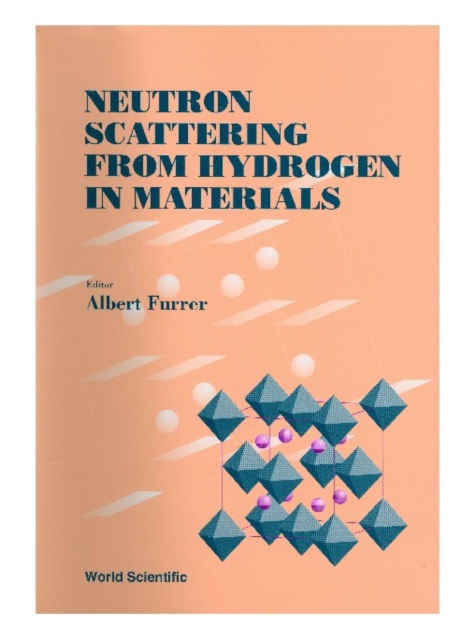
This volume provides a topical survey of the static and dynamic properties of hydrogen in both metallic and inorganic materials studied by neutron scattering which has been the key technique in this field for a long time.
This invaluable book distils the research accomplishments of Professor Fred Basolo during the five decades when he served as a world leader in the modern renaissance of inorganic chemistry.
The demand for novel efficient and environmentally sustainable chemo, regio- and stereoselective catalyst systems for the oxidation of organic substrates is continuously growing in line with toughening economic and environmental constraints.
This book systematically describes the design and synthesis of MOF-related materials and the electrochemical energy storage-related research in the field of batteries.
This book focuses on direct nitrogenation strategies to incorporate one or more N-atoms into simple substrates especially hydrocarbons via C-H and/or C-C bond cleavage, which is a green and sustainable way to synthesize nitrogen-containing compounds.
About eight years ago, the catalytic carbonylation of organic nitro compounds was a research field developed enough to justify a rather long review on this subject.
On Friday, February 20, 1980, I had the pleasure to be present at the inaugural lecture of my colleague Jan Reedijk, who had just been named at the Chair of Inorganic Chemistry of Leiden University.
When this book was first conceived as a project the expanding interest in the clinical use of platinum and gold complexes made a survey of the relevant biological properties of metal complexes timely and appropriate.
The scope of this paper is to recall fundamental notions of the molecular spectroscopy and dynamics, necessary for discussion of photophysical and photochemical processes in condensed phases.
The analogy between the chemistry of molecular transition metal clusters and the processes of chemisorption and catalysis at metal surfaces (the Cluster Surface analogy) has for a number of years provided an interplay between experimental and theoretical inorganic and physical chemists.
While the organometallic chemistry of the d-block transition elements has been a flourishing field for the past 25 years, it has only been in the last several years that dramatic activity and progJ'ess has occurred in the area of lanthanide and actinide organometallic chemistry.