Tomorrow's nanoscientist will have a truly interdisciplinary and nano-centric education, rather than, for example, a degree in chemistry with a specialization in nanoscience.
The versatility of the emulsion copolymerization reaction and the ability to control the properties of the final latices have led to rapid expansion both in the quantity of polyvinylacetate and vinyl acetate-acrylic copolymer latices and in their applications.
Looking beyond the traditional applications of polyurethanes (PUR), Polyurethanes as Specialty Chemicals presents a different approach to polyurethane chemistry by examining a range of new products and new research for both environmental and medical applications.
Thermodynamic data of copolymer solutions are a necessity for industrial and laboratory processes and serve as essential tools for understanding the physical behavior of copolymer solutions, intermolecular interactions, and the molecular nature of mixtures.
Mass Spectrometry (MS) has rapidly become an indispensable tool in polymer analysis, and modern MS today complements in many ways the structural data provided by Nuclear Magnetic Resonance (NMR) and Infrared (IR) methods.
Relating Materials Properties to Structure: Handbook and Software for Polymer Calculations and Materials Properties lays the foundation for an understanding of the basic structure of materials and the significant distinguishing features between major classes.
Polymer Processing Instabilities: Control and Understanding offers a practical understanding of the various flows that occur during the processing of polymer melts.
An in-depth review of important preparative methods for the synthesis and chemical modification of polymers, this authoritative second edition examines the advantages and limitations of various polymerization applications and procedures.
Written by pioneering experts in the field, this book offers a wide range of approaches for molecular imprinting, experimental protocols that exemplify specific techniques, and a detailed survey on molecular imprinting research and applications.
Supramolecular Polymers, Second Edition details assembly processes and structure-function correlation in natural and synthetic self-assembling materials, focusing on developments occurred over the past five years.
Micro- and Nanostructured Multiphase Polymer Blend Systems: Phase Morphology and Interfaces focuses on the formation of phase morphology in polymer blends and copolymers and considers various types of blends including thermosets, thermoplastics, thermoplastic vulcanizates, and structured copolymers.
The continually growing plastics market consists of more than 250 million tons of product annually, making the recurring problem of polymer melt fracture an acute issue in the extrusion of these materials.
New synthetic techniques allow chemists to modify polymer microstructures more precisely than ever, making it possible to design materials that meet increasingly demanding performance requirements.
Polymeric materials are now playing an increasingly important role in pharmaceuticals, as well as in sensing devices, in situ prostheses and probes, and microparticle diagnostic agents.
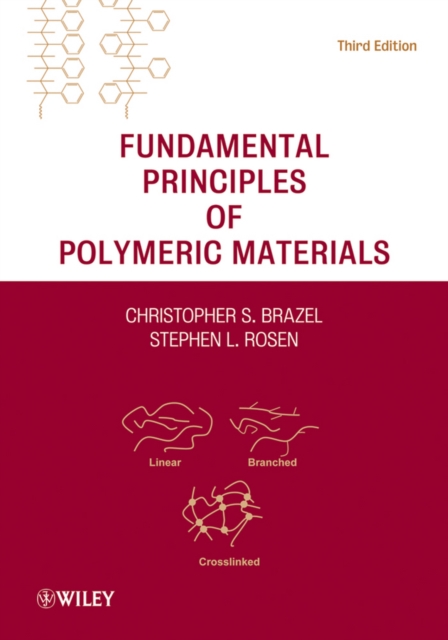
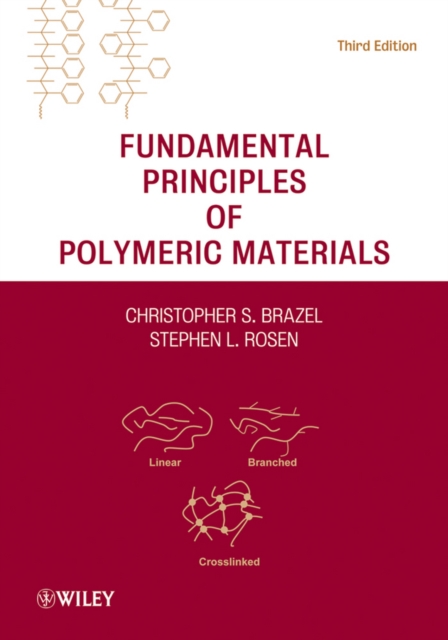
Underscoring the multidisciplinary nature of polymer science, this third edition provides a broad-based and comprehensive text at an introductory, reader-friendly level.
Written by a chemical physicist specializing in macromolecular physics, this book brings to life the definitive work of celebrated scientists who combined multidisciplinary perspectives to pioneer the field of polymer science.
The Handbook of Fiber Chemistry, Third Edition provides complete coverage of scientific and technological principles for all major natural and synthetic fibers.
Reflecting the exceptional growth in the use of nanostructured materials for an increasing range of industrial applications, Polymer Nanocomposites Handbook comprehensively covers the synthesis of nanomaterials that act as the building blocks of polymer nanocomposites and polymers that act as matrix materials.
The CRC Handbook of Enthalpy Data of Polymer-Solvent Systems presents data that is as essential to the production, process design, and use of polymers as it is to understanding the physical behavior and intermolecular interactions in polymer solutions and in developing thermodynamic polymer models.
A reliable source for scientific and commercial information on over 1,000 polymers, this revised and updated edition features 25 percent new material, including 50 entirely new entries that reflect advances in such areas as conducting polymers, hydrogels, nano-polymers, and biomaterials.
Polymers are among the major hallmarks of 20th-century science, and the explosive outgrowth and tremendous importance of polymeric foams is a testament to their amazing versatility and unique properties.
From weather-proof tires and artificial hearts to the o-rings and valve seals that enable successful space exploration, rubber is an indispensable component of modern civilization.
This book highlights the functions and models of biological surfaces with unique wettability and elucidates the methods to realize bioinspired surfaces.
Natural Fiber Textile Composite Engineering sheds light on the area of the natural fiber textile composites with new research on their applications, the material used, the methods of preparation, the different types of polymers, the selection of raw materials, the elements of design the natural fiber textile polymer composites for a particular end use, their manufacturing techniques, and finally their life cycle assessments (LCA).
This new work, Functional Polymeric Composites: Macro to Nanoscales, focuses on new challenges, findings, opportunities, and applications in the area of polymer composites.
In the last 10 years there have been major advances in fundamental understanding and applications and a vast portfolio of new polymer structures with unique and tailored properties was developed.
Elastomer-Based Composite Materials: Mechanical, Dynamic, and Microwave Properties and Engineering Applications is focused on elastomer-based composite materials comprising different types of reinforcing fillers.
This book presents the chemical properties of lignocellulosic fibers, knowledge of which is essential for innovation and sustainable development of their transformation.
Biopolymers represent a carbon emission solution: they are green and eco-friendly with a variety of uses in biomedical engineering, the automotive industry, the packaging and paper industries, and for the development of new building materials.
Dendrimers, which are hyperbranched synthetic macromolecules, have attracted researchers' increasing interest over the last three decades owing to their numerous properties, in particular, in the fields of biology and nanomedicine.
D_TEX presents itself as a starting point at a crossroads of ideas and debates around the complex universe of Textile Design in all its forms, manifestations and dimensions.
This reference and text provides an in-depth description of developments in control techniques and their application to polymerization reactors and offers important introductory background information on polymerization reaction engineering.
Continuing the outstanding coverage from Part A, the authoritative information inFundamentals and Preparation, Part B rounds out the first comprehensive treatise onchemical processing of textiles.