A practical handbook rather than merely a chemistry reference, Szycher's Handbook of Polyurethanes, Second Edition offers an easy-to-follow compilation of crucial new information on polyurethane technology, which is irreplaceable in a wide range of applications.
Biopolymers in Sustainable Corrosion Inhibition covers the fundamentals, properties, and applications of biopolymers and considers their superiorities over traditional alternatives.
Biopolymers in Sustainable Corrosion Inhibition covers the fundamentals, properties, and applications of biopolymers and considers their superiorities over traditional alternatives.
Biopolymer and Biopolymer Blends: Fundamentals, Processes, and Emerging Applications showcases the potential of biopolymers as alternative sources to conventional nonbiodegradable petroleum-based polymers.
Biopolymer and Biopolymer Blends: Fundamentals, Processes, and Emerging Applications showcases the potential of biopolymers as alternative sources to conventional nonbiodegradable petroleum-based polymers.
We rely upon plastics for a great many functions in everyday life, from the cases of consumer electronics to disposable cutlery, plastics are versatile and convenient.
Polysaccharides offer unique and valuable functional properties, persisting in technological importance and poised to grow more critical due to sustainability demands and emerging applications in medical and life sciences.
We rely upon plastics for a great many functions in everyday life, from the cases of consumer electronics to disposable cutlery, plastics are versatile and convenient.
The book covers conjugation of biopolymers with synthetic polymers, nanoparticles, metals, phytochemicals, food additives and biopolymers, such as polynucleotides, polypeptides and polysaccharides.
Polysaccharides offer unique and valuable functional properties, persisting in technological importance and poised to grow more critical due to sustainability demands and emerging applications in medical and life sciences.
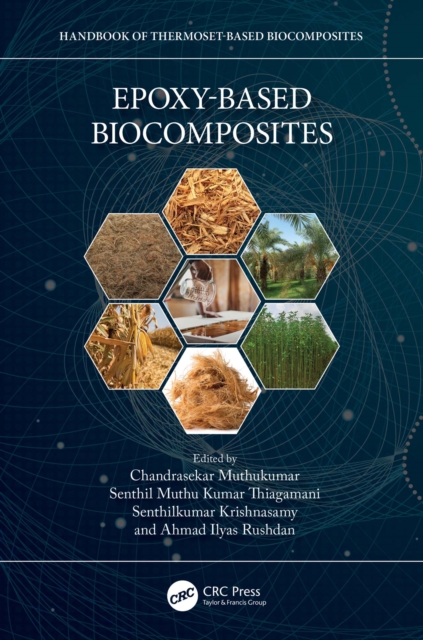
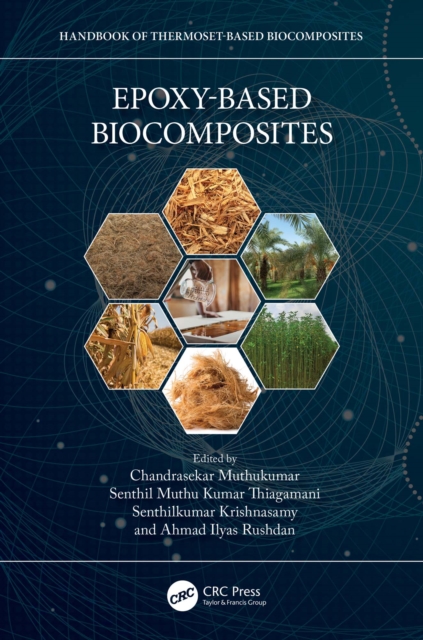
Epoxy-Based Biocomposites highlights the influence of fibre type, nanofillers, and ageing conditions on the performance of epoxy-based biocomposites subjected to various loading conditions.
El libro «Fundamentos de interacciones intermoleculares de proteínas de interés industrial» es una herramienta para el aprendizaje en la fundamentación de interacciones intermoleculares y la capacidad de las proteínas para formar sistemas dispersos (emulsiones, espumas y geles) al estar en presencia de otras moléculas como el agua, los lípidos y los carbohidratos.
Epoxy-Based Biocomposites highlights the influence of fibre type, nanofillers, and ageing conditions on the performance of epoxy-based biocomposites subjected to various loading conditions.
Moving through the historical evolution of traditional amorphous 1D organic polymers to crystalline 3D networks, through 0D molecular cages and 2D frameworks, this book takes the reader on a journey on how covalently bonded materials and their hybrids can change the material world through applications relevant to energy, water and the environment.
Green materials derived from renewable resources are increasingly being advocated for sustainable development due to rising environmental consciousness, waste management difficulties, depleting fossil resources, and rising oil prices to name a few.
Green materials derived from renewable resources are increasingly being advocated for sustainable development due to rising environmental consciousness, waste management difficulties, depleting fossil resources, and rising oil prices to name a few.
Moving through the historical evolution of traditional amorphous 1D organic polymers to crystalline 3D networks, through 0D molecular cages and 2D frameworks, this book takes the reader on a journey on how covalently bonded materials and their hybrids can change the material world through applications relevant to energy, water and the environment.
Taking an interdisciplinary approach, this new book considers state-of-the-art developments and research in polymer science, such as advanced polymers, composites and nanocomposites, and the role of polymers in the progress of green chemistry and medicine.
Taking an interdisciplinary approach, this new book considers state-of-the-art developments and research in polymer science, such as advanced polymers, composites and nanocomposites, and the role of polymers in the progress of green chemistry and medicine.
This revised and expanded single-source reference analyzes all compounding material classes of dry rubber compounds, such as carbon blacks, platicizers and age resisters, integrating detailed information on how elastomers are built up.
The perfect companion to the highly acclaimed Volume 1 of Wood Adhesives,Volume 2 presents stimulating discussions on technically and economically importantadhesives for wood bonding-covering their preparation and formulation, as well astechniques and suggestions for their application.
There has been increasing research into designing transition metal-containing dendrimers as innovative materials, especially in the field of biomedicine and pharmaceutical science.
There has been increasing research into designing transition metal-containing dendrimers as innovative materials, especially in the field of biomedicine and pharmaceutical science.
With the increasing demand for optimization of energy storage, maintenance of the environment, and effective production, control on nanostructures of catalysts and optimization of their organization have become key to achieving high efficiency and specificity in energy and material conversion systems.
This first comprehensive handbook on this exciting field provides readers with a clear understanding of the current state of the art, ingenious solutions and opportunities.
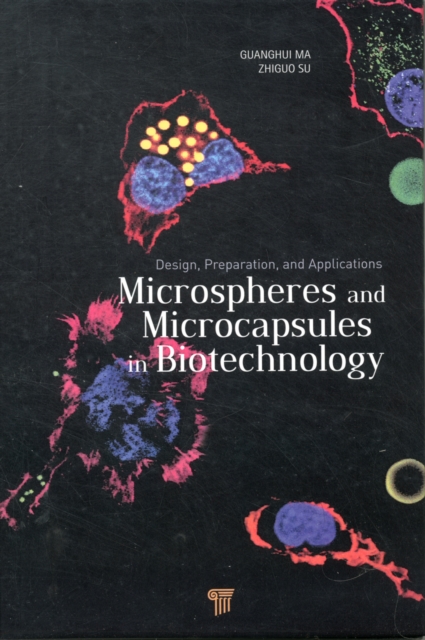
Microspheres and microcapsules have very broad applications in various fields, especially in those of biotechnology and biopharmaceuticals, as targeting drug-delivery carriers, separation media for protein, peptide, DNA, and so forth.
Conjugated microporous polymers (CMPs) with various structures and properties have been synthesized, and it is possible to design the molecular structure of the conjugated skeleton and nanopores.
Polymeric materials are used for a legion of applications in a wide array of technological areas, and their proper surface/interface characteristics are of cardinal importance for their applications.
Polymeric materials are used for a legion of applications in a wide array of technological areas, and their proper surface/interface characteristics are of cardinal importance for their applications.