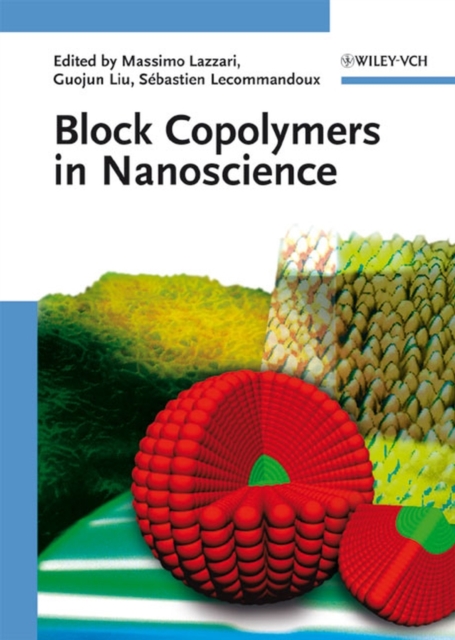
This first book to take a detailed look at one of the key focal points where nanotechnology and polymers meet provides both an introductory view for beginners as well as in-depth knowledge for specialists in the various research areas involved.
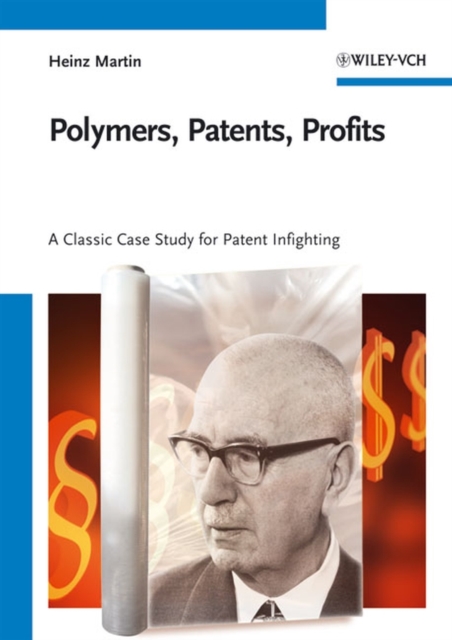
This is the fascinating, first-hand story of the groundbreaking invention by Nobel prizewinner Karl Ziegler and the patent fights between his research team at the Max Planck Institute of Carbon Research in Germany and the "e;giants"e; of the petrochemicals industry, such as Du Pont and Esso.
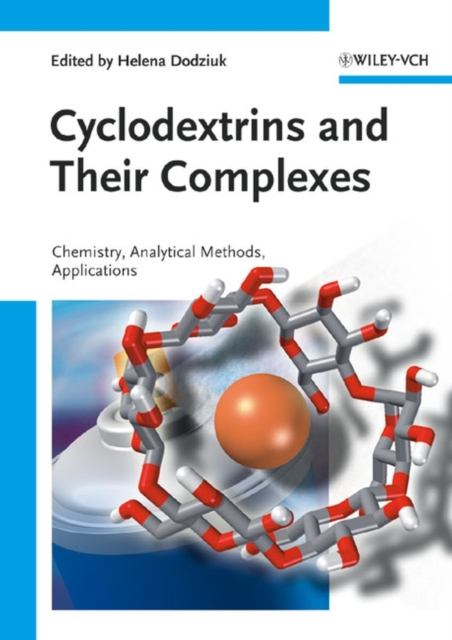
Offering comprehensive and up-to-date know-how in one compact book, an experienced editor and top authors cover every aspect of these important molecules from molecular recognition to cyclodextrins as enzyme models.
At the start of the 1950s, Ziegler and Natta discovered that simple metallorganic catalysts are capable of transforming olefins into linear polymers with highly ordered structures.
This laboratory guide for successful electrophoretic separations is divided into two parts to provide readers with a thorough presentation of the fundamentals followed by a detailed description of the most common methods currently in use.
Explains the correlation between the physical properties and structure of polymer gels This book elucidates in detail the physics of polymer gels and reviews their unique properties that make them attractive for innumerable applications.
Explains the correlation between the physical properties and structure of polymer gels This book elucidates in detail the physics of polymer gels and reviews their unique properties that make them attractive for innumerable applications.
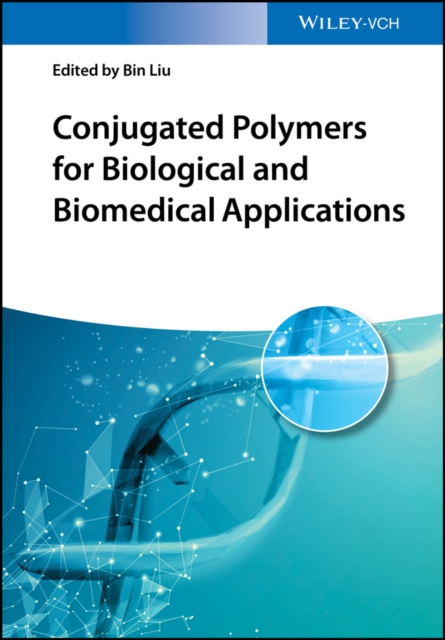
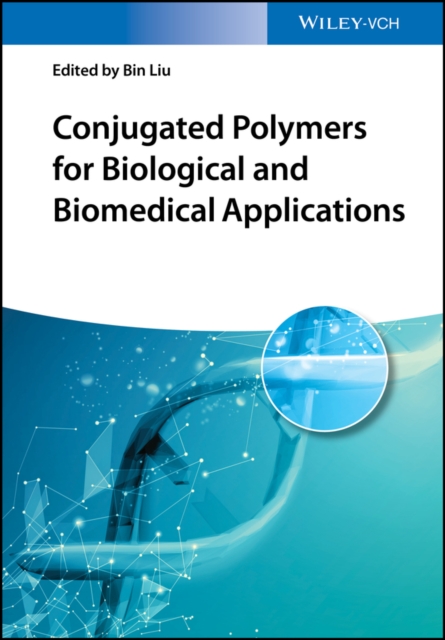
This first book to specifically focus on applications of conjugated polymers in the fields of biology and biomedicine covers materials science, physical principles, and nanotechnology.
This first book to specifically focus on applications of conjugated polymers in the fields of biology and biomedicine covers materials science, physical principles, and nanotechnology.
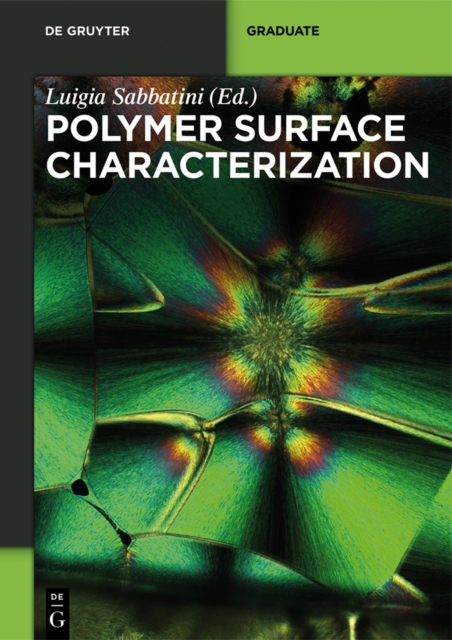
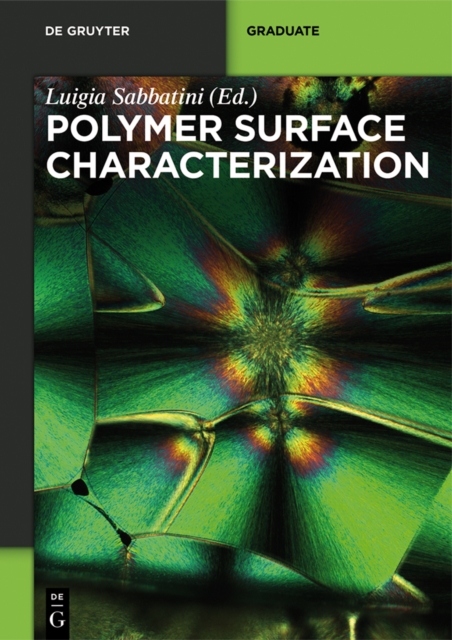
Polymer Surface Characterization provides a comprehensive approach to the surface analysis of polymers of technological interest by means of modern analytical techniques.
Polymer Surface Characterization provides a comprehensive approach to the surface analysis of polymers of technological interest by means of modern analytical techniques.
This book provides a concise and comprehensive introduction of polymer membranes' preparation, functionalization and applications in biotechniques including affinity membrane chromatography, membrane-based biosensor and membrane-based bioreactor.
This book can serve as an introduction to students interested in learning the techniques used in developing mathematical models of physical phenomenon in polymers; or it can furnish the background information to the experienced professional desiring to broaden his/her knowledge of polymers.
A valuable primer to help students and workers understand concepts and relationships which are developed more fully in other specialist texts on polymer molecular physics, Introduction to Molecular Motion in Polymers explains how molecular movement is determined by chemical structure, then how the motion controls the physical and technological properties of polymer materials.
Catalysis has always been part of the development of mankind; from the fermentation of alcoholic drinks, through the development of fertilisers in the agricultural revolution and production of bulk chemicals in the 20th Century.
Chemically-modified carbon nanotubes (CNTs) exhibit a wide range of physical and chemical properties which makes them an attractive starting material for the preparation of super-strong and highly-conductive fibres and films.
Functional organic and organometallic polymers and materials have gained much attention as versatile materials for energy interconversions and optoelectronic/photonic applications, including electrical energy generation in photovoltaic cells and light generation in organic light-emitting diodes, as they offer a low cost, light weight and simple option for device fabrication.
This book details polysaccharides and other important biomacromolecules covering their source, production, structures, properties, and current and potential application in the fields of biotechnology and medicine.
Thiol-X chemistries are already well established techniques, but it is only recently that they have been exploited for the functionalization and synthesis of polymers and other materials.
Interest in the application of nanotechnology to medicine has surged in recent years and could transform the way we diagnose, treat and prevent diseases such as cancer.
Controlled/living radical polymerization (CRP) has revolutionized and revitalized the field of synthetic polymer chemistry over the last twenty years as it is now possible to prepare a wide variety of previously inaccessible macromolecules under relatively mild conditions.
Polymers are used in many everyday technologies and their degradation due to environmental exposure has lead to great interest in materials which can heal and repair themselves.
Polymer nanocomposites revolutionized research in the composites area by achieving the nanoscale dispersion of the inorganic filler (clay platelets) in the polymer matrices after suitable surface modifications of the filler phase.
Rheology is primarily concerned with materials: scientific, engineering and everyday products whose mechanical behaviour cannot be described using classical theories.
The use of conducting molecular materials is a rapidly developing, multidisciplinary field of research, offering a wide variety of possibilities for the future.
The Chemistry of Polymers, Third edition, is a well established and highly readable introductory text book on polymer science, ideal for chemists requiring a broad introduction to the subject.
"e;The Chemistry of Polymers is a concise, easy-to-read, inexpensive introduction to the subject and fulfils the need for a polymer text written from an applied angle.
As environmental performance becomes increasingly important, the development of man-made polymers and their associated benefits has been overshadowed by problems relating to their ultimate disposal.
Research into plant biopolymers, their structural characteristics and related physicochemical and functional properties is of increasing significance in the modern world.
As a result of their unique physical properties, biological membrane mimetics such as biopolymers are used in a broad range of scientific and technological applications.
As a result of their unique physical properties, biological membrane mimetics such as biopolymers are used in a broad range of scientific and technological applications.
Smart materials stimulated by chemical or by logical signals hold promise for many applications, including new sensors and actuators for medicine, environmental and process control.