Biopolymers represent a carbon emission solution: they are green and eco-friendly with a variety of uses in biomedical engineering, the automotive industry, the packaging and paper industries, and for the development of new building materials.
Conjugated polymeric materials and their nanocomposites are widely used for the creation of alternative sources of renewable energy, cell phone screens, mobile gadgets, video players and OLED-TV, as well as organic diodes, transistors, sensors, etc.
Volumes in the Proven Synthetic Methods Series address the concerns many chemists have regarding irreproducibility of synthetic protocols, lack of characterization data for new compounds, and inflated yields reported in chemical communications-trends that have recently become a serious problem.
Cellulose-Based Graft Copolymers: Structure and Chemistry discusses the synthesis, characterization, and properties of multifunctional cellulose-based graft copolymers.
Introduction to Polymer Chemistry provides undergraduate students with a much-needed, well-rounded presentation of the principles and applications of natural, synthetic, inorganic, and organic polymers.
Introduction to Polymer Chemistry provides undergraduate students with a much-needed, well-rounded presentation of the principles and applications of natural, synthetic, inorganic, and organic polymers.
Launched in 1995 as a companion to the Dictionary of Organic Compounds, the Organic Chemist's Desk Reference has been essential reading for laboratory chemists who need a succinct guide to the 'nuts and bolts' of organic chemistry - the literature, nomenclature, stereochemistry, spectroscopy, hazard information, and laboratory data.
Green Polymers and Environment Pollution Control examines the latest developments in the important and growing field of producing conventional polymers from sustainable sources.
High-Performance Polymers for Engineering-Based Composites presents a selection of investigations and innovative research in polymer chemistry and advanced materials.
Volumes in the Proven Synthetic Methods Series address the concerns many chemists have regarding irreproducibility of synthetic protocols, lack of identification and characterization data for new compounds, and inflated yields reported in chemical communications-trends that have recently become a serious problem.
With extensive detailed spectral data, it contains a variety of problems designed by renowned authors to develop proficiency in organic structure determination.
The aim of this new compendium is to provide a solid understanding of the recent developments in advanced polymeric materials from macro- to nano-length scales.
Since the 1990s the synthetic community has shown a growing interest in the development of catalytic reactions that employ entirely organic catalysts - so-called 'organocatalysts'.
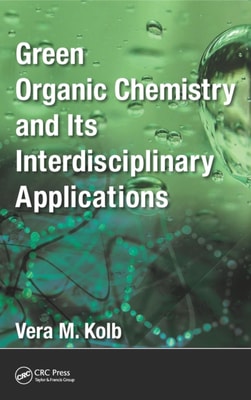
Green Organic Chemistry and Its Interdisciplinary Applications covers key developments in green chemistry and demonstrates to students that the developments were most often the result of innovative thinking.
Successful industrial heterogeneous catalysts fulfill several key require- ments: in addition to high catalytic activity for the desired reaction, with high selectivity where appropriate, they also have an acceptable commercial life and are rugged enough for transportation and charging into plant reactors.
The ftavonoid pigments, one of the most numerous and widespread groups of natural constituents, are ofimportance and interest to a wide variety ofphysical and biological scientists and work on their chemistry, occurrence, natural distribution and biological function continues unabated.
The flavonoids, one of the most numerous and widespread groups of natural constituents, are important to man not only because they contribute to plant colour but also because many members (e.
During the past few decades, much research has been reported on the formation of insoluble monomolecular films of lipids and biopolymers (synthetic polymers and proteins) on the surface of water or at the oil-water interface.
The development of chemicals to selectively control the growth of weeds has been a fascinating success story which has unfolded largely during the last four decades.