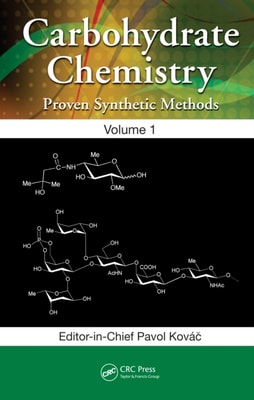
The second volume in the series Carbohydrate Chemistry: Proven Synthetic Methods, Volume 2 offers a collection of synthetic procedures valuable to the practice of synthetic carbohydrate chemistry.
Written by Stanley Manahan, Fundamentals of Sustainable Chemical Science has been carefully designed to provide a basic introduction to chemistry, including organic chemistry and biochemistry, for readers with little or no prior background in the subject.
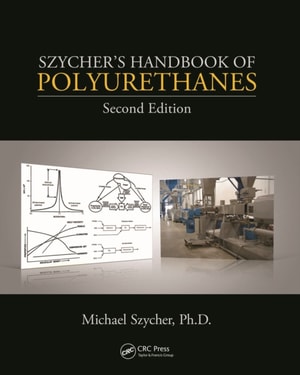
A practical handbook rather than merely a chemistry reference, Szycher's Handbook of Polyurethanes, Second Edition offers an easy-to-follow compilation of crucial new information on polyurethane technology, which is irreplaceable in a wide range of applications.
Long gone are the days when synthetic publications included parallel preparative experiments to document reproducibility of the experimental protocols and when journals required such documentation.
Polymeric and hybrid nanoparticles have received increased scientific interest in terms of basic research as well as commercial applications, promising a variety of uses for nanostructures in fields including bionanotechnology and medicine.
Since the publication of the benchmark first edition of this book, chemical library and combinatorial chemistry methods have developed into mature technologies.
With their broad range of properties, polymer blends are widely used in adhesion, colloidal stability, the design of composite and biocompatible materials, and other areas.
Presenting a chemist's perspective on the papermaking process, this volume is an extensive collection of data that combines the organic chemistry of paper with its potential applications.
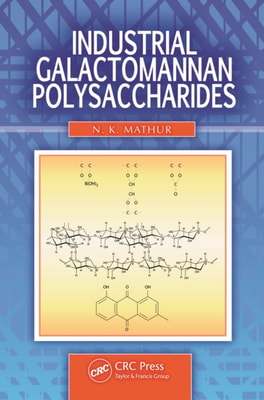
Quite possibly the first comprehensive text on galactomannans, Industrial Galactomannan Polysaccharides compiles information on their industrial uses in the form of gums including locust bean, guar, tara, fenugreek, cassia-tara, and Sesbania-bisipinasa varieties.
Ten years after the debut of the expansive CRC Handbook of Thermodynamic Data of Copolymer Solutions, The CRC Handbook of Phase Equilibria and Thermodynamic Data of Copolymer Solutions updates and expands the world's first comprehensive source of this vital data.
Examining the chemical modification of biological polymers and the emerging applications of this technology, Chemical Modification of Biological Polymers reflects the change in emphasis in this subsection of biotechnology from the study of protein structure and function toward applications in therapeutics and diagnostics.
The last decade has seen a huge interest in green organic chemistry, particularly as chemical educators look to "e;green"e; their undergraduate curricula.
Like the author's other companion books, The Chemistry Companion provides-high quality information in unique one-page-per-topic presentations that do not overburden and distract with excessive details.
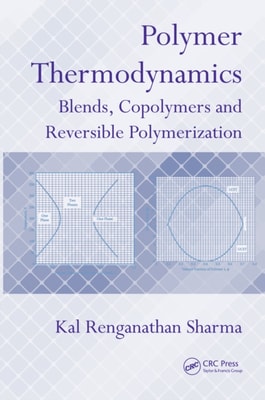
Polymer Thermodynamics: Blends, Copolymers and Reversible Polymerization describes the thermodynamic basis for miscibility as well as the mathematical models used to predict the compositional window of miscibility and construct temperature versus volume-fraction phase diagrams.
Addressing the persistent environmental threat of organic chemicals with a fresh approach to degradation and transformation processes, Organic Chemicals in the Environment: Mechanisms of Degradation and Transformation, Second Edition examines a wide range of compounds as well as abiotic and microbiological reactions mediated by microorganisms
While continuous processes have found widespread application within chemical production, members of the research and development communities have historically favored the centuries old technique of iterative batch reactions.
Stimulated by the increasing importance of chiral molecules as pharmaceuticals and the need for enantiomerically pure drugs, techniques in chiral chemistry have been expanded and refined, especially in the areas of chromatography, asymmetric synthesis, and spectroscopic methods for chiral molecule structural characterization.
Written by a seasoned teacher, speaker, and writer in the field of chemistry, this text serves to provide a guide to the chemicals that make life possible and enrich the senses, as well as those that endanger it.
Shorter reaction times, higher product yields, and enhanced selectivity are some of the advantages microwave heating has over conventional methods, causing its use to transition from a curiosity to mainstream, both in industrial and academic settings.
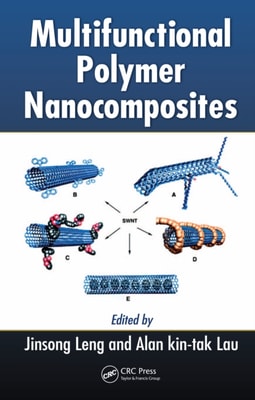
The novel properties of multifunctional polymer nanocomposites make them useful for a broad range of applications in fields as diverse as space exploration, bioengineering, car manufacturing, and organic solar cell development, just to name a few.
Over the years, researchers have reported solubility data in the chemical, pharmaceutical, engineering, and environmental literature for several thousand organic compounds.
The Algebra of Organic Synthesis combines the aims, philosophies, and efforts involved in organic synthesis, reaction optimization, and green chemistry with techniques for determining quantitatively just how "e;green"e; synthesis plans are.
Featuring the work one of the world's foremost authorities on rubber curing, this uniquely comprehensive resource provides valuable data that will allow researchers and engineers to find solutions to their own curing problems.
Admired for their extraordinary stimuli-sensitive behavior and shape-changing capabilities, shape-memory polymers (SMPs) and multifunctional composites are among the most important smart materials.
Derived from the fourth edition of the well-known Plastics Technology Handbook, Plastics Fabrication and Recycling presents the molding and fabrication processes of plastics as well as several important fe
Derived from the fourth edition of the well-known Plastics Technology Handbook, Plastics Fundamentals, Properties, and Testing covers the behavior, characterization, and evaluation of polymers.
,Derived from the fourth edition of the well-known Plastics Technology Handbook, Industrial Polymers, Specialty Polymers, and Their Applications covers a wide range of general and special types of polymers