This volume contains numerical values and a critical analysis of solubility data for ethane in pure liquids, liquid mixtures, aqueous and organic solutions, and electrolytes, at both low and high pressures.
The Best Synthetic Methods Series is aimed at practising organic chemists who require up-to-date details of working methods for the synthesis of organic compounds.
Organic Photochemistry outlines the principles, techniques and well-known reactions occurring in organic molecules and also illustrates more complex photochemical transformations occurring in organic chemistry.
This book presents the abstracts of the 19th International Congress of Heterocyclic Chemistry (19th ICHC) held in Fort Collins, Colorado, 10-15th August 2003 and provides the reader with a topical comprehensive reference source covering the latest developments in the heterocycles area.
Best Synthetic Methods: Organophosphorus (V) Chemistry provides systematic coverage of the most common classes of pentavalent organophosphorus compounds and reagents (including phosphonyl, phosphoryl, and organophosphates), and allows researchers an easy point of entry into this complex and economically important field.
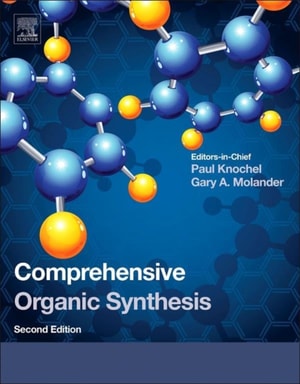
The second edition of Comprehensive Organic Synthesis-winner of the 2015 PROSE Award for Multivolume Reference/Science from the Association of American Publishers-builds upon the highly respected first edition in drawing together the new common themes that underlie the many disparate areas of organic chemistry.
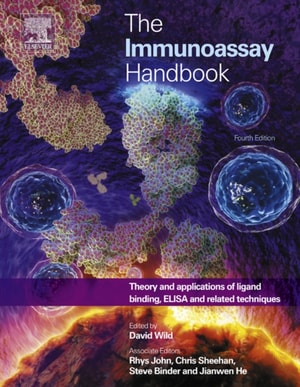
The fourth edition of The Immunoassay Handbook provides an excellent, thoroughly updated guide to the science, technology and applications of ELISA and other immunoassays, including a wealth of practical advice.
"e;Progress in Heterocyclic Chemistry"e; (PHC) an ongoing reference work on heterocyclic chemistry is published with the active involvement of The International Society of Heterocyclic Chemistry (ISHC) whose aim is to promote heterocyclic chemistry, in particular by serving as the primary sponsoring agency for the ISHC-Congress, a large biannual meeting attracting up to a thousand participants.
Almost all branches of chemistry and material science now interface with organometallic chemistry--the study of compounds containing carbon-metal bonds.
Written by expert contributors from the academic and industrial sectors, this book presents traditional and modern approaches to polymer characterization and analysis.
This revised and updated Second Edition of Polymer Synthesis II continues in the tradition of Volume I in presenting detailed laboratory instructions for the preparation of various polymers.
In the case of students, this laboratory preparations manual can be used to find additional experiments to illustrate concepts in synthesis and to augment existing laboratory texts.
Written for both the experienced practitioner and the newcomer, this book provides essential guidance to the practical aspects of free radical chain reactions.
The chapters in this volume have been written by some of the foremost practictioners in the field and should be of interest to both mechanistic and synthetic chemists.
The Porphyrin Handbook, Volume 15: Phthalocyanines: Synthesis provides information pertinent to every aspect of the chemistry, synthesis, spectroscopy, and structure of phthalocyanines.
This book provides the "e;nuts and bolts"e; background for a successful study of carbohydrates - the essential molecules that not only give you energy, but are an integral part of many biological processes.
The development of oriented organic monomolecular layers by the Langmuir-Blodgett (LB) and self-assembly (SA) techniques has led researchers toward their goal of assembling individual molecules into highly ordered architectures.
This volume provides organic chemists with a convenient, up-to-date reference source on reliable preparative procedures for the most common functional groups.
Volume II describes 17 additional functional groups and presents a critical review of their available methods of synthesis with preparative examples of each.
Organic Chemistry, Second Edition, Volume I: Organic Functional Group Preparations provides a convenient and useful source of reliable preparative procedures for the most common functional groups.
Protein Liquid Chromatography is a handbook-style guide to liquid chromatography as a tool for isolating and purifying proteins, consisting of 25 individual chapters divided into three parts: Part A covers commonly-used, classic modes of chromatography such as ion-exchange, size-exclusion, and reversed-phase; Part B deals with various target protein classes such as membrane proteins, recombinant proteins, and glycoproteins; and Part C looks at various miscellaneous related topics, including coupling reaction, buffer solution additives, and software.
Almost all branches of chemistry and material science now interface with organometallic chemistry--the study of compounds containing carbon-metal bonds.
Annual Reports in Medicinal Chemistry provides timely and critical reviews of important topics in medicinal chemistry together with an emphasis on emerging topics in the biological sciences, which are expected to provide the basis for entirely new future therapies.
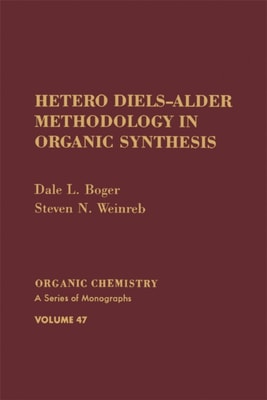
Organic Chemistry: A Series of Monographs, Volume 47: Hetero Diels-Alder Methodology in Organic Synthesis focuses on the use of hetero Diels-Alder reactions as pivotal steps in natural product total syntheses.
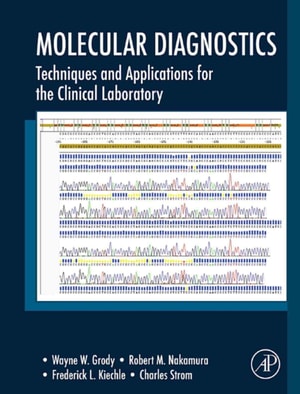
Advances in genomic and proteomic profiling of disease have transformed the field of molecular diagnostics, thus leading the way for a major revolution in clinical practice.
Phosphorous-31 NMR: Principles and Applications focuses on the evolution of phosphorus-31 nuclear magnetic resonance (NMR) as a widely applied spectroscopic probe of the structure and dynamics of phosphorus-containing compounds.
Industrialists developing new food and pharmaceutical products face the challenge of innovation in an increasingly competitive market that must consider incredient cost, product added-value, expectations of a healthy life-style, improved sensory impact, controlled delivery of active compounds and last, but not lease, product stability.
Organometallic compounds are utilized as reagents in the preparation and processing of advanced nanostructured materials, as catalysts in the production of a wide variety of specialty chemicals and polymers, and as drugs.