This book introduces readers to industrially important enzymes and discusses in detail their structures and functions, as well as their manifold applications.
This book provides a comprehensive overview of the chemistry of CO2 in relation to surface interactions and photocatalytic transformation by UV radiation.
This book is devoted to CO2 capture and utilization (CCU) from a green, biotechnological and economic perspective, and presents the potential of, and the bottlenecks and breakthroughs in converting a stable molecule such as CO2 into specialty chemicals and materials or energy-rich compounds.
This book offers comprehensive information on the main techniques for measuring water-oxidation-catalyst (WOC) performance, with a particular focus on the combined use of sacrificial oxidants and dyes within closed-batch reactors.
This book serves the environmentalists to track the development of photocatalytic materials and technology in the present context and to explore future trends.
This book provides a comprehensive overview of the field of plasma catalysis, regarded as a promising alternative to thermal processes for energy and environmental applications.
In chemical processes, the progressive deactivation of solid catalysts is a major economic concern and mastering their stability has become as essential as controlling their activity and selectivity.
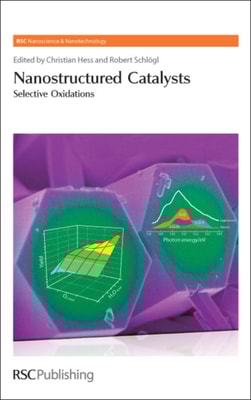
Catalysis has always been part of the development of mankind; from the fermentation of alcoholic drinks, through the development of fertilisers in the agricultural revolution and production of bulk chemicals in the 20th Century.
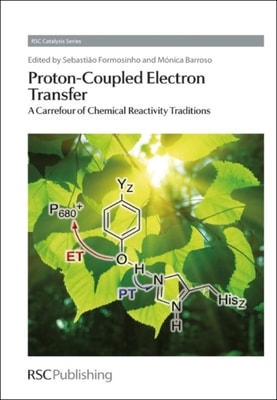
Proton-coupled electron transfer (PCET) is emerging as an important new class of reactions and, over the past decade, great strides have been made in our understanding of them.
P-stereogenic ligands were among the first to be used in asymmetric catalysis but synthetic difficulties and prejudices have hampered their development.
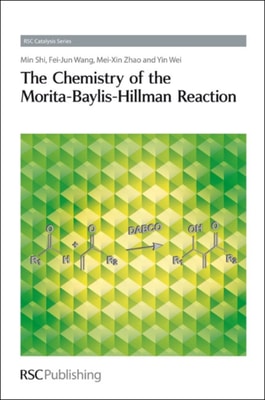
Carbon-carbon bond formations and functional group transformations are the most fundamental reactions for the construction of molecular frameworks and are at the forefront of organic chemistry research.
Cross-coupling reactions involving C-H and C-X bond functionalisation are commonplace in natural product synthesis and natural products, therapeutic agents, biological probes, and advanced materials.
Although ionic liquids have only been studied in depth during the last decades, the field is now maturing to such a degree that the focus is on larger scale applications for use in real processes such as catalysis.
This book, unique in its field, is a comprehensive description of all the methodologies reported for carrying out conjugate addition reactions in a stereoselective way, using small chiral organic molecules as catalysts (organocatalysts).
Over the last fifteen years, N-heterocyclic carbenes (NHCs) have mostly been used as ancillary ligands for the preparation of transition metal-based catalysts.
With contributions from experts in supported metal catalysis from both the industry and academia, this book presents the latest developments in characterization and application of supported metals in heterogeneous catalysis.
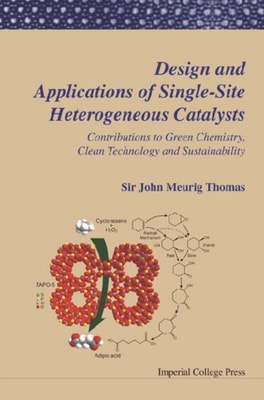
For far too long chemists and industrialists have relied on the use of aggressive reagents such as nitric and sulphuric acids, permanganates and dichromates to prepare the massive quantities of both bulk and fine chemicals that are needed for the maintenance of civilised life - materials such as fuels, fabrics, foodstuffs, fertilisers and pharmaceuticals.
The book gives a comprehensive up-to-date summary of the existing information on the structural/electronic properties, chemistry and catalytic properties of vanadium and molybdenum containing catalysts.
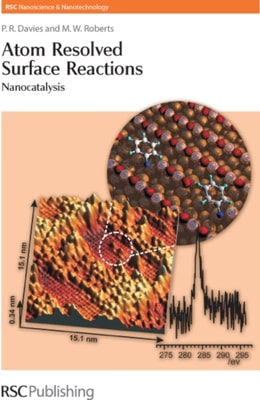
This book offers a unique perspective of the impact of scanning probe microscopes on our understanding of the chemistry of the surface at the nanoscale.
Sulfur compounds contaminate many industrially important feedstocks and, on release to the atmosphere as sulfur oxides, can cause widespread damage to the ecosystem.
The need to improve both the efficiency and environmental acceptability of industrial processes is driving the development of heterogeneous catalysts across the chemical industry, including commodity, specialty and fine chemicals and in pharmaceuticals and agrochemicals.
Waste minimisation has a number of aims which include enhancing the intrinsic selectivity of any given process, providing a means of recovering reagents in a form which allows easy regeneration and the replacement of stoichiometric processes with catalytic ones.
Although catalysts are responsible for the manufacture and processing of a number of products in daily use, the subject of catalysis is still very much in its infancy, and the complexity of the processes still present major challenges.
In a classical kinetic resolution, two enantiomers of a racemate are transformed into chiral products at different rates with a maximum theoretical yield of 50%.
In a classical kinetic resolution, two enantiomers of a racemate are transformed into chiral products at different rates with a maximum theoretical yield of 50%.