Exploring and highlighting the new horizons in the studies of reaction mechanisms that open joint application of experimental studies and theoretical calculations is the goal of this book.
Exploring and highlighting the new horizons in the studies of reaction mechanisms that open joint application of experimental studies and theoretical calculations is the goal of this book.
This unique handbook fills the gap in the market for an up-to-date work that links both homogeneous catalysis applied to organic reactions and catalytic reactions on surfaces of heterogeneous catalysts.
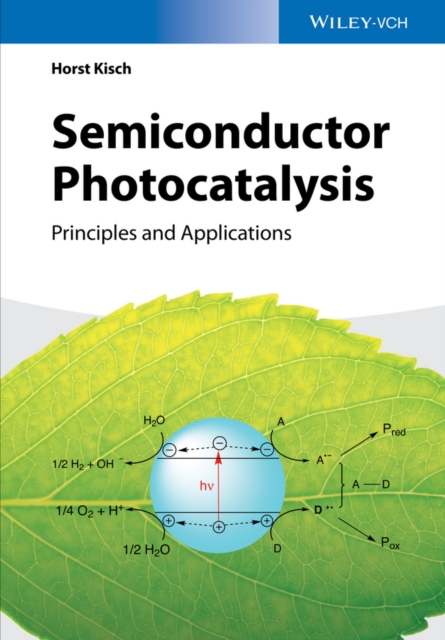
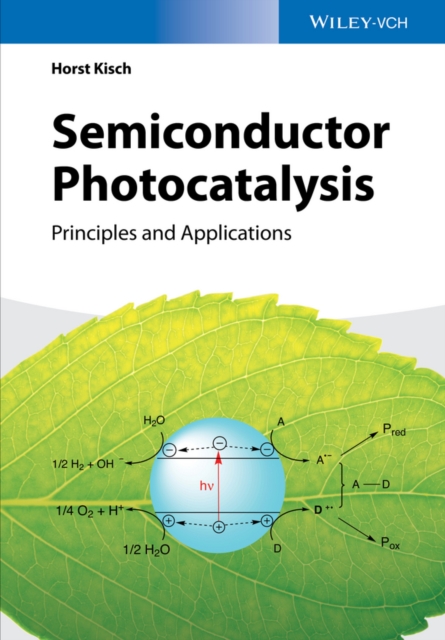
Focusing on the basic principles of semiconductor photocatalysis, this book also gives a brief introduction to photochemistry, photoelectrochemistry, and homogeneous photocatalysis.
Highlighting the key aspects and latest advances in the rapidly developing field of molecular catalysis, this book covers new strategies to investigate reaction mechanisms, the enhancement of the catalysts' selectivity and efficiency, as well as the rational design of well-defined molecular catalysts.
Highlighting the key aspects and latest advances in the rapidly developing field of molecular catalysis, this book covers new strategies to investigate reaction mechanisms, the enhancement of the catalysts' selectivity and efficiency, as well as the rational design of well-defined molecular catalysts.
This "e;hands-on"e; approach to the topic of arylation consolidates the body of key research over the last ten years (and up to around 2014) on various catalytic methods which involve an arylation process.
This "e;hands-on"e; approach to the topic of arylation consolidates the body of key research over the last ten years (and up to around 2014) on various catalytic methods which involve an arylation process.
Focusing on the basic principles of semiconductor photocatalysis, this book also gives a brief introduction to photochemistry, photoelectrochemistry, and homogeneous photocatalysis.
This book reflects the increasing interest among the chemical synthetic community in the area of asymmetric copper-catalyzed reactions, and introduces readers to the latest, most significant developments in the field.
This book reflects the increasing interest among the chemical synthetic community in the area of asymmetric copper-catalyzed reactions, and introduces readers to the latest, most significant developments in the field.
Water is abundant in nature, non-toxic, non-flammable and renewable and could therefore be safer and economical for the chemical industry wherever it is used as a solvent.
Water is abundant in nature, non-toxic, non-flammable and renewable and could therefore be safer and economical for the chemical industry wherever it is used as a solvent.
For the second edition of 'Microreactors in Organic Chemistry and Catalysis' all chapters have been revised and updated to reflect the latest developments in this rapidly developing field.
For the second edition of 'Microreactors in Organic Chemistry and Catalysis' all chapters have been revised and updated to reflect the latest developments in this rapidly developing field.
This book provides an overview of bioinspired metal-sulfur catalysis by covering structures, activities and model complexes of enzymes exhibiting metal sulphur moieties in their active center.
This book provides an overview of bioinspired metal-sulfur catalysis by covering structures, activities and model complexes of enzymes exhibiting metal sulphur moieties in their active center.
C-H, C-O, C-C, and C-Heteroatom bond forming processes by using metal-ligand approaches for the synthesis of organic compounds of biological, pharmacological and organic nanotechnological utility are the key areas addressed in this book.
C-H, C-O, C-C, and C-Heteroatom bond forming processes by using metal-ligand approaches for the synthesis of organic compounds of biological, pharmacological and organic nanotechnological utility are the key areas addressed in this book.
This handbook and ready reference brings together all significant issues of practical importance in selected topics discussing recent significant achievements for interested readers in one single volume.
This handbook and ready reference brings together all significant issues of practical importance in selected topics discussing recent significant achievements for interested readers in one single volume.
The Nobel Prize in Chemistry 2007 awarded to Gerhard Ertl for his groundbreaking studies in surface chemistry highlighted the importance of heterogeneous catalysis not only for modern chemical industry but also for environmental protection.
The Nobel Prize in Chemistry 2007 awarded to Gerhard Ertl for his groundbreaking studies in surface chemistry highlighted the importance of heterogeneous catalysis not only for modern chemical industry but also for environmental protection.
This first book to illuminate this important aspect of chemical synthesis improves the lifetime of catalysts, thus reducing material and saving energy, costs and waste.
This first book to illuminate this important aspect of chemical synthesis improves the lifetime of catalysts, thus reducing material and saving energy, costs and waste.
Filling a gap in the catalysis and nano literature, this monograph is unique in focusing on both nanostructured heterogeneous and homogeneous catalysis.
Filling a gap in the catalysis and nano literature, this monograph is unique in focusing on both nanostructured heterogeneous and homogeneous catalysis.
Written for chemists in industry and academia, this ready reference and handbook summarizes recent progress in the development of new catalysts that do not require precious metals.
Written for chemists in industry and academia, this ready reference and handbook summarizes recent progress in the development of new catalysts that do not require precious metals.
This first book to offer a practical overview of zeolites and their commercial applications provides a practical examination of zeolites in three capacities.
This comprehensive review of cinchona-based chiralilty inducers and their applications covers every topic, including ligands, immobilization and organocatalysis.
Filling a gap in the current literature, this comprehensive reference presents all important catalyst classes, including metal oxides, polyoxometalates, and zeolites.
The first comprehensive coverage of this unique and interdisciplinary field provides a complete overview, covering such topics as chemoenzymatic synthesis, microbial production of DNA building blocks, asymmetric transformations by coupled enzymes and much more.