This book provides an introduction to the use of algebraic methods and sym- bolic computation for simple quantum systems with applications to large order perturbation theory.
Based on the international workshop GPCRs: From Deorphanisation to Lead Structure Identification, held in Berlin in May 2006, the book highlights the following topics: Structure of GPCRs, Design of GPCR Ligands, GPCR Signalling, Deorphanization and Assay Development.
Shape detection techniques are an important aspect of computer vision and are used to transform raw image data into the symbolic representations needed for object recognition and location.
This contributed volume focuses on the application of machine learning and cheminformatics in predictive modeling for organic materials, polymers, solvents, and energetic materials.
This contributed volume focuses on the application of machine learning and cheminformatics in predictive modeling for organic materials, polymers, solvents, and energetic materials.
This contributed volume explores the application of machine learning in predictive modeling within the fields of materials science, nanotechnology, and cheminformatics.
This book contains peer-reviewed contributions based on talks presented at the 25th International Workshop on Quantum Systems in Chemistry, Physics, and Biology held in Torun, Poland, in June 2022.
This contributed volume explores the application of machine learning in predictive modeling within the fields of materials science, nanotechnology, and cheminformatics.
This book outlines past and new developments in molecular response theory in terms of static and dynamic-induced current densities and showcases an important step forward in the field of molecular density functions and their topological analysis.
El texto, como material academico, presenta la forma de emplear el manual de uso y la hoja de datos de un microcontrolador stm32f4 mediante un entorno de desarrollo para su programacion, de forma tal que se implemente directamente al diseno de sistemas mecatronicos.
While the relevant features and properties of nanosystems necessarily depend on nanoscopic details, their performance resides in the macroscopic world.
The advent of laser-based sources of ultrafast infrared pulses has extended the study of very fast molecular dynamics to the observation of processes manifested through their effects on the vibrations of molecules.
Employing a wide range of examples from G-protein-coupled receptors and ligand-gated ion channels, this detailed, single-source reference illustrates the principles of pharmacological analysis and receptor classification that are the basis of rational drug design.
Pioneered by the pharmaceutical industry and adapted for the purposes of materials science and engineering, the combinatorial method is now widely considered a watershed in the accelerated discovery, development, and optimization of new materials.
This text traces developments in rational drug discovery and combinatorial library design with contributions from 50 leading scientists in academia and industry who offer coverage of basic principles, design strategies, methodologies, software tools and algorithms, and applications.
Fundamental QSARs for Metal Ions describes the basic and essential applications of quantitative structure-activity relationships (QSARs) for regulatory or industrial scientists who need to predict metal ion bioactivity.
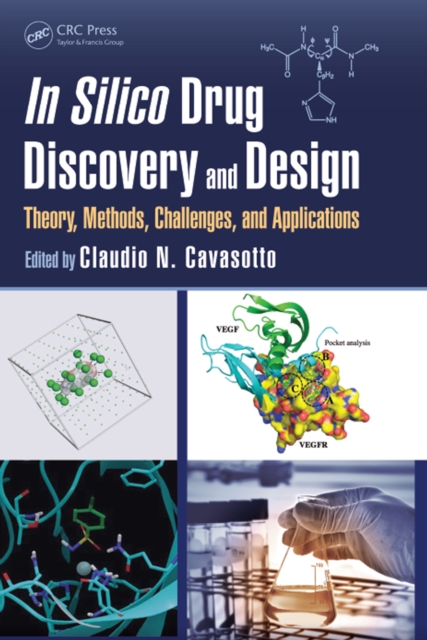
In Silico Drug Discovery and Design: Theory, Methods, Challenges, and Applications provides a comprehensive, unified, and in-depth overview of the current methodological strategies in computer-aided drug discovery and design.
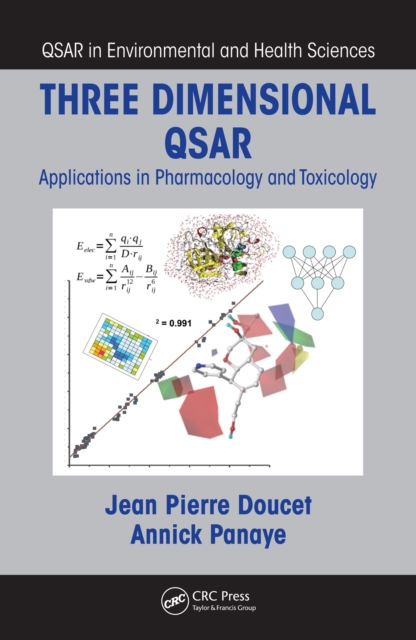
As a result of new statistical and mathematical approaches, improved visualization tools, and recognition by international regulatory groups, quantitative structure-activity relationships (QSARs) now play important roles in pharmacology for the design of new drugs as well as in toxicology and ecotoxicology for hazard identification and risk assessm
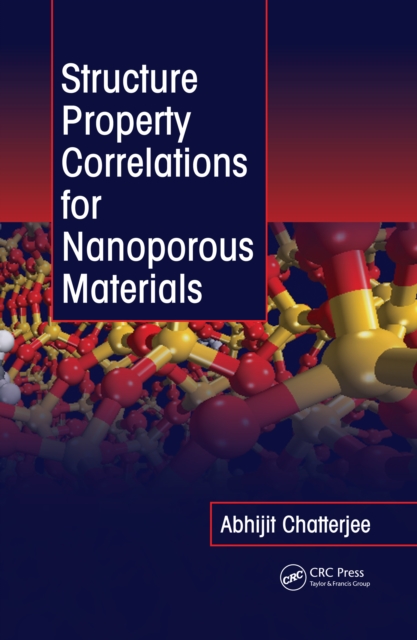
Nanoporous materials are critical to various fields of research, including ion exchange, separation, catalysis, sensor applications, biological molecular isolation, and purification.
Covering theoretical methods and computational techniques in biomolecular research, this book focuses on approaches for the treatment of macromolecules, including proteins, nucleic acids, and bilayer membranes.
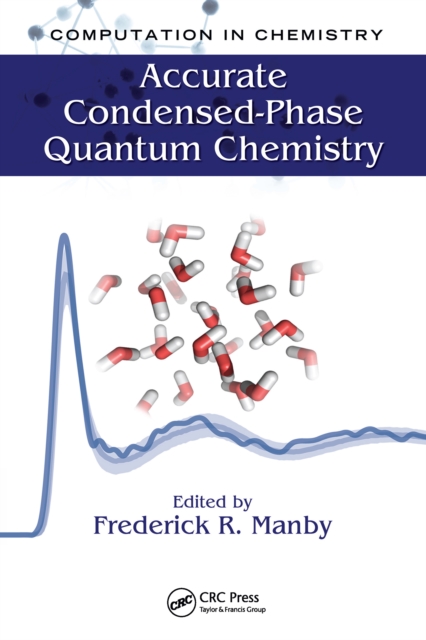
The theoretical methods of quantum chemistry have matured to the point that accurate predictions can be made and experiments can be understood for a wide range of important gas-phase phenomena.
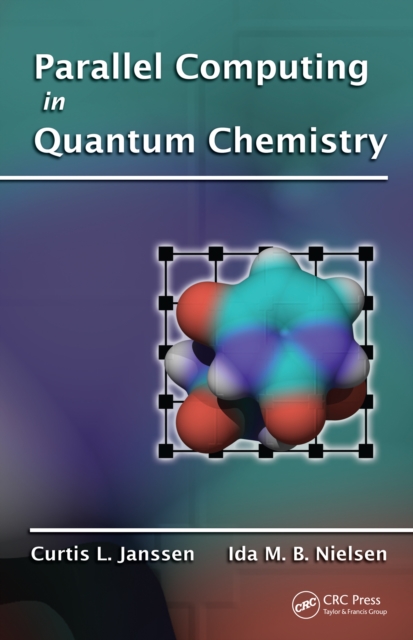
An In-Depth View of Hardware Issues, Programming Practices, and Implementation of Key MethodsExploring the challenges of parallel programming from the perspective of quantum chemists, Parallel Computing in Quantum Chemistry thoroughly covers topics relevant to designing and implementing parallel quantum chemistry programs.
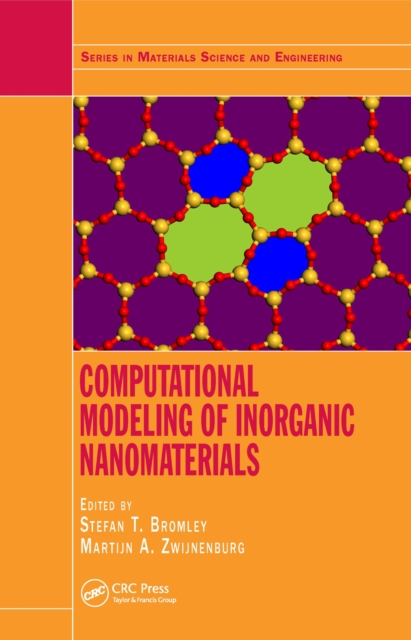
Computational Modeling of Inorganic Nanomaterials provides an accessible, unified introduction to a variety of methods for modeling inorganic materials as their dimensions approach the nanoscale.
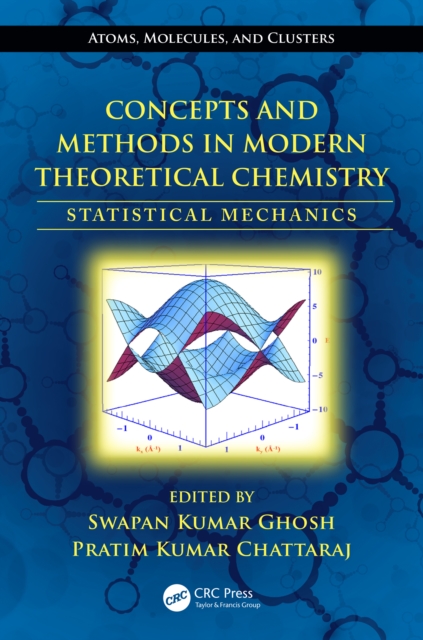
Concepts and Methods in Modern Theoretical Chemistry: Statistical Mechanics, the second book in a two-volume set, focuses on the dynamics of systems and phenomena.
This work provides a how-to approach to the fundamentals, methodologies and dynamics of computational organometallic chemistry, including classical and molecular mechanics (MM), quantum mechanics (QM), and hybrid MM/QM techniques.
Virtual screening can reduce costs and increase hit rates for lead discovery by eliminating the need for robotics, reagent acquisition or production, and compound storage facilities.
Numerical methods are the mathematical procedures that approximate the solution of complex mathematical problems into much simpler form and which find a wide variety of use while solving complex Physical Chemistry problems.
Molecular modeling is becoming an increasingly important part of chemical research and education as computers become faster and programs become easier to use.
Numerical methods are the mathematical procedures that approximate the solution of complex mathematical problems into much simpler form and which find a wide variety of use while solving complex Physical Chemistry problems.
Although molecular modeling has been around for a while, the groundbreaking advancement of massively parallel supercomputers and novel algorithms for parallelization is shaping this field into an exciting new area.
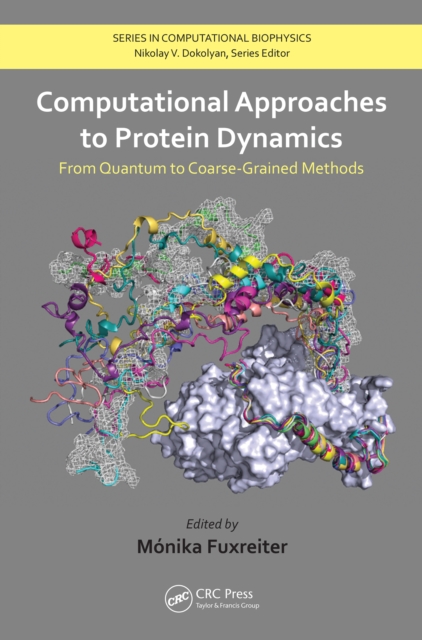
The Latest Developments on the Role of Dynamics in Protein FunctionsComputational Approaches to Protein Dynamics: From Quantum to Coarse-Grained Methods presents modern biomolecular computational techniques that address protein flexibility/dynamics at all levels of theory.