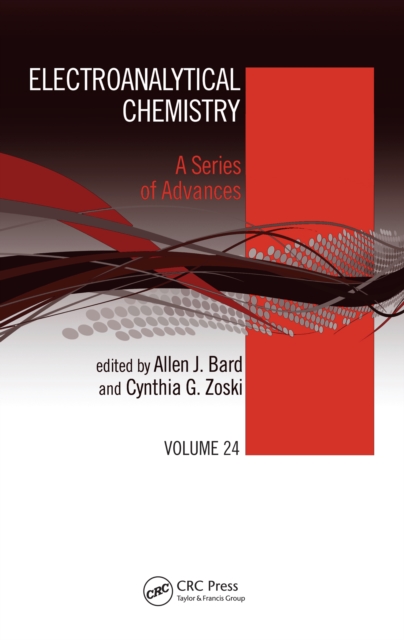
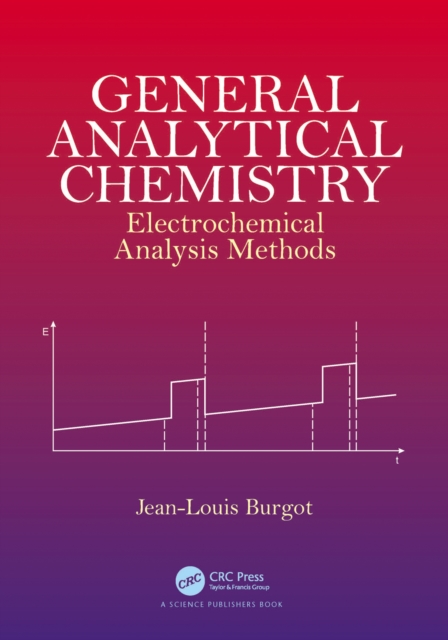
Electroanalytical chemists and others are concerned not only with the application of new and classical techniques to analytical problems, but also with the fundamental theoretical principles upon which these techniques are based.
Introduction to Solid State Ionics: Phenomenology and Applications presents a pedagogical, graduate-level treatment of the science and technology of superionic conductors, also known as fast ion conductors or solid electrolytes.
Impedance Spectroscopy is a powerful measurement method used in many application fields such as electrochemistry, material science, biology and medicine, semiconductor industry and sensors.
Chemists increasingly apply electrochemical methods to the investigation of their systems, in particular towards a better understanding of molecular properties, the exploration of chemical reactions involving electron-transfer (ET), the initiation of further reactions by ET, the kinetic measurements, and the establishment of the reaction mechanisms
Fuel Cells: Principles, Design, and Analysis considers the latest advances in fuel cell system development and deployment, and was written with engineering and science students in mind.
Providing new insights into the molecular and electronic processes involved in the conversion of sunlight into chemical products, Photoelectrochemical Solar Conversion Systems: Molecular and Electronic Aspects begins with an historical overview and a survey of recent developments in the electrochemistry of semiconductors and spectroscopic technique
From the development of polymers that make cars lighter to fuels that make them run cleaner, the chemist's role in the automotive industry has evolved to be one that is more outside the laboratory than in it.
Fields, Forces, and Flows in Biological Systems describes the fundamental driving forces for mass transport, electric current, and fluid flow as they apply to the biology and biophysics of molecules, cells, tissues, and organs.
For more than three decades the Electroanalytical Chemistry Series has delivered the most in-depth and critical research related to issues in electrochemistry.
Since the publication of the second edition of this handbook in 1993, the field of photochemical sciences has continued to expand across several disciplines including organic, inorganic, physical, analytical, and biological chemistries, and, most recently, nanosciences.
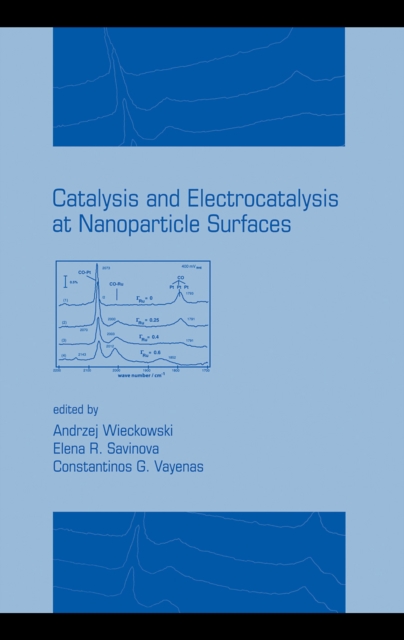
Illustrating developments in electrochemical nanotechnology, heterogeneous catalysis, surface science and theoretical modelling, this reference describes the manipulation, characterization, control, and application of nanoparticles for enhanced catalytic activity and selectivity.
The first book to present a detailed analysis of the electrochemistry, development, modeling, optimization, testing, and technology behind modern zirconia-based sensors, Electrochemistry of Zirconia Gas Sensors explores how to tailor these sensors to meet specific industrial needs.
This book reviews the fundamentals of electrochemical sensors, the preparation of electrodes, potential materials for sensing applications, and different analytical methods used for electrochemical sensing applications.
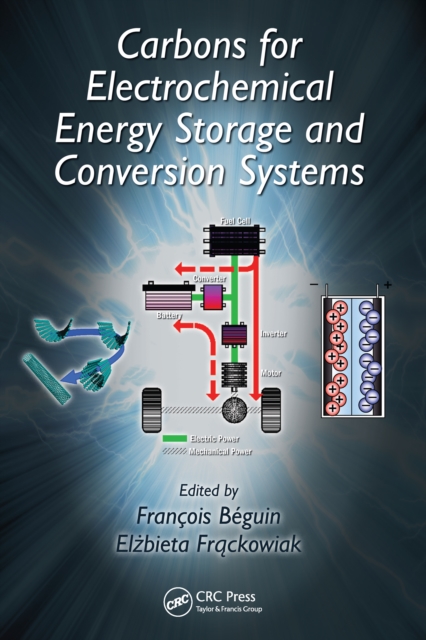
As carbons are widely used in energy storage and conversion systems, there is a rapidly growing need for an updated book that describes their physical, chemical, and electrochemical properties.
This monograph will clearly depict much of the current, leading research into the reactions and properties of organic and bioorganic materials in which electron transfer plays an important role.
This monograph will clearly depict much of the current, leading research into the reactions and properties of organic and bioorganic materials in which electron transfer plays an important role.
This book reviews the fundamentals of electrochemical sensors, the preparation of electrodes, potential materials for sensing applications, and different analytical methods used for electrochemical sensing applications.
Continuously studied since its discovery, graphene offers truly unique opportunities, because unlike most semiconductor systems, its 2D electronic states are not buried deep under the surface and it can be easily accessed directly by tunneling or by other local probes.
Impedance Spectroscopy is a powerful measurement method used in many application fields such as electrochemistry, material science, biology and medicine, semiconductor industry and sensors.
This book is part of an acclaimed continuing series designed to provide authoritative reviews on recent developments and applications of well-established techniques in the field of electroanalytical chemistry.
Lecture Notes on Impedance Spectroscopy (LNIS) is a book series covering new advances in the field of impedance spectroscopy including theory, fundamentals, and applications.
Updated to include recent results from intensive worldwide research efforts in materials science, surface science, and corrosion science, Corrosion Mechanisms in Theory and Practice, Third Edition explores the latest advances in corrosion and protection mechanisms.
This book covers the different aspects of microbial electrolysis cell (MEC) technology and its applications in wastewater treatment such as nutrient recovery and heavy metals removal.
This book covers the different aspects of microbial electrolysis cell (MEC) technology and its applications in wastewater treatment such as nutrient recovery and heavy metals removal.
This book covers the most cutting-edge developments in the field of magnetic nanoparticles and nanomagnetism, such as novel synthetic and fabrication technologies, diverse magnetic characterization techniques and highly proved and most innovative applications of magnetic nanoparticles.
Dieses Lehrbuch ist als kompakte Einführung in die Physikalische Chemie für Biowissenschaftler und -ingenieure in Bachelor-Studiengängen konzipiert worden.
The book is a concise presentation of different applications of the electrocoagulation treatment process involved in the removal of both organic and inorganic contaminants from drinking and industrial wastewater.
This book covers the most cutting-edge developments in the field of magnetic nanoparticles and nanomagnetism, such as novel synthetic and fabrication technologies, diverse magnetic characterization techniques and highly proved and most innovative applications of magnetic nanoparticles.
Written by an authority in corrosion science, this reference offers a comprehensive description of the causes of corrosion as well as the means to limit or prevent it.
With contributions from a community of experts, the book focuses on the use of ionic functions to define the principle of operation in polymer devices.
The first part of the book covers the electrolyte solution in its stationary state-electrostatic, and various ion-dipole, dipole-dipole, and mutual repulsion interactions.
With its combination of readability, love for details and rigor, "e;Fatigue and Corrosion in Metals"e; has become an authoritative reference work that has quickly established itself as the most comprehensive guide for fatigue and corrosion design available to date.
With its combination of readability, love for details and rigor, "e;Fatigue and Corrosion in Metals"e; has become an authoritative reference work that has quickly established itself as the most comprehensive guide for fatigue and corrosion design available to date.
The nanopore provides a highly electrochemically confined space within which single-molecule characteristics can be efficiently converted into measurable electrochemical signatures with high temporal and current resolution.