This widely acclaimed text, now in its fifth edition and translated into many languages, continues to present a clear, simple and concise introduction to chemical thermodynamics.
Published under the auspices of both IUPAC and its affiliated body, the International Association of Chemical Thermodynamics (IACT), this book will serve as a guide to scientists or technicians who use equations of state for fluids.
Protein folding and aggregation is the process by which newly synthesized proteins fold into the specific three-dimensional structures defining their biologically active states.
This book contains the latest information on all aspects of the most important chemical thermodynamic properties of Gibbs energy and Helmholtz energy, as related to fluids.
This book contains the latest information on all aspects of the most important chemical thermodynamic properties of Gibbs energy and Helmholtz energy, as related to fluids.
Containing the very latest information on all aspects of enthalpy and internal energy as related to fluids, this book brings all the information into one authoritative survey in this well-defined field of chemical thermodynamics.
Containing the very latest information on all aspects of enthalpy and internal energy as related to fluids, this book brings all the information into one authoritative survey in this well-defined field of chemical thermodynamics.
Written by the leading experts in the field, this book will provide a valuable, current account of the advances in the measurement and prediction of transport properties that have occurred over the last twenty years.
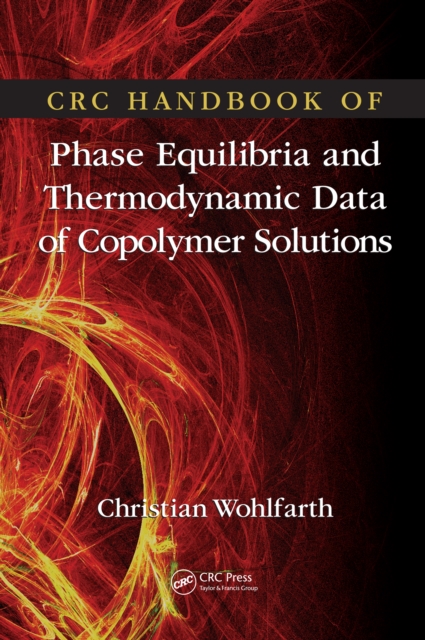
Ten years after the debut of the expansive CRC Handbook of Thermodynamic Data of Copolymer Solutions, The CRC Handbook of Phase Equilibria and Thermodynamic Data of Copolymer Solutions updates and expands the world's first comprehensive source of this vital data.
Dieses umfangreiche Chemie Buch bietet eine strukturierte Einführung in die wichtigsten Bereiche der Chemie und eignet sich sowohl für Studienanfänger als auch fortgeschrittene Lernende.
In Heat Capacity: Theory and Measurement, the incidence of the second law of thermodynamics on heat capacity is examined with respect to heat flux taking place in a thermodynamically irreversible manner, as well as with respect to irreversible heat capacity (CIR = QIR/i T).
The first part of the book covers the electrolyte solution in its stationary state-electrostatic, and various ion-dipole, dipole-dipole, and mutual repulsion interactions.
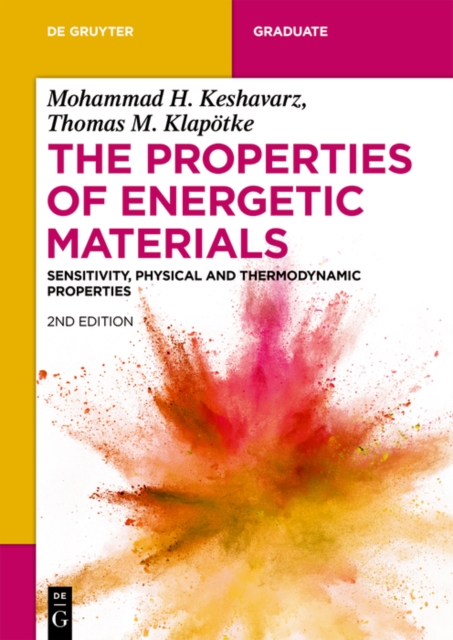
For a chemist who is concerned with the synthesis of new energetic compounds, it is essential to be able to assess physical and thermodynamic properties, as well as the sensitivity, of possible new energetic compounds before synthesis is attempted.
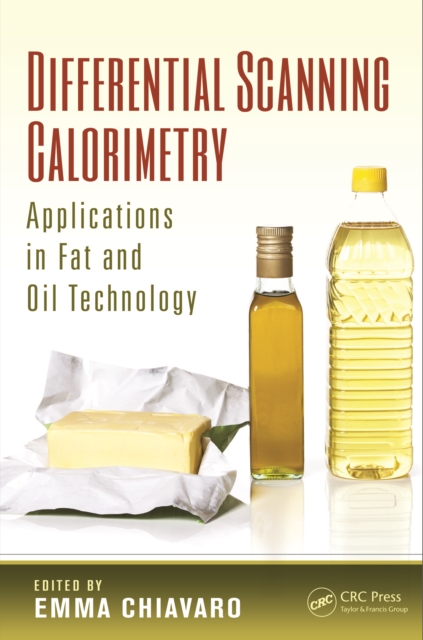
Differential Scanning Calorimetry: Applications in Fat and Oil Technology provides a complete summary of the scientific literature about differential scanning calorimetry (DSC), a well-known thermo-analytical technique that currently has a large set of applications covering several aspects of lipid technology.
A large amount of experimental data has been published since the debut of the original CRC Handbook of Thermodynamic Data of Aqueous Polymer Solutions.
Surface tension provides a thermodynamic avenue for analyzing systems in equilibrium and formulating phenomenological explanations for the behavior of constituent molecules in the surface region.
Ten years after the debut of the expansive CRC Handbook of Thermodynamic Data of Copolymer Solutions, The CRC Handbook of Phase Equilibria and Thermodynamic Data of Copolymer Solutions updates and expands the world's first comprehensive source of this vital data.
Principles of Chemical Engineering Processes: Material and Energy Balances continues to serve an essential text, guiding students on the basic principles and calculation techniques used in the field of chemical engineering and providing a solid understanding of the fundamentals of the application of material and energy balances.
Polymer Thermodynamics: Blends, Copolymers and Reversible Polymerization describes the thermodynamic basis for miscibility as well as the mathematical models used to predict the compositional window of miscibility and construct temperature versus volume-fraction phase diagrams.
The first two editions of Concise Chemical Thermodynamics proved to be a very popular introduction to a subject many undergraduate students perceive to be difficult due to the underlying mathematics.
"e;an impressive text that addresses a glaring gap in the teaching of physical chemistry, being specifically focused on biologically-relevant systems along with a practical focus.
Thermodynamic data form the basis for separation processes used in different fields of science and industry, from specialty chemicals to foods and pharmaceuticals.
Thermodynamic data of copolymer solutions are a necessity for industrial and laboratory processes and serve as essential tools for understanding the physical behavior of copolymer solutions, intermolecular interactions, and the molecular nature of mixtures.
The CRC Handbook of Enthalpy Data of Polymer-Solvent Systems presents data that is as essential to the production, process design, and use of polymers as it is to understanding the physical behavior and intermolecular interactions in polymer solutions and in developing thermodynamic polymer models.
Because classical thermodynamics evolved into many branches of science and engineering, most undergraduate courses on the subject are taught from the perspective of each area of specialization.
This book deals with complex fluid characterization of oil and gas reservoirs, emphasizing the importance of PVT parameters for practical application in reservoir simulation and management.
This book deals with complex fluid characterization of oil and gas reservoirs, emphasizing the importance of PVT parameters for practical application in reservoir simulation and management.
This book serves undergraduates, postgraduates, and scientists in materials science who wish to acquire or extend their understanding of ternary phase diagrams.
This book serves undergraduates, postgraduates, and scientists in materials science who wish to acquire or extend their understanding of ternary phase diagrams.