The authors examine topics in modern physics and offer a unitary and original treatment of the fundamental problems of the dynamics of physical systems, as well as a description of the nuclear matter within a framework of general relativity.
The authors examine topics in modern physics and offer a unitary and original treatment of the fundamental problems of the dynamics of physical systems, as well as a description of the nuclear matter within a framework of general relativity.
Higher-Order Differential Equations and Elasticity is the third book within Ordinary Differential Equations with Applications to Trajectories and Vibrations, Six-volume Set.
Non-Linear Differential Equations and Dynamical Systems is the second book within Ordinary Differential Equations with Applications to Trajectories and Vibrations, Six-volume Set.
Linear Differential Equations and Oscillators is the first book within Ordinary Differential Equations with Applications to Trajectories and Vibrations, Six-volume Set.
Singular Differential Equations and Special Functions is the fifth book within Ordinary Differential Equations with Applications to Trajectories and Vibrations, Six-volume Set.
Simultaneous Differential Equations and Multi-Dimensional Vibrations is the fourth book within Ordinary Differential Equations with Applications to Trajectories and Vibrations, Six-volume Set.
Higher-Order Differential Equations and Elasticity is the third book within Ordinary Differential Equations with Applications to Trajectories and Vibrations, Six-volume Set.
Simultaneous Differential Equations and Multi-Dimensional Vibrations is the fourth book within Ordinary Differential Equations with Applications to Trajectories and Vibrations, Six-volume Set.
Non-Linear Differential Equations and Dynamical Systems is the second book within Ordinary Differential Equations with Applications to Trajectories and Vibrations, Six-volume Set.
Linear Differential Equations and Oscillators is the first book within Ordinary Differential Equations with Applications to Trajectories and Vibrations, Six-volume Set.
Singular Differential Equations and Special Functions is the fifth book within Ordinary Differential Equations with Applications to Trajectories and Vibrations, Six-volume Set.
Number Systems: A Path into Rigorous Mathematics aims to introduce number systems to an undergraduate audience in a way that emphasises the importance of rigour, and with a focus on providing detailed but accessible explanations of theorems and their proofs.
Number Systems: A Path into Rigorous Mathematics aims to introduce number systems to an undergraduate audience in a way that emphasises the importance of rigour, and with a focus on providing detailed but accessible explanations of theorems and their proofs.
Classification and Examples of Differential Equations and their Applications is the sixth book within Ordinary Differential Equations with Applications to Trajectories and Vibrations, Six-volume Set.
Classification and Examples of Differential Equations and their Applications is the sixth book within Ordinary Differential Equations with Applications to Trajectories and Vibrations, Six-volume Set.
Nonlinear Systems and Their Remarkable Mathematical Structures, Volume 2 is written in a careful pedagogical manner by experts from the field of nonlinear differential equations and nonlinear dynamical systems (both continuous and discrete).
Nonlinear Systems and Their Remarkable Mathematical Structures, Volume 2 is written in a careful pedagogical manner by experts from the field of nonlinear differential equations and nonlinear dynamical systems (both continuous and discrete).
Includes current work of 38 renowned contributors that details the diversity of thought in the fields of commutative algebra and multiplicative ideal theory.
Comprising a selection of expository and research papers, Harmonic Analysis and Integral Geometry grew from presentations offered at the July 1998 Summer University of Safi, Morocco-an annual, advanced research school and congress.
This volume contains the proceedings of the Conference on Representations of Algebras - Sao Paulo (CRASP), held at the Instituto de Matematica e Estatistica of the Universidade de Sao Paulo, Brazil.
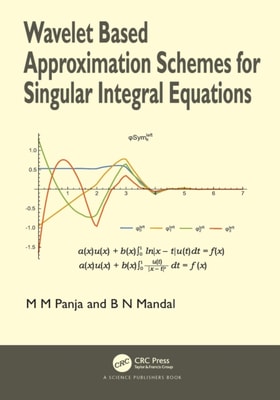
Many mathematical problems in science and engineering are defined by ordinary or partial differential equations with appropriate initial-boundary conditions.
Many mathematical problems in science and engineering are defined by ordinary or partial differential equations with appropriate initial-boundary conditions.
The book contains the main results of class field theory and Artin L functions, both for number fields and function fields, together with the necessary foundations concerning topological groups, cohomology, and simple algebras.
The book contains the main results of class field theory and Artin L functions, both for number fields and function fields, together with the necessary foundations concerning topological groups, cohomology, and simple algebras.
The author offers a thorough presentation of the classical theory of algebraic numbers and algebraic functions which both in its conception and in many details differs from the current literature on the subject.
The author offers a thorough presentation of the classical theory of algebraic numbers and algebraic functions which both in its conception and in many details differs from the current literature on the subject.
This unique text provides a geometric approach to group theory and linear algebra, bringing to light the interesting ways in which these subjects interact.
Optimization is a field important in its own right but is also integral to numerous applied sciences, including operations research, management science, economics, finance and all branches of mathematics-oriented engineering.
Several years ago I was invited to an American university to give one-term graduate course on Siegel modular forms, Hecke operators, and related zeta functions.