These notes had their origin in a postgraduate lecture series I gave at the Eid- genossiche Technische Hochschule (ETH) in Zurich in the Spring of 2000.
This volume contains the Proceedings of the Fourth Seminar on Stochastic Analy- sis, Random Fields and Applications, which took place at the Centro Stefano Fran- scini (Monte Verita) in Ascona (Ticino), Switzerland, from May 20 to 24, 2002.
This textbook gives an introduction to stochastic partial differential equations such as reaction-diffusion, Burgers and 2D Navier-Stokes equations, perturbed by noise.
Since the publication of the first edition of this seminar book in 1994, the theory and applications of extremes and rare events have enjoyed an enormous and still increasing interest.
Fractal geometry is a new and promising field for researchers from different disciplines such as mathematics, physics, chemistry, biology and medicine.
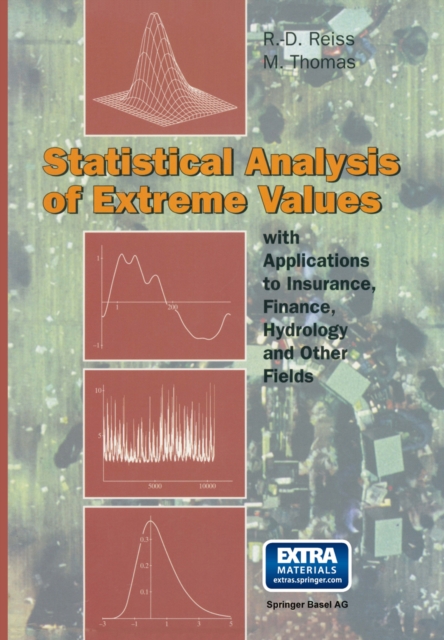
The statistical analysis of extreme data is important for various disciplines, including hydrology, insurance, finance, engineering and environmental sciences.
This book presents in thirteen refereed survey articles an overview of modern activity in stochastic analysis, written by leading international experts.
This thirteenth volume of the Poincare Seminar Series, Henri Poincare, 1912-2012, is published on the occasion of the centennial of the death of Henri Poincare in 1912.
An Introduction to Quantum Stochastic Calculus aims to deepen our understanding of the dynamics of systems subject to the laws of chance both from the classical and the quantum points of view and stimulate further research in their unification.
This volume contains refereed research or review articles presented at the 7th Seminar on Stochastic Analysis, Random Fields and Applications which took place at the Centro Stefano Franscini (Monte Verita) in Ascona , Switzerland, in May 2011.
This is a collection of papers by participants at High Dimensional Probability VI Meeting held from October 9-14, 2011 at the Banff International Research Station in Banff, Alberta, Canada.
This monograph is a presentation of a unified approach to a certain class of semimartingale inequalities, which can be regarded as probabilistic extensions of classical estimates for conjugate harmonic functions on the unit disc.
Although much of classical ergodic theory is concerned with single transformations and one-parameter flows, the subject inherits from statistical mechanics not only its name, but also an obligation to analyze spatially extended systems with multidimensional symmetry groups.
This book gives a comprehensive review of results for associated sequences and demimartingales developed so far, with special emphasis on demimartingales and related processes.
Since the publication of the first edition of this seminar book in 1994, the theory and applications of extremes and rare events have enjoyed an enormous and still increasing interest.
This volume contains refereed research or review papers presented at the 6th Seminar on Stochastic Processes, Random Fields and Applications, which took place at the Centro Stefano Franscini (Monte Verita) in Ascona, Switzerland, in May 2008.
Stochastic analysis has a variety of applications to biological systems as well as physical and engineering problems, and its applications to finance and insurance have bloomed exponentially in recent times.
This eleventh volume in the Poincare Seminar Series presents an interdisciplinary perspective on the concept of Time, which poses some of the most challenging questions in science.
These proceedings represent the current state of research on the topics 'boundary theory' and 'spectral and probability theory' of random walks on infinite graphs.
This book constitutes the refereed proceedings of the 7th International Conference on Belief Functions, BELIEF 2022, held in Paris, France, in October 2022.
This book presents a selection of peer-reviewed contributions to the fifth Bayesian Young Statisticians Meeting, BaYSM 2021, held virtually due to the COVID-19 pandemic on 1-3 September 2021.
This book provides the foundations for geometric applications of convex cones and presents selected examples from a wide range of topics, including polytope theory, stochastic geometry, and Brunn-Minkowski theory.
This book offers an accessible introduction to random walk and diffusion models at a level consistent with the typical background of students in the life sciences.
This book provides a blend of quantitative and qualitative approaches to decision making, while also bridging the gap between the theory of how to make good decisions versus how people actually make decisions.
This textbook provides basic quantitative models allowing researchers and decision makers to a) assess viability of threatened populations and evaluate the success of species reintroductions, b) estimate invasion abilities of alien species, c) evaluate the persistence of metapopulations subjected to habitat destruction and fragmentation, d) analyze policies and strategies for the sustainable harvesting of biological resources, and e) assess the course of human and nonhuman diseases and the possible containment measures.
This book presents in a compact form the program carried out in introductory statistics courses and discusses some essential topics for research activity, such as Monte Carlo simulation techniques, methods of statistical inference, best fit and analysis of laboratory data.
The investigation of the role of mechanical and mechano-chemical interactions in cellular processes and tissue development is a rapidly growing research field in the life sciences and in biomedical engineering.
Taking readers with a basic knowledge of probability and real analysis to the frontiers of a very active research discipline, this textbook provides all the necessary background from functional analysis and the theory of PDEs.
Stochastic elasticity is a fast developing field that combines nonlinear elasticity and stochastic theories in order to significantly improve model predictions by accounting for uncertainties in the mechanical responses of materials.