Risk Analysis in Finance and Insurance, Third Edition presents an accessible yet comprehensive introduction to the main concepts and methods that transform risk management into a quantitative science.
Since the groundbreaking research of Harry Markowitz into the application of operations research to the optimization of investment portfolios, finance has been one of the most important areas of application of operations research.
Quite apart from the fact that percolation theory had its orlgln in an honest applied problem (see Hammersley and Welsh (1980)), it is a source of fascinating problems of the best kind a mathematician can wish for: problems which are easy to state with a minimum of preparation, but whose solutions are (apparently) difficult and require new methods.
In recent years algorithms of the stochastic approximation type have found applications in new and diverse areas, and new techniques have been developed for proofs of convergence and rate of convergence.
Overview This book is intended as a textbook in probability for graduate students in math- ematics and related areas such as statistics, economics, physics, and operations research.
Intended as a self-contained introduction to measure theory, this textbook also includes a comprehensive treatment of integration on locally compact Hausdorff spaces, the analytic and Borel subsets of Polish spaces, and Haar measures on locally compact groups.
Classical statistical models for regression, time series and longitudinal data provide well-established tools for approximately normally distributed vari- ables.
when certain parameters in the problem tend to limiting values (for example, when the sample size increases indefinitely, the intensity of the noise ap- proaches zero, etc.
This textbook is based on a three-semester course of lectures given by the author in recent years in the Mechanics-Mathematics Faculty of Moscow State University and issued, in part, in mimeographed form under the title Probability, Statistics, Stochastic Processes, I, II by the Moscow State University Press.
Being a systematic treatment of the modern theory of stochastic integrals and stochastic differential equations, the theory is developed within the martingale framework, which was developed by J.
Frontiers of Pattern Recognition contains the proceedings of the International Conference on Frontiers of Pattern Recognition which took place on January 18-20, 1971, at the University of Hawaii, Honolulu.
Stochastic Modelling of Social Processes provides information pertinent to the development in the field of stochastic modeling and its applications in the social sciences.
Mathematical Methods of Reliability Theory discusses fundamental concepts of probability theory, mathematical statistics, and an exposition of the relationships among the fundamental quantitative characteristics encountered in the theory.
Applied Stochastic Processes is a collection of papers dealing with stochastic processes, stochastic equations, and their applications in many fields of science.
An Introduction to Probability and Mathematical Statistics provides information pertinent to the fundamental aspects of probability and mathematical statistics.
Stochastic Analysis: Liber Amicorum for Moshe Zakai focuses on stochastic differential equations, nonlinear filtering, two-parameter martingales, Wiener space analysis, and related topics.
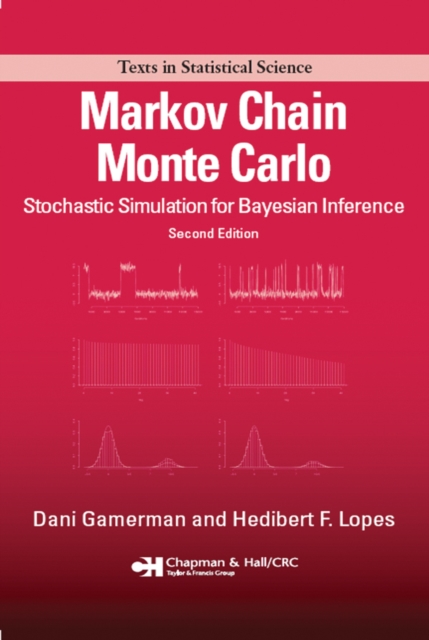
While there have been few theoretical contributions on the Markov Chain Monte Carlo (MCMC) methods in the past decade, current understanding and application of MCMC to the solution of inference problems has increased by leaps and bounds.
This book introduces stochastic processes and their applications for students in engineering, industrial statistics, science, operations research, business, and finance.
This book highlights various theoretical developments on logistic distribution, illustrates the practical utility of these results, and describes univariate and multivariate generalizations of the distribution.
Practical in its approach, Applied Bayesian Forecasting and Time Series Analysis provides the theories, methods, and tools necessary for forecasting and the analysis of time series.
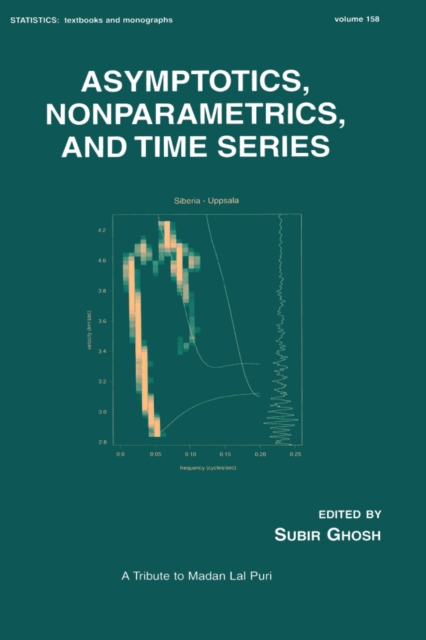
"e;Contains over 2500 equations and exhaustively covers not only nonparametrics but also parametric, semiparametric, frequentist, Bayesian, bootstrap, adaptive, univariate, and multivariate statistical methods, as well as practical uses of Markov chain models.
Hidden Markov Models for Time Series: An Introduction Using R, Second Edition illustrates the great flexibility of hidden Markov models (HMMs) as general-purpose models for time series data.
Despite the unobserved components model (UCM) having many advantages over more popular forecasting techniques based on regression analysis, exponential smoothing, and ARIMA, the UCM is not well known among practitioners outside the academic community.
Establishes Geotechnical Reliability as Fundamentally Distinct from Structural ReliabilityReliability-based design is relatively well established in structural design.
Discrete phenomena are an important aspect of various complex systems, acting both as underlying driving mechanisms and as manifestations of diverse behaviours.
Filling the need for an introductory book on linear programming that discusses the important ways to mitigate parameter uncertainty, Introduction to Linear Optimization and Extensions with MATLAB provides a concrete and intuitive yet rigorous introduction to modern linear optimization.
This book contains the proceedings ofthe meeting on "e;Applied Mathematics in the Aerospace Field,"e; held in Erice, Sicily, Italy from September 3 to September 10, 1991.
Stochastic Processes: General Theory starts with the fundamental existence theorem of Kolmogorov, together with several of its extensions to stochastic processes.
The interdisciplinary subject of random heterogeneous materials has experienced remarkable growth since the publication of the well-known monograph Statistical Con- tinuum Theories by Beran ( 1968).
Probabilistic and Statistical Methods in Computer Science presents a large variety of applications of probability theory and statistics in computer science and more precisely in algorithm analysis, speech recognition and robotics.
Statistical models and methods for lifetime and other time-to-event data are widely used in many fields, including medicine, the environmental sciences, actuarial science, engineering, economics, management, and the social sciences.
Providing the first comprehensive treatment of the subject, this groundbreaking work is solidly founded on a decade of concentrated research, some of which is published here for the first time, as well as practical, 'hands on' classroom experience.
The objective of this book is to collect in a single volume the essentials of stochastic networks, from the classical product-form theory to the more re- cent developments such as diffusion and fluid limits, stochastic comparisons, stability, control (dynamic scheduling) and optimization.
In the past half-century the theory of probability has grown from a minor isolated theme into a broad and intensive discipline interacting with many other branches of mathematics.