Brain Dynamics serves to introduce graduate students and nonspecialists from various backgrounds to the field of mathematical and computational neurosciences.
Recent advances in the fields of knowledge representation, reasoning and human-computer interaction have paved the way for a novel approach to treating and handling context.
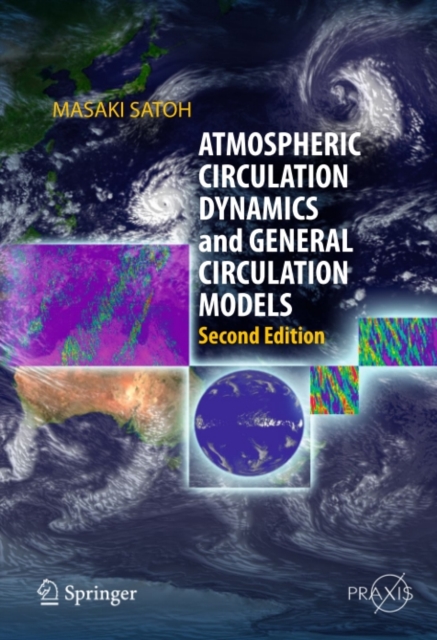
General circulation models (GCMs), which define the fundamental dynamics of atmospheric circulation, are nowadays used in various fields of atmospheric science such as weather forecasting, climate predictions and environmental estimations.
This book constitutes the thoroughly refereed post-proceedings of the First International Workshop on Formal Modeling and Analysis of Timed Systems, FORMATS 2003, held in Marseille, France in September 2003.
The study of permutation complexity can be envisioned as a new kind of symbolic dynamics whose basic blocks are ordinal patterns, that is, permutations defined by the order relations among points in the orbits of dynamical systems.
The concept of temporal networks is an extension of complex networks as a modeling framework to include information on when interactions between nodes happen.
This volume contains the papers selected for presentation at IPCO VIII, the Eighth Conference on Integer Programming and Combinatorial Optimization, Utrecht, The Netherlands, 2001.
Building on classical queueing theory mainly dealing with single node queueing systems, networks of queues, or stochastic networks has been a field of intensive research over the last three decades.
Providing an introduction to the theory of nonlinear Fokker-Planck equations, this book discusses fundamental properties of transient and stationary solutions, emphasizing the stability analysis of stationary solutions by means of self-consistency equations, linear stability analysis, and Lyapunov's direct method.
This volume contains the proceedings of the second joint PAPM-PROBMIV Workshop, held at the University of Copenhagen, Denmark, July 25-26, 2002 as part of the Federated Logic Conference (FLoC 2002).
This book constitutes the refereed proceedings of the Joint Workshop on Process Algebra and Performance Modeling and Probabilistic Methods in Verification, PAPM-PROBMIV 2001, held in Aachen, Germany in September 2001.
The LNCS journal Transactions on Computational Science reflects recent developments in the field of Computational Science, conceiving the field not as a mere ancillary science but rather as an innovative approach supporting many other scientific disciplines.
We are proud to introduce the proceedings of the Seventh International C- ference on Parallel Problem Solving from Nature, PPSN VII, held in Granada, Spain, on 7-11 September 2002.
Euro-ParConferenceSeries The European Conference on Parallel Computing (Euro-Par) is an international conference series dedicated to the promotion and advancement of all aspects of parallel and distributed computing.
Our purpose in writing this book was to provide a compendium of stochastic optimizationtechniques,someguidesto wheneachisappropriateinpractical situations, and a few useful ways of thinking about optimization as a p- cess of search in some very rich con?
This book is designed as an introduction to neural dynamics through an intuitive exploration of fundamental "e;dynamic motifs"e;- the recurring dynamical concepts essential for understanding computational neuroscience.
This book is designed as an introduction to neural dynamics through an intuitive exploration of fundamental "e;dynamic motifs"e;- the recurring dynamical concepts essential for understanding computational neuroscience.
This book presents recent theoretical findings on Sliding Mode Control (SMC) issues for various classes of complex nonlinear systems based on Takagi-Sugeno (T-S) fuzzy models.
This book serves as a practical guide to using numerical methods with MATLAB(R)/Python implementation for simulating fluid flow and transport in porous media, covering the fundamentals and their application in a way that is easy to understand for those without a technical background.
This textbook continues to fill the need for a systems engineering design textbook specifically written for students from a large variety of backgrounds-engineering, human factors, psychology, and physiology fields.