This volume explores the application of topological techniques in the study of delay and ordinary differential equations with a particular focus on continuum mechanics.
This text is meant to be a self-contained, elementary introduction to Partial Differential Equations, assuming only advanced differential calculus and some basic LP theory.
This book is a product of the experience of the authors in teaching partial differential equations to students of mathematics, physics, and engineering over a period of 20 years.
Employ the essential and hands-on tools and functions of MATLAB's ordinary differential equation (ODE) and partial differential equation (PDE) packages, which are explained and demonstrated via interactive examples and case studies.
The author, Professor Kurzweil, is one of the world's top experts in the area of ordinary differential equations - a fact fully reflected in this book.
Being a systematic treatment of the modern theory of stochastic integrals and stochastic differential equations, the theory is developed within the martingale framework, which was developed by J.
The subject of stability problems for viscoelastic solids and elements of structures, with which this book is concerned, has been the focus of attention in the past three decades.
Many problems in partial differential equations which arise from physical models can be considered as ordinary differential equations in appropriate infinite dimensional spaces, for which elegant theories and powerful techniques have recently been developed.
Numerical Methods for Differential Systems: Recent Developments in Algorithms, Software, and Applications reviews developments in algorithms, software, and applications of numerical methods for differential systems.
Treatise on Analysis, Volume 10-VIII provides information pertinent to the study of the most common boundary problems for partial differential equations.
Mathematics in Science and Engineering, Volume 48: Comparison and Oscillation Theory of Linear Differential Equations deals primarily with the zeros of solutions of linear differential equations.
Nonlinear Partial Differential Equations in Engineering discusses methods of solution for nonlinear partial differential equations, particularly by using a unified treatment of analytic and numerical procedures.
Pure and Applied Mathematics, Volume 56: Partial Differential Equations of Mathematical Physics provides a collection of lectures related to the partial differentiation of mathematical physics.
Periodic Differential Equations: An Introduction to Mathieu, Lame, and Allied Functions covers the fundamental problems and techniques of solution of periodic differential equations.
A Collection of Problems on a Course of Mathematical Analysis is a collection of systematically selected problems and exercises (with corresponding solutions) in mathematical analysis.
International Series of Monographs in Pure and Applied Mathematics, Volume 67: Non-Linear Differential Equations, Revised Edition focuses on the analysis of the phase portrait of two-dimensional autonomous systems; qualitative methods used in finding periodic solutions in periodic systems; and study of asymptotic properties.
Since its original publication in 1969, Mathematics for Engineers and Scientists has built a solid foundation in mathematics for legions of undergraduate science and engineering students.
Early training in the elementary techniques of partial differential equations is invaluable to students in engineering and the sciences as well as mathematics.
Written by an engineer and sharply focused on practical matters, Solution of Ordinary Differential Equations by Continuous Groups explores the application of Lie groups to the solution of ordinary differential equations.
"e;Presents new approaches to qualitative analysis of continuous, discreteptime, and impulsive nonlinear systems via Liapunov matrix-valued functions that introduce more effective tests for solving problems of estimating the domains of asymptotic stability.
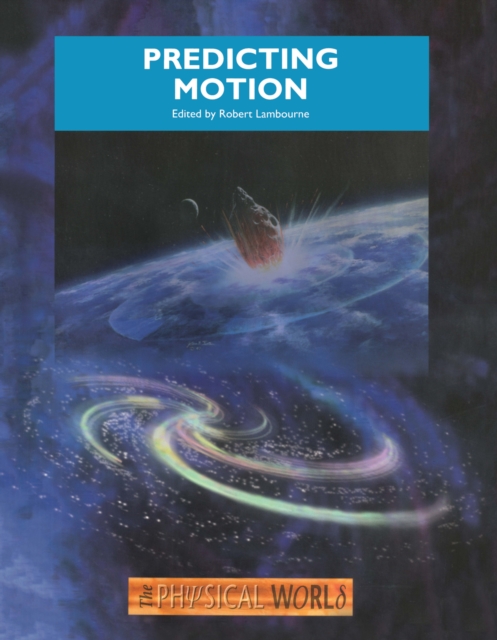
Predicting Motion presents the core ideas of Newtonian mechanics, starting from Newton's laws and the idea that changes in motion are predictable given the forces that cause them.
A monotone iterative technique is used to obtain monotone approximate solutions that converge to the solution of nonlinear problems of partial differential equations of elliptic, parabolic and hyperbolic type.
Thoroughly revised and updated, The Art of Modeling in Science and Engineering with Mathematica, Second Edition explores the mathematical tools and procedures used in modeling based on the laws of conservation of mass, energy, momentum, and electrical charge.
Although the study of classical thermoelasticity has provided information on linear systems, only recently have results on the asymptotic behavior completed our basic understanding of the generic behavior of solutions.
Extremality results proved in this Monograph for an abstract operator equation provide the theoretical framework for developing new methods that allow the treatment of a variety of discontinuous initial and boundary value problems for both ordinary and partial differential equations, in explicit and implicit forms.
Of considerable importance to numerical analysts, this text contains the proceedings of the 18th Dundee Biennial Conference on Numerical Analysis, featuring eminent analysts and current topics.
Stability of Differential Equations with Aftereffect presents stability theory for differential equations concentrating on functional differential equations with delay, integro-differential equations, and related topics.
Line Integral Methods for Conservative Problems explains the numerical solution of differential equations within the framework of geometric integration, a branch of numerical analysis that devises numerical methods able to reproduce (in the discrete solution) relevant geometric properties of the continuous vector field.
Blow-up for Higher-Order Parabolic, Hyperbolic, Dispersion and Schrodinger Equations shows how four types of higher-order nonlinear evolution partial differential equations (PDEs) have many commonalities through their special quasilinear degenerate representations.
A Practical Guide to Geometric Regulation for Distributed Parameter Systems provides an introduction to geometric control design methodologies for asymptotic tracking and disturbance rejection of infinite-dimensional systems.
Ten years after publication of the popular first edition of this volume, the index theorem continues to stand as a central result of modern mathematics-one of the most important foci for the interaction of topology, geometry, and analysis.