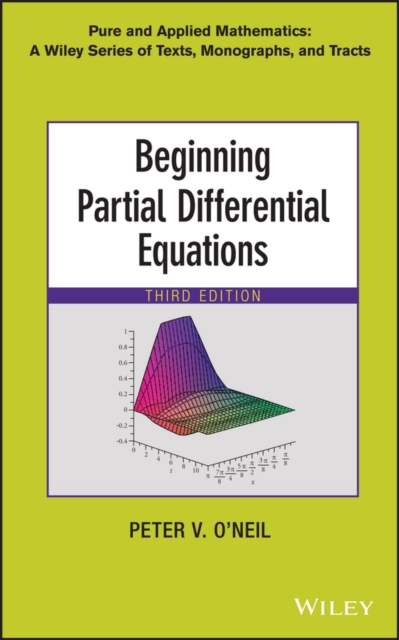
A broad introduction to PDEs with an emphasis on specialized topics and applications occurring in a variety of fields Featuring a thoroughly revised presentation of topics, Beginning Partial Differential Equations, Third Edition provides a challenging, yet accessible, combination of techniques, applications, and introductory theory on the subjectof partial differential equations.
A self-contained introduction to the methods and techniques of symmetry analysis used to solve ODEs and PDEsSymmetry Analysis of Differential Equations: An Introduction presents an accessible approach to the uses of symmetry methods in solving both ordinary differential equations (ODEs) and partial differential equations (PDEs).
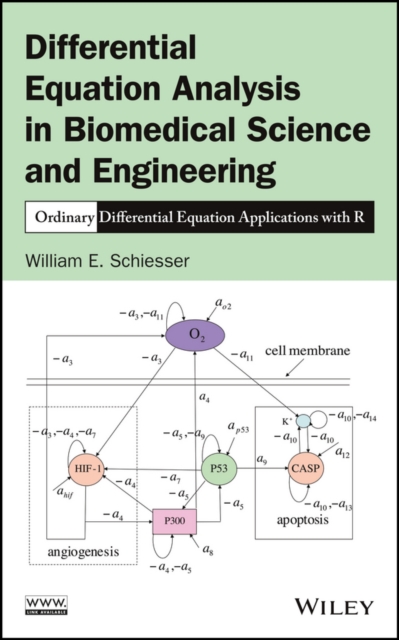
Features a solid foundation of mathematical and computational tools to formulate and solve real-world ODE problems across various fields With a step-by-step approach to solving ordinary differential equations (ODEs), Differential Equation Analysis in Biomedical Science and Engineering: Ordinary Differential Equation Applications with R successfully applies computational techniques for solving real-world ODE problems that are found in a variety of fields, including chemistry, physics, biology, and physiology.
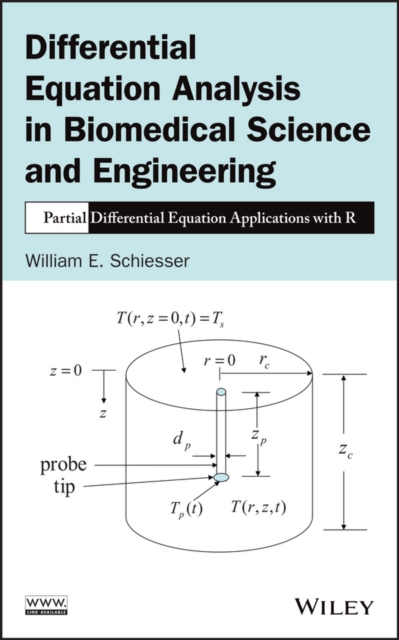
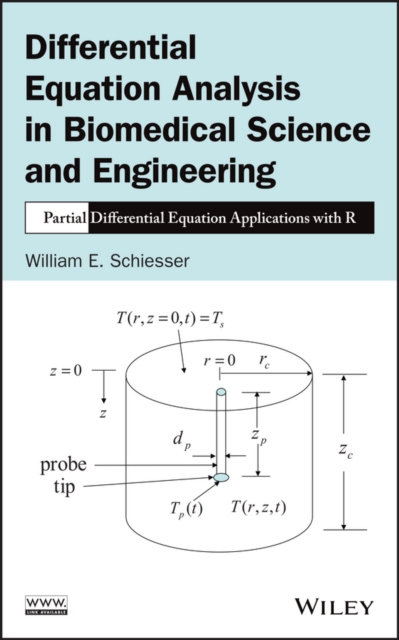
Features a solid foundation of mathematical and computational tools to formulate and solve real-world PDE problems across various fields With a step-by-step approach to solving partial differential equations (PDEs), Differential Equation Analysis in Biomedical Science and Engineering: Partial Differential Equation Applications with R successfully applies computational techniques for solving real-world PDE problems that are found in a variety of fields, including chemistry, physics, biology, and physiology.
Written by a team of international experts, Extremes and Recurrence in Dynamical Systems presents a unique point of view on the mathematical theory of extremes and on its applications in the natural and social sciences.
A broad introduction to PDEs with an emphasis on specialized topics and applications occurring in a variety of fields Featuring a thoroughly revised presentation of topics, Beginning Partial Differential Equations, Third Edition provides a challenging, yet accessible, combination of techniques, applications, and introductory theory on the subjectof partial differential equations.
Bringing together 18 chapters written by leading experts in dynamical systems, operator theory, partial differential equations, and solid and fluid mechanics, this book presents state-of-the-art approaches to a wide spectrum of new and challenging stability problems.
Features a balance between theory, proofs, and examples and provides applications across diverse fields of study Ordinary Differential Equations presents a thorough discussion of first-order differential equations and progresses to equations of higher order.
Demonstrates the application of DSM to solve a broad range of operator equations The dynamical systems method (DSM) is a powerful computational method for solving operator equations.
A concise introduction to numerical methodsand the mathematical framework neededto understand their performance Numerical Solution of Ordinary Differential Equations presents a complete and easy-to-follow introduction to classical topics in the numerical solution of ordinary differential equations.
Enables readers to apply the fundamentals of differential calculus to solve real-life problems in engineering and the physical sciences Introduction to Differential Calculus fully engages readers by presenting the fundamental theories and methods of differential calculus and then showcasing how the discussed concepts can be applied to real-world problems in engineering and the physical sciences.
The classic introduction to the fundamentals of calculus Richard Courant's classic text Differential and Integral Calculus is an essential text for those preparing for a career in physics or applied math.
Volume 2 of the classic advanced calculus text Richard Courant's Differential and Integral Calculus is considered an essential text for those working toward a career in physics or other applied math.
This new edition features the latest tools for modeling, characterizing, and solving partial differential equations The Third Edition of this classic text offers a comprehensive guide to modeling, characterizing, and solving partial differential equations (PDEs).
From the reviews of Numerical Solution of Partial Differential Equations in Science and Engineering: "e;The book by Lapidus and Pinder is a very comprehensive, even exhaustive, survey of the subject .
INTRODUCTORY APPLICATIONS OF PARTIAL DIFFERENTIAL EQUATIONS With Emphasis on Wave Propagation and Diffusion This is the ideal text for students and professionals who have somefamiliarity with partial differential equations, and who now wishto consolidate and expand their knowledge.
Advances in computer technology have conveniently coincided withtrends in numerical analysis toward increased complexity ofcomputational algorithms based on finite difference methods.
A modern introduction to synchronization phenomena, combining the development of deep mathematical concepts with illustrative examples and practical applications.