This book is intended as a course in numerical analysis and approximation theory for advanced undergraduate students or graduate students, and as a reference work for those who lecture or research in this area.
The Mathematics of Finite Elements and Applications V is the summary of invited papers and the abstracts of the poster papers in the fifth conference on The Mathematics of Finite Elements and Applications, MAFELAP 1984, held at Brunei University in May 1984.
Here's the perfect self-teaching guide to help anyone master differential equations--a common stumbling block for students looking to progress to advanced topics in both science and math.
This monograph provides a comprehensive treatment of expansion theorems for regular systems of first order differential equations and n-th order ordinary differential equations.
Numerical Methods for Partial Differential Equations: Finite Difference and Finite Volume Methods focuses on two popular deterministic methods for solving partial differential equations (PDEs), namely finite difference and finite volume methods.
An accessible book that examines the mathematics of weather predictionInvisible in the Storm is the first book to recount the history, personalities, and ideas behind one of the greatest scientific successes of modern times-the use of mathematics in weather prediction.
This book provides the mathematical foundations for the analysis of a class of degenerate elliptic operators defined on manifolds with corners, which arise in a variety of applications such as population genetics, mathematical finance, and economics.
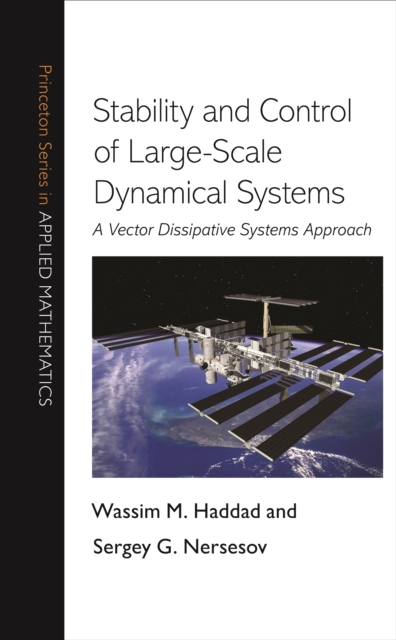
Modern complex large-scale dynamical systems exist in virtually every aspect of science and engineering, and are associated with a wide variety of physical, technological, environmental, and social phenomena, including aerospace, power, communications, and network systems, to name just a few.
What mathematical modeling uncovers about life in the cityX and the City, a book of diverse and accessible math-based topics, uses basic modeling to explore a wide range of entertaining questions about urban life.
Uses mathematical, numerical, and programming tools to solve differential equations for physical phenomena and engineering problems Introduction to Computation and Modeling for Differential Equations, Second Edition features the essential principles and applications of problem solving across disciplines such as engineering, physics, and chemistry.
Uses mathematical, numerical, and programming tools to solve differential equations for physical phenomena and engineering problems Introduction to Computation and Modeling for Differential Equations, Second Edition features the essential principles and applications of problem solving across disciplines such as engineering, physics, and chemistry.
Nonlinear Diffusion of Electromagnetic Fields covers applications of the phenomena of non-linear diffusion of electromagnetic fields, such as magnetic recording, electromagnetic shielding and non-destructive testing, development of CAD software, and the design of magnetic components in electrical machinery.
The book compiles works presented at a seminar aiming to attract global experts in differential equations, mathematical modeling, and integration methods.
This book started its life as a series of lectures given by the second author from the 1970's onwards to students in their third and fourth years in the Department of Mechanics and Mathematics at Rostov State University.
Many questions dealing with solvability, stability and solution methods for va- ational inequalities or equilibrium, optimization and complementarity problems lead to the analysis of certain (perturbed) equations.
The author of this book made an attempt to create the general theory of optimization of linear systems (both distributed and lumped) with a singular control.
This book is written for theoretical and mathematical physicists and mat- maticians interested in recent developments in complex general relativity and their application to classical and quantum gravity.
The goal of this third edition of Nonlinear Dynamics and Chaos: With Applications to Physics, Biology, Chemistry, and Engineering is the same as previous editions: to provide a good foundation - and a joyful experience - for anyone who'd like to learn about nonlinear dynamics and chaos from an applied perspective.
The goal of this third edition of Nonlinear Dynamics and Chaos: With Applications to Physics, Biology, Chemistry, and Engineering is the same as previous editions: to provide a good foundation - and a joyful experience - for anyone who'd like to learn about nonlinear dynamics and chaos from an applied perspective.
Unlike the classical Sturm theorems on the zeros of solutions of second-order ODEs, Sturm's evolution zero set analysis for parabolic PDEs did not attract much attention in the 19th century, and, in fact, it was lost or forgotten for almost a century.
This volume contains the lecture notes of the Short Course on Numerical Methods for Hyperbolic Equations (Faculty of Mathematics, University of Santiago de Compostela, Spain, 2-4 July 2011).
Separation of Variables for Partial Differential Equations: An Eigenfunction Approach includes many realistic applications beyond the usual model problems.
, Difference Methods for Singular Perturbation Problems focuses on the development of robust difference schemes for wide classes of boundary value problems.
Interest in the mathematical analysis of multi-functions has increased rapidly over the past thirty years, partly because of its applications in fields such as biology, control theory and optimization, economics, game theory, and physics.
This book looks at dynamics as an iteration process where the output of a function is fed back as an input to determine the evolution of an initial state over time.
The subject of sparse matrices has its root in such diverse fields as management science, power systems analysis, surveying, circuit theory, and structural analysis.
This textbook is designed to give graduate students an understanding of integrable systems via the study of Riemann surfaces, loop groups, and twistors.
Generalized dynamic thermoelasticity is a vital area of research in continuum mechanics, free of the classical paradox of infinite propagation speeds of thermal signals in Fourier-type heat conduction.
Nonlinear elliptic problems play an increasingly important role in mathematics, science and engineering, creating an exciting interplay between the subjects.
Generalized dynamic thermoelasticity is a vital area of research in continuum mechanics, free of the classical paradox of infinite propagation speeds of thermal signals in Fourier-type heat conduction.
Stochastic Filtering Theory uses probability tools to estimate unobservable stochastic processes that arise in many applied fields including communication, target-tracking, and mathematical finance.
Differential and integral equations involve important mathematical techniques, and as such will be encountered by mathematicians, and physical and social scientists, in their undergraduate courses.
This book provides a comprehensive introduction to the mathematical theory of compressible flow, describing both inviscid and viscous compressible flow, which are governed by the Euler and the Navier-Stokes equations respectively.
Input-to-State Stability presents the dominating stability paradigm in nonlinear control theory that revolutionized our view on stabilization of nonlinear systems, design of robust nonlinear observers, and stability of nonlinear interconnected control systems.