Over the last twenty years, Professor Franco Giannessi, a highly respected researcher, has been working on an approach to optimization theory based on image space analysis.
Graph Theory, Combinatorics and Algorithms: Interdisciplinary Applications focuses on discrete mathematics and combinatorial algorithms interacting with real world problems in computer science, operations research, applied mathematics and engineering.
Supervisory Control Theory (SCT) provides a tool to model and control human-engineered complex systems, such as computer networks, World Wide Web, identification and spread of malicious executables, and command, control, communication, and information systems.
Combinatorial (or discrete) optimization is one of the most active fields in the interface of operations research, computer science, and applied ma- ematics.
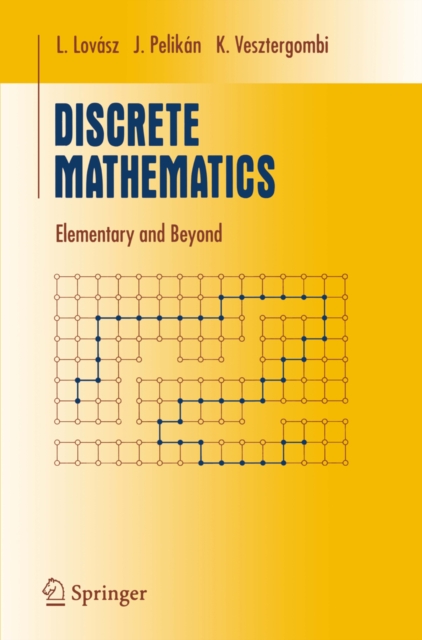
Discrete mathematics is quickly becoming one of the most important areas of mathematical research, with applications to cryptography, linear programming, coding theory and the theory of computing.
Created to teach students many of the most important techniques used for constructing combinatorial designs, this is an ideal textbook for advanced undergraduate and graduate courses in combinatorial design theory.
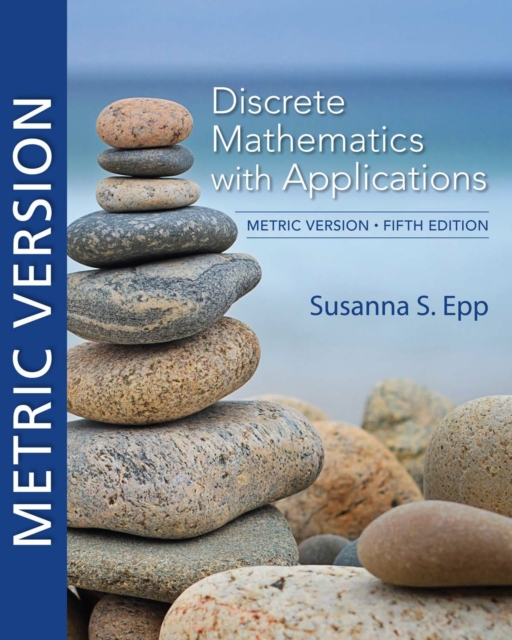
DISCRETE MATHEMATICS WITH APPLICATIONS, 5th Edition, Metric Edition explains complex, abstract concepts with clarity and precision and provides a strong foundation for computer science and upper-level mathematics courses of the computer age.
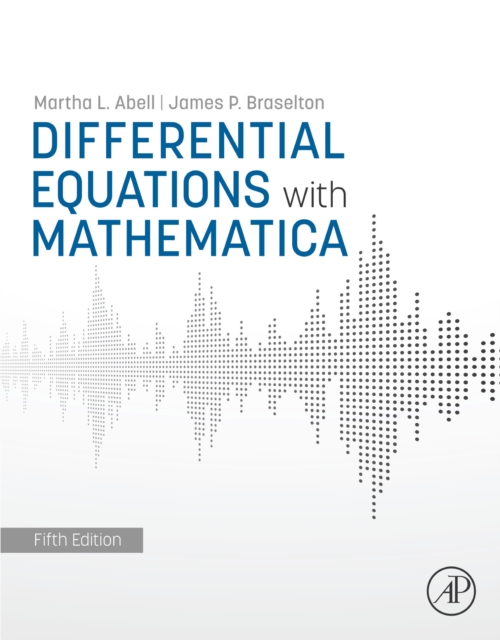
Differential Equations with Mathematica, Fifth Edition uses the fundamental concepts of the popular platform to solve (analytically, numerically, and/or graphically) differential equations of interest to students, instructors, and scientists.
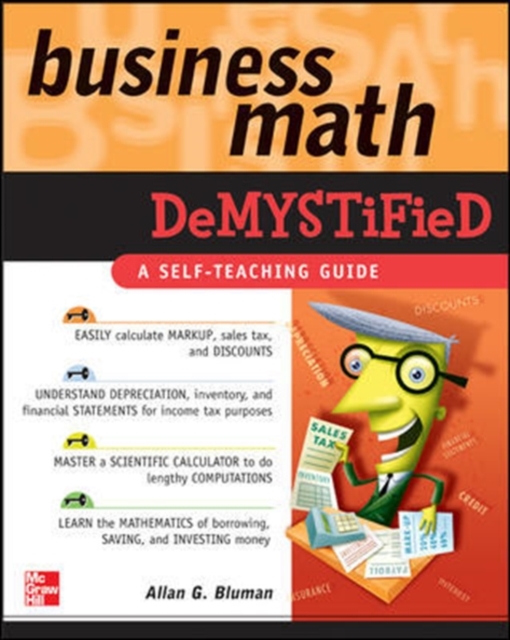
This work teaches business-management students all the basic mathematics used in a retail business and follows the standard curriculum of Business Math courses.
An inviting collection of fun, hands-on applications in mathematics and computingThis book provides a fun, hands-on approach to learning how mathematics and computing relate to the world around us and help us to better understand it.
Supercharge your data with the limitless potential of Neo4j 5, the premier graph database for cutting-edge machine learningPurchase of the print or Kindle book includes a free PDF eBookKey FeaturesExtract meaningful information from graph data with Neo4j's latest version 5Use Graph Algorithms into a regular Machine Learning pipeline in PythonLearn the core principles of the Graph Data Science Library to make predictions and create data science pipelines.
The aim of the book is to cover the three fundamental aspects of research in equilibrium problems: the statement problem and its formulation using mainly variational methods, its theoretical solution by means of classical and new variational tools, the calculus of solutions and applications in concrete cases.
This book contains 28 research articles from among the 49 papers and abstracts presented at the Tenth International Conference on Fibonacci Numbers and Their Applications.
A cooperative system is defined to be multiple dynamic entities that share information or tasks to accomplish a common, though perhaps not singular, objective.
A gentle introduction to the highly sophisticated world of discrete mathematics, Mathematical Problems and Proofs presents topics ranging from elementary definitions and theorems to advanced topics -- such as cardinal numbers, generating functions, properties of Fibonacci numbers, and Euclidean algorithm.
Although rigidity has been studied since the time of Lagrange (1788) and Maxwell (1864), it is only in the last twenty-five years that it has begun to find applications in the basic sciences.
Quantum field theory is one of most central constructions in 20th century th- retical physics, and it continues to develop rapidly in many different directions.
Coding and Modulation for Digital Television presents a comprehensive description of all error control coding and digital modulation techniques used in Digital Television (DTV).
Differential Equations with Mathematica, Fifth Edition uses the fundamental concepts of the popular platform to solve (analytically, numerically, and/or graphically) differential equations of interest to students, instructors, and scientists.
This book is designed to meet the requirement of undergraduate and postgraduate students pursuing computer science, information technology, mathematical science, and physical science course.
The study of one-shot devices such as automobile airbags, fire extinguishers, or antigen tests, is rapidly becoming an important problem in the area of reliability engineering.
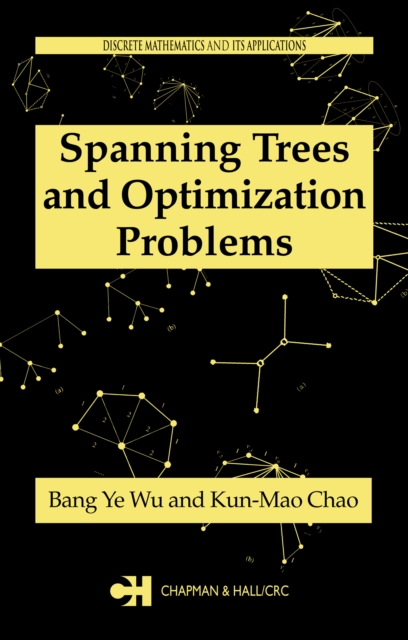
The design of approximation algorithms for spanning tree problems has become an exciting and important area of theoretical computer science and also plays a significant role in emerging fields such as biological sequence alignments and evolutionary tree construction.
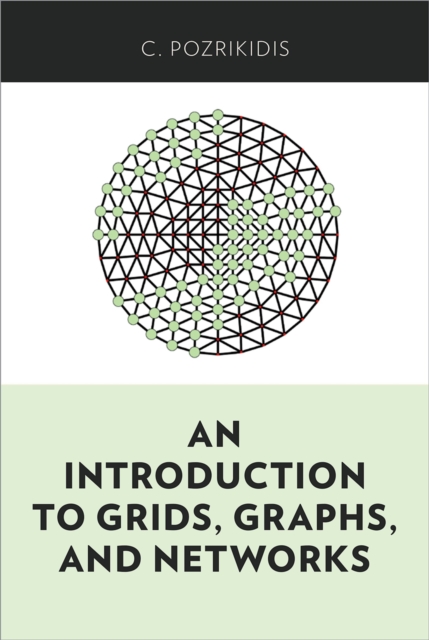
An Introduction to Grids, Graphs, and Networks aims to provide a concise introduction to graphs and networks at a level that is accessible to scientists, engineers, and students.
In 1875, Elwin Bruno Christoffel introduced a special class of words on a binary alphabet linked to continued fractions which would go onto be known as Christoffel words.
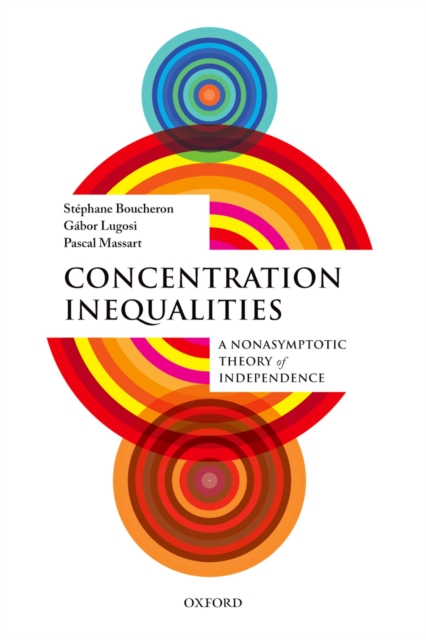
Concentration inequalities for functions of independent random variables is an area of probability theory that has witnessed a great revolution in the last few decades, and has applications in a wide variety of areas such as machine learning, statistics, discrete mathematics, and high-dimensional geometry.
Concentration inequalities for functions of independent random variables is an area of probability theory that has witnessed a great revolution in the last few decades, and has applications in a wide variety of areas such as machine learning, statistics, discrete mathematics, and high-dimensional geometry.
The name "e;random walk"e; for a problem of a displacement of a point in a sequence of independent random steps was coined by Karl Pearson in 1905 in a question posed to readers of "e;Nature"e;.
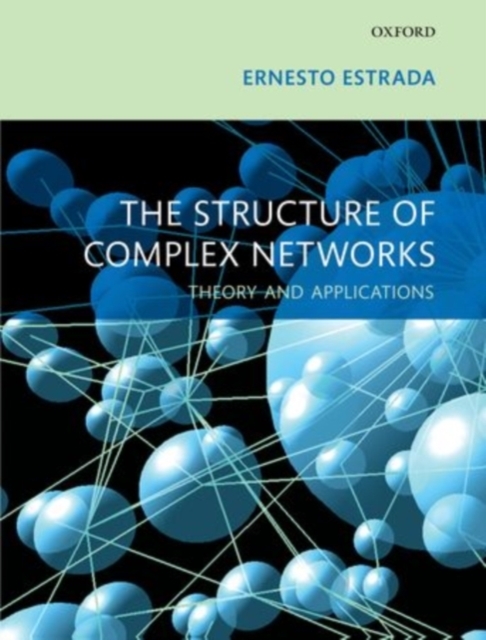
The study of network theory is a highly interdisciplinary field, which has emerged as a major topic of interest in various disciplines ranging from physics and mathematics, to biology and sociology.
This SpringerBrief provides the first systematic review of the existing works of cohesive subgraph search (CSS) over large heterogeneous information networks (HINs).
Numerical Algorithmic Science and Engineering (NAS&E), or more compactly, Numerical Algorithmics, is the theoretical and empirical study and the practical implementation and application of algorithms for solving finite-dimensional problems of a numeric nature.
Generating function (GF) is a mathematical technique to concisely represent a known ordered sequence into a simple continuous algebraic function in dummy variable(s).
This monograph introduces a novel and effective approach to counting lattice paths by using the discrete Fourier transform (DFT) as a type of periodic generating function.