This book is an exposition of semi-Riemannian geometry (also called pseudo-Riemannian geometry)--the study of a smooth manifold furnished with a metric tensor of arbitrary signature.
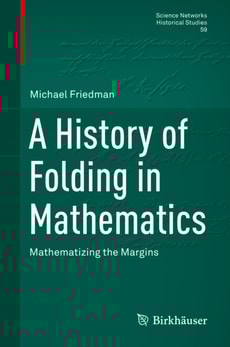
While it is well known that the Delian problems are impossible to solve with a straightedge and compass - for example, it is impossible to construct a segment whose length is cube root of 2 with these instruments - the discovery of the Italian mathematician Margherita Beloch Piazzolla in 1934 that one can in fact construct a segment of length cube root of 2 with a single paper fold was completely ignored (till the end of the 1980s).
In recent years, extensive research has been conducted by eminent mathematicians and engineers whose results and proposed problems are presented in this new volume.
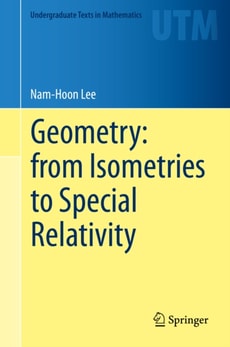
This textbook offers a geometric perspective on special relativity, bridging Euclidean space, hyperbolic space, and Einstein's spacetime in one accessible, self-contained volume.
With In Focus Sacred Geometry, learn the fascinating history behind this ancient tradition as well as how to decipher the geometrical symbols, formulas, and patterns based on mathematical patterns.
This book provides an accessible introduction to using the tools of differential geometry to tackle a wide range of topics in physics, with the concepts developed through numerous examples to help the reader become familiar with the techniques.
The objective of Volume II is to show how asymptotic methods, with the thickness as the small parameter, indeed provide a powerful means of justifying two-dimensional plate theories.
Geometric Topology is a foundational component of modern mathematics, involving the study of spacial properties and invariants of familiar objects such as manifolds and complexes.
In the series of volumes which together will constitute the Handbook of Differential Geometry a rather complete survey of the field of differential geometry is given.
This undergraduate textbook provides a comprehensive treatment of Euclidean and transformational geometries, supplemented by substantial discussions of topics from various non-Euclidean and less commonly taught geometries, making it ideal for both mathematics majors and pre-service teachers.
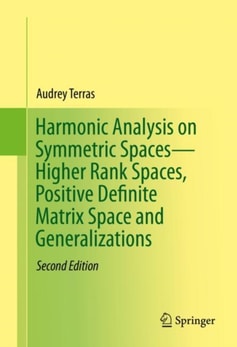
This text is an introduction to harmonic analysis on symmetric spaces, focusing on advanced topics such as higher rank spaces, positive definite matrix space and generalizations.
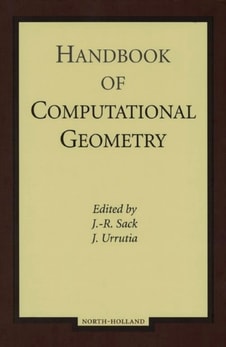
Computational Geometry is an area that provides solutions to geometric problems which arise in applications including Geographic Information Systems, Robotics and Computer Graphics.
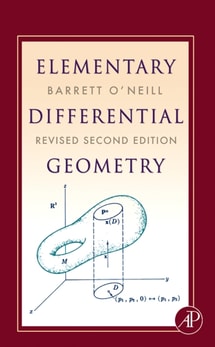
Written primarily for students who have completed the standard first courses in calculus and linear algebra, Elementary Differential Geometry, Revised 2nd Edition, provides an introduction to the geometry of curves and surfaces.
This book is an enhanced and expanded English edition of the treatise "e;Fondamenti matematici e analisi numerica della dinamica di un Universo isotropo,"e; published by the Accademia delle Scienze di Torino in volume no.
Offering a concise collection of MatLab programs and exercises to accompany a third semester course in multivariable calculus, A MatLab Companion for Multivariable Calculus introduces simple numerical procedures such as numerical differentiation, numerical integration and Newton's method in several variables, thereby allowing students to tackle realistic problems.
"e;CLEP COLLEGE ALGEBRA Study Guide 2 of 2: ADVANCED ALGEBRA"e; 500 questions and answers (ILLUSTRATED) that focus on essential advanced algebra concepts.
This book presents original research applying mathematics to musical rhythm, with a focus on computational methods, theoretical approaches, analysis of rhythm in folk and global music traditions, syncopation, and maximal evenness.
"e;SAT MATH LEVEL II Prep Flashcard Workbook 2 of 2: ALGEBRA 2-TRIGONOMETRY"e; 500 questions and answers (ILLUSTRATED) that focus on essential advanced algebra and trigonometry concepts.
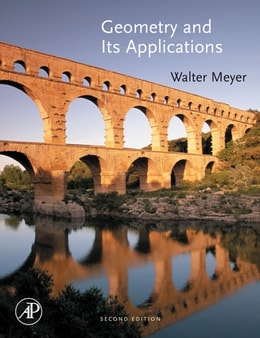
Meyer's Geometry and Its Applications, Second Edition, combines traditional geometry with current ideas to present a modern approach that is grounded in real-world applications.
Finite element, finite volume and finite difference methods use grids to solve the numerous differential equations that arise in the modelling of physical systems in engineering.
After a brief description of the evolution of thinking on Finslerian geometry starting from Riemann, Finsler, Berwald and Elie Cartan, the book gives a clear and precise treatment of this geometry.
In the series of volumes which together will constitute the "e;Handbook of Differential Geometry"e; we try to give a rather complete survey of the field of differential geometry.
Geometrical tolerancing is the standard technique that designers and engineers use to specify and control the form, location and orientation of the features of components and manufactured parts.
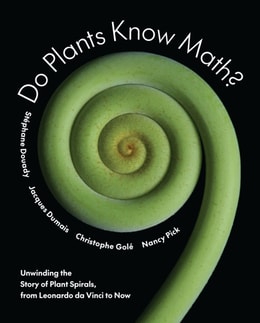
A breathtakingly illustrated look at botanical spirals and the scientists who puzzled over themCharles Darwin was driven to distraction by plant spirals, growing so exasperated that he once begged a friend to explain the mystery ';if you wish to save me from a miserable death.
This book presents a multidisciplinary guide to gauge theory and gravity, with chapters by the world's leading theoretical physicists, mathematicians, historians and philosophers of science.
This textbook provides a gentle introduction to intersection homology and perverse sheaves, where concrete examples and geometric applications motivate concepts throughout.
The hexaflexagon is a folded paper strip of colored triangles that has long delighted people with how it "e;magically"e; changes its appearance when "e;flexed"e;.