This book examines the geometrical notion of orthogonality, and shows how to use it as the primitive concept on which to base a metric structure in affine geometry.
The first part of the book gives a general introduction to key concepts in algebraic statistics, focusing on methods that are helpful in the study of models with hidden variables.
Through a careful treatment of number theory and geometry, Number, Shape, & Symmetry: An Introduction to Number Theory, Geometry, and Group Theory helps readers understand serious mathematical ideas and proofs.
The subject of wavelet analysis and fractal analysis is fast developing and has drawn a great deal of attention in varied disciplines of science and engineering.
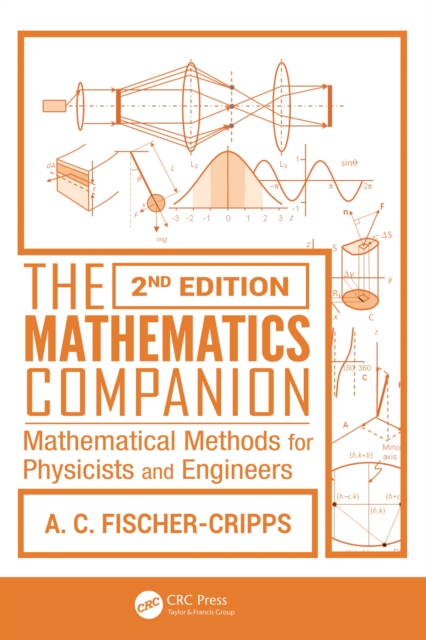
Everything You Need to Know about Mathematics for Science and EngineeringUpdated and expanded with new topics, The Mathematics Companion: Mathematical Methods for Physicists and Engineers, 2nd Edition presents the essential core of mathematical principles needed by scientists and engineers.
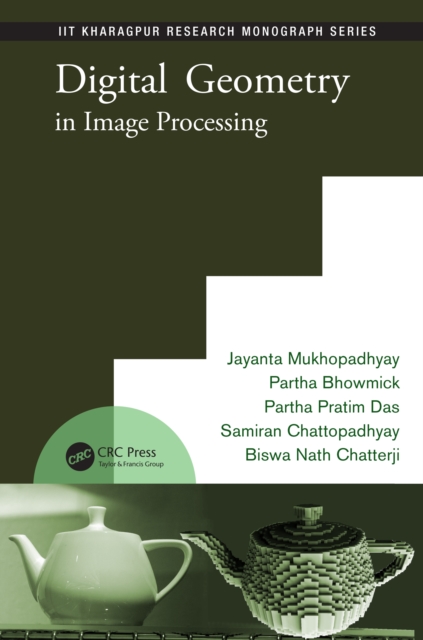
Exploring theories and applications developed during the last 30 years, Digital Geometry in Image Processing presents a mathematical treatment of the properties of digital metric spaces and their relevance in analyzing shapes in two and three dimensions.
Clifford algebras are at a crossing point in a variety of research areas, including abstract algebra, crystallography, projective geometry, quantum mechanics, differential geometry and analysis.
This book aims to present to first and second year graduate students a beautiful and relatively accessible field of mathematics-the theory of singu- larities of stable differentiable mappings.
Nature is full of spidery patterns: lightning bolts, coastlines, nerve cells, termite tunnels, bacteria cultures, root systems, forest fires, soil cracking, river deltas, galactic distributions, mountain ranges, tidal patterns, cloud shapes, sequencing of nucleotides in DNA, cauliflower, broccoli, lungs, kidneys, the scraggly nerve cells that carry signals to and from your brain, the branching arteries and veins that make up your circulatory system.
Experience gained during a ten-year long involvement in modelling, program- ming and application in nonlinear optimization helped me to arrive at the conclusion that in the interest of having successful applications and efficient software production, knowing the structure of the problem to be solved is in- dispensable.
VII Preface In many fields of mathematics, geometry has established itself as a fruitful method and common language for describing basic phenomena and problems as well as suggesting ways of solutions.
Since their invention in the late seventies, public key cryptosystems have become an indispensable asset in establishing private and secure electronic communication, and this need, given the tremendous growth of the Internet, is likely to continue growing.
Mixing may be thought of as the operation by which a system evolves from one state of simplicity (initial segregation) to another state of simplicity (complete uniformity).
Convexity of sets in linear spaces, and concavity and convexity of functions, lie at the root of beautiful theoretical results that are at the same time extremely useful in the analysis and solution of optimization problems, including problems of either single objective or multiple objectives.
This text provides a masterful and systematic treatment of all the basic analytic and geometric aspects of Bergman's classic theory of the kernel and its invariance properties.
This textbook is distinguished from other texts on the subject by the depth of the presentation and the discussion of the calculus of moving surfaces, which is an extension of tensor calculus to deforming manifolds.
Differential geometry arguably offers the smoothest transition from the standard university mathematics sequence of the first four semesters in calculus, linear algebra, and differential equations to the higher levels of abstraction and proof encountered at the upper division by mathematics majors.
This monograph gives a short introduction to the relevant modern parts of discrete geometry, in addition to leading the reader to the frontiers of geometric research on sphere arrangements.
Introduction to Global Optimization Exploiting Space-Filling Curves provides an overview of classical and new results pertaining to the usage of space-filling curves in global optimization.
"e;Problem-Solving and Selected Topics in Euclidean Geometry: in the Spirit of the Mathematical Olympiads"e; contains theorems which are of particular value for the solution of geometrical problems.
This is the most comprehensive survey of the mathematical life of the legendary Paul Erdos (1913-1996), one of the most versatile and prolific mathematicians of our time.
In recent years, research in K3 surfaces and Calabi-Yau varieties has seen spectacular progress from both arithmetic and geometric points of view, which in turn continues to have a huge influence and impact in theoretical physics-in particular, in string theory.
Asymptotic Geometric Analysis is concerned with the geometric and linear properties of finite dimensional objects, normed spaces, and convex bodies, especially with the asymptotics of their various quantitative parameters as the dimension tends to infinity.
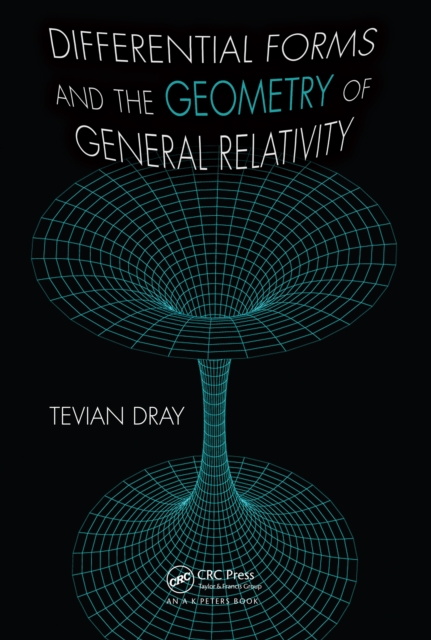
Traditionally, Lorentzian geometry has been used as a necessary tool to understand general relativity, as well as to explore new genuine geometric behaviors, far from classical Riemannian techniques.
This contributed volume brings together the highest quality expository papers written by leaders and talented junior mathematicians in the field of Commutative Algebra.