An award-winning history of the Enlightenment quest to devise a mathematical model of rationalityWhat did it mean to be reasonable in the Age of Reason?
This book, edited by Kim Williams and Cosimo Monteleone, follows the publication of two other books dedicated to Daniele Barbaro and published by Springer: Daniele Barbaro's Vitruvius of 1567 (Kim Williams, 2019) and Daniele Barbaro's Perspective of 1568 (Kim Williams and Cosimo Monteleone, 2021).
The genesis of the digital idea and why it transformed civilizationA few short decades ago, we were informed by the smooth signals of analog television and radio; we communicated using our analog telephones; and we even computed with analog computers.
The Top 10 Sunday Times BestsellerNOW A MAJOR MOTION PICTUREOscar Nominated For Best Picture and Best Adapted ScreenplaySet amid the civil rights movement, the never-before-told true story of NASA's African-American female mathematicians who played a crucial role in America's space program.
The international New Math developments between about 1950 through 1980, are regarded by many mathematics educators and education historians as the most historically important development in curricula of the twentieth century.
Fifty years ago when Jacques Hadamard set out to explore how mathematicians invent new ideas, he considered the creative experiences of some of the greatest thinkers of his generation, such as George Polya, Claude Levi-Strauss, and Albert Einstein.
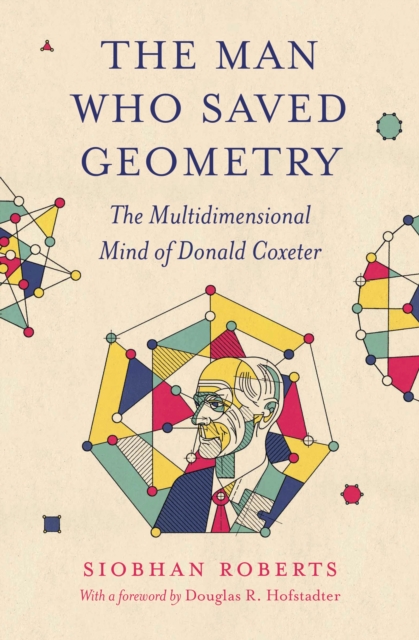
An exquisite visual celebration of the 2,500-year history of geometryIf you've ever thought that mathematics and art don't mix, this stunning visual history of geometry will change your mind.
When mathematician Hermann Weyl decided to write a book on philosophy, he faced what he referred to as "e;conflicts of conscience"e;--the objective nature of science, he felt, did not mesh easily with the incredulous, uncertain nature of philosophy.
Lowenheim's theorem reflects a critical point in the history of mathematical logic, for it marks the birth of model theory--that is, the part of logic that concerns the relationship between formal theories and their models.
This contributed volume is the result of a July 2010 workshop at the University of Wuppertal Interdisciplinary Centre for Science and Technology Studies which brought together world-wide experts from physics, philosophy and history, in order to address a set of questions first posed in the 1950s: How do we compare spacetime theories?
A sweeping intellectual biography that restores the Enlightenment polymath to the intellectual, scientific, and courtly worlds that shaped his early life and thoughtDescribed by Voltaire as ';perhaps a man of the most universal learning in Europe,' Gottfried Wilhelm Leibniz (16461716) is often portrayed as a rationalist and philosopher who was wholly detached from the worldly concerns of his fellow men.
The Development of Mathematics Between the World Wars traces the transformation of scientific life within mathematical communities during the interwar period in Central and Eastern Europe, specifically in Germany, Russia, Poland, Hungary, and Czechoslovakia.
This volume combines an introduction to central collineations with an introduction to projective geometry, set in its historical context and aiming to provide the reader with a general history through the middle of the nineteenth century.
This biography illuminates the life of Ennio De Giorgi, a mathematical genius in parallel with John Nash, the Nobel Prize Winner and protagonist of A Beautiful Mind.
This volume aims to make Stephen of Pisa and Antioch's work on the celestial sciences accessible to a wider readership, providing not just the text but a translation and introduction as well.
This contributed volume explores the renaissance of general relativity after World War II, when it transformed from a marginal theory into a cornerstone of modern physics.
This book deals with the general concepts in stereotomy and its connection with descriptive geometry, the social background of its practitioners and theoreticians, the general methods and tools of this technology, and the specific procedures for the members built in hewn stone, including arches, squinches, stairs and vaults, ending with a chapter discussing the open problems in this field.
On the road toward a history of turbulence, this book focuses on what the actors in this research field have identified as the "e;turbulence problem"e;.
This contributed volume investigates the active role of the different contexts of mathematics teaching on the evolution of the practices of mathematical concepts, with particular focus on their foundations.
This proceedings volume collects the stories of mathematicians and scientists who have spent and developed parts of their careers and life in countries other than those of their origin.
This book offers insights into the history of mathematics education, covering both the current state of the art of research and the methodology of the field.
The book offers an extensive study on the convoluted history of the research of algebraic surfaces, focusing for the first time on one of its characterizing curves: the branch curve.
This biography of the mathematician, Sophie Germain, paints a rich portrait of a brilliant and complex woman, the mathematics she developed, her associations with Gauss, Legendre, and other leading researchers, and the tumultuous times in which she lived.
Gerhard Gentzen is best known for his development of the proof systems of natural deduction and sequent calculus, central in many areas of logic and computer science today.
This book discusses how and why historical measurement units developed, and reviews useful methods for making conversions as well as situations in which dimensional analysis can be used.
Every age and every culture has relied on the incorporation of mathematics in their works of architecture to imbue the built environment with meaning and order.
This book presents a history of mathematic between 1607 and 1865 in that part of mainland North America which is north of Mexico but excludes the present-day Canada and Alaska.
In this two-volume compilation of articles, leading researchers reevaluate the success of Hilbert's axiomatic method, which not only laid the foundations for our understanding of modern mathematics, but also found applications in physics, computer science and elsewhere.
This book describes in detail the various theories on the shape of the Earth from classical antiquity to the present day and examines how measurements of its form and dimensions have evolved throughout this period.
This book provides an overview of the confluence of ideas in Turing's era and work and examines the impact of his work on mathematical logic and theoretical computer science.
This book examines the life and work of mathematician Giovanni Battista Guccia, founder of the Circolo Matematico di Palermo and its renowned journal, the Rendiconti del Circolo matematico di Palermo.
This engaging book places Leonardo da Vinci's scientific achievements within the wider context of the rapid development that occurred during the Renaissance.