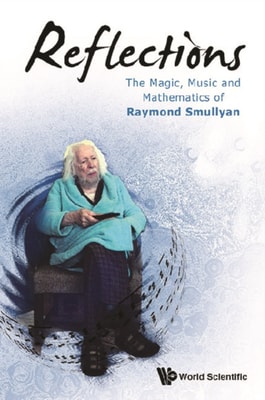
The tradition of honoring Martin Gardner continues with this edited collection of articles by those who have been inspired by Gardner to enter mathematics, to enter magic, to bring magic into their mathematics, or to bring mathematics into their magic.
Artificial Intelligence: An Introduction to Big Ideas and their Development, Second Edition guides readers through the history and development of artificial intelligence (AI), from its early mathematical beginnings through to the exciting possibilities of its potential future applications.
This textbook introduces the general points of view of research methodology in the scientific and engineering fields of studies and presents an overview of the technical and professional communication needed for article publication in journals.
This volume presents the lecture notes of short courses given by three leading experts in mathematical logic at the 2010 and 2011 Asian Initiative for Infinity Logic Summer Schools.
This volume provides a forum which highlights new achievements and overviews of recent developments of the thriving logic groups in the Asia-Pacific region.
This is an exciting if not rambling account of events of Raymond Smullyan's four lives - as a mathematical logician, musician, magician, and author - together with thoughts that come to his mind as he recalls them.
This book is a brief and focused introduction to the reverse mathematics and computability theory of combinatorial principles, an area of research which has seen a particular surge of activity in the last few years.
This volume presents the lecture notes of short courses given by three leading experts in mathematical logic at the 2012 Asian Initiative for Infinity Logic Summer School.
This book originates as an essential underlying component of a modern, imaginative three-semester honors program (six undergraduate courses) in Mathematical Studies.
Ever since Paul Cohen's spectacular use of the forcing concept to prove the independence of the continuum hypothesis from the standard axioms of set theory, forcing has been seen by the general mathematical community as a subject of great intrinsic interest but one that is technically so forbidding that it is only accessible to specialists.
This volume is based on the talks given at the Workshop on Infinity and Truth held at the Institute for Mathematical Sciences, National University of Singapore, from 25 to 29 July 2011.
The proceedings publishes research results on the following disciplines: philosophy and epistemology, history and philosophy of science, mathematics, logic and computer science, social sciences, linguistics, cognitive sciences, artificial intelligence, general systems and operational research.
This book contains a collection of articles on the topics mentioned in the title or closely related to them, and is dedicated to Prof Aristide Halanay from the University of Bucharest, Romania, in occasion of his 70th birthday.
With increasing demands for high precision autonomous control over wide operating envelopes, conventional control engineering approaches are unable to adequately deal with system complexity, nonlinearities, spatial and temporal parameter variations, and with uncertainty.
The book is devoted to the questions of the long-time behavior of solutions for evolution equations, connected with kinetic models in statistical physics.
This book provides a concise and modern introduction to Formal Languages and Machine Computation, a group of disparate topics in the theory of computation, which includes formal languages, automata theory, turing machines, computability, complexity, number-theoretic computation, public-key cryptography, and some new models of computation, such as quantum and biological computation.
Cellular automata provide one of the most interesting avenues into the study of complex systems in general, as well as having an intrinsic interest of their own.
This book is devoted to an analysis of the way that structures must enter into a serious study of any subject, and the term "e;structuralism"e; refers to the general method of approaching a subject from the viewpoint of structure.
The author selects 23 of his papers in mathematical logic that pursue definability via priority, forcing, compactness and fine structure applied to classical recursion, hyperarithmetic sets, recursion in objects of finite type, measure, models and E-recursion.