Combinatorics and finite fields are of great importance in modern applications such as in the analysis of algorithms, in information and communication theory, and in signal processing and coding theory.
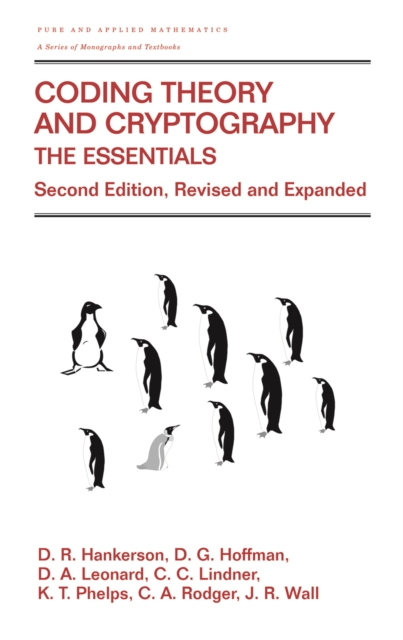
Bringing the material up to date to reflect modern applications, this second edition has been completely rewritten and reorganized to incorporate a new style, methodology, and presentation.
Cryptography, in particular public-key cryptography, has emerged in the last 20 years as an important discipline that is not only the subject of an enormous amount of research, but provides the foundation for information security in many applications.
Examines the ancient cosmic science of the female megalithic astronomers Describes the shared sacred geometry and astronomy knowledge in the megalithic monuments, temples, and secret calendars of the matrilineal cultures of Malta, Gobekli Tepe, and the Minoans of Crete Shows how early Christians helped preserve ancient science by encoding it in the rock-cut churches of the Cappadocia region of Turkey Explains how Greek myths reveal the transition from matriarchy to patriarchyLong before Pythagoras and Plato, before arithmetic and Christianity, there existed matrilineal societies around the Mediterranean, led by women with a sophisticated understanding of astronomy and sacred science.
Although the Lucas sequences were known to earlier investigators such as Lagrange, Legendre and Genocchi, it is because of the enormous number and variety of results involving them, revealed by Edouard Lucas between 1876 and 1880, that they are now named after him.
Although the Lucas sequences were known to earlier investigators such as Lagrange, Legendre and Genocchi, it is because of the enormous number and variety of results involving them, revealed by Edouard Lucas between 1876 and 1880, that they are now named after him.
This book provides a foundation for arithmetic topology, a new branch of mathematics that investigates the analogies between the topology of knots, 3-manifolds, and the arithmetic of number fields.
This textbook overviews the whole spectrum of formal methods and techniques that are aimed at verifying correctness of software, and how they can be used in practice.
This textbook overviews the whole spectrum of formal methods and techniques that are aimed at verifying correctness of software, and how they can be used in practice.
Containing data on number theory, encryption schemes, and cyclic codes, this highly successful textbook, proven by the authors in a popular two-quarter course, presents coding theory, construction, encoding, and decoding of specific code families in an "e;easy-to-use"e; manner appropriate for students with only a basic background in mathematics offerin
Building on the tradition of an outstanding series of conferences at the University of Illinois at Urbana-Champaign, the organizers attracted an international group of scholars to open the new Millennium with a conference that reviewed the current state of number theory research and pointed to future directions in the field.
An entertaining and enlightening history of irrational numbers, from ancient Greece to the twenty-first centuryThe ancient Greeks discovered them, but it wasn't until the nineteenth century that irrational numbers were properly understood and rigorously defined, and even today not all their mysteries have been revealed.
This book presents original peer-reviewed contributions from the London Mathematical Society (LMS) Midlands Regional Meeting and Workshop on 'Galois Covers, Grothendieck-Teichmuller Theory and Dessinsd'Enfants', which took place at the University of Leicester, UK, from 4 to 7 June, 2018.
This book collects and explains the many theorems concerning the existence of certificates of positivity for polynomials that are positive globally or on semialgebraic sets.
La segunda edición de Teoría de los números está dirigida a todos aquellos que encuentran en las matemáticas el lenguaje universal para explicar los fenómenos de nuestro entorno, y por supuesto, a quienes ven en ella una puerta que los conduce a la búsqueda del conocimiento, orientado hacia el desarrollo científico y tecnológico.
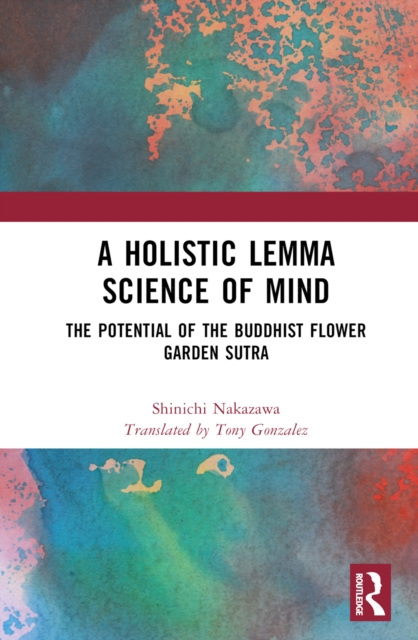
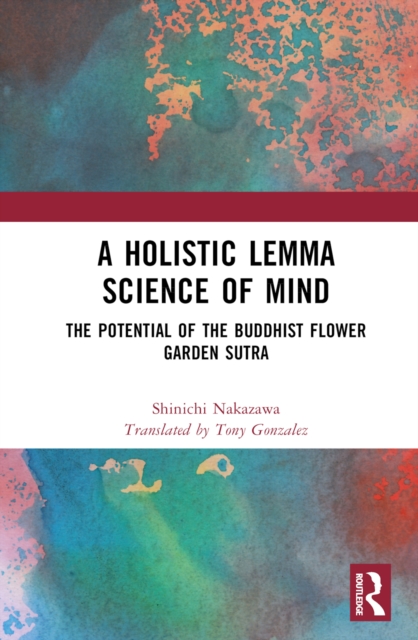
Nakazawa connects Buddhist philosophy with modern sciences such as psychology, quantum theory, and mathematics, as well as linguistics and the arts to present a perspective on understanding the mind in a world built on interconnection and networks of relations.
Nakazawa connects Buddhist philosophy with modern sciences such as psychology, quantum theory, and mathematics, as well as linguistics and the arts to present a perspective on understanding the mind in a world built on interconnection and networks of relations.