Prime Numbers, Friends Who Give Problems is written as a trialogue, with two persons who are interested in prime numbers asking the author, Papa Paulo, intelligent questions.
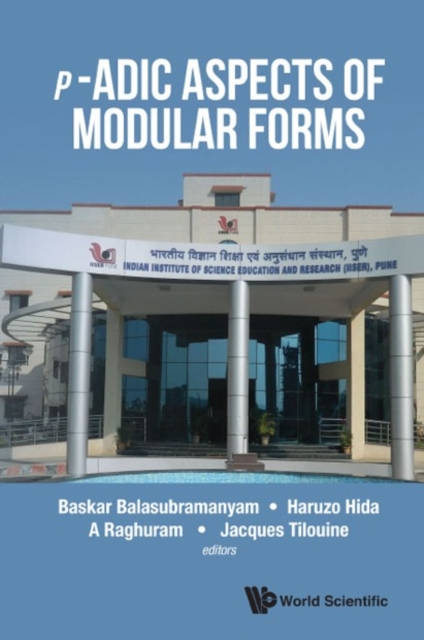
This volume is an outgrowth of the program Modular Representation Theory of Finite and p-Adic Groups held at the Institute for Mathematical Sciences at National University of Singapore during the period of 1-26 April 2013.
This book is a comprehensive treatise on the partial toroidal and minimal compactifications of the ordinary loci of PEL-type Shimura varieties and Kuga families, and on the canonical and subcanonical extensions of automorphic bundles.
This volume consists of a selection of research-type articles on dynamical systems, evolution equations, analytic number theory and closely related topics.
This unique volume presents a fruitful and beautiful mathematical world hidden in Caianiello's neuronic equations, which describe the instantaneous behavior of a model of a brain or thinking machine.
This book gathers original research papers and survey articles presented at the "e;International Conference on Class Groups of Number Fields and Related Topics,"e; held at Harish-Chandra Research Institute, Allahabad, India, on September 4-7, 2017.
This book stems from lectures that were delivered at the three-week Advanced Instructional School on Ergodic Theory and Dynamical Systems held at the Indian Institute of Technology Delhi, from 4-23 December 2017, with the support of the National Centre for Mathematics, National Board for Higher Mathematics, Department of Atomic Energy, Government of India.
From Polynomials to Sums of Squares describes a journey through the foothills of algebra and number theory based around the central theme of factorization.
From Polynomials to Sums of Squares describes a journey through the foothills of algebra and number theory based around the central theme of factorization.
This proceedings volume, the fifth in a series from the Combinatorial and Additive Number Theory (CANT) conferences, is based on talks from the 19th annual workshop, held online due to the COVID-19 pandemic.
Linear Algebra: Algorithms, Applications, and Techniques, Fourth Edition offers a modern and algorithmic approach to computation while providing clear and straightforward theoretical background information.
The Hardy-Littlewood circle method was invented over a century ago to study integer solutions to special Diophantine equations, but it has since proven to be one of the most successful all-purpose tools available to number theorists.
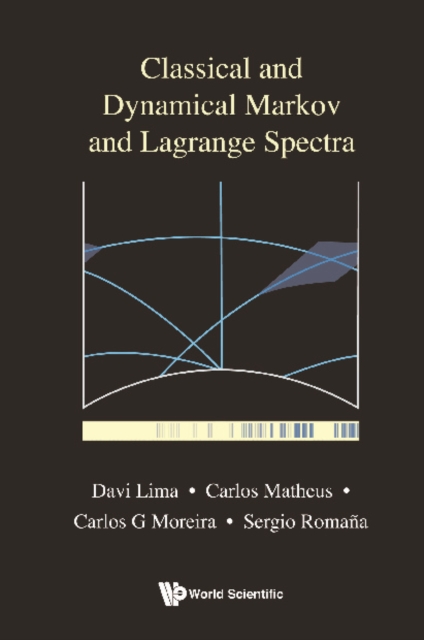
The book intends to give a modern presentation of the classical Markov and Lagrange spectrum, which are fundamental objects from the theory of Diophantine approximations and of their several generalizations related to Dynamical Systems and Differential Geometry.
This book is an attempt to describe the gradual development of the major schools of research on number theory in South India, Punjab, Mumbai, Bengal, and Bihar-including the establishment of Tata Institute of Fundamental Research (TIFR), Mumbai, a landmark event in the history of research of number theory in India.
This volume explores the rich interplay between number theory and wireless communications, reviewing the surprisingly deep connections between these fields and presenting new research directions to inspire future research.
In this book, the author pays tribute to Bernhard Riemann (1826-1866), a mathematician with revolutionary ideas, whose work on the theory of integration, the Fourier transform, the hypergeometric differential equation, etc.
This book tells the story of the Riemann hypothesis for function fields (or curves) starting with Artin's 1921 thesis, covering Hasse's work in the 1930s on elliptic fields and more, and concluding with Weil's final proof in 1948.
This interdisciplinary book covers a wide range of subjects, from pure mathematics (knots, braids, homotopy theory, number theory) to more applied mathematics (cryptography, algebraic specification of algorithms, dynamical systems) and concrete applications (modeling of polymers and ionic liquids, video, music and medical imaging).
This book discusses regular powers and symbolic powers of ideals from three perspectives- algebra, combinatorics and geometry - and examines the interactions between them.
This monograph introduces two approaches to studying Siegel modular forms: the classical approach as holomorphic functions on the Siegel upper half space, and the approach via representation theory on the symplectic group.
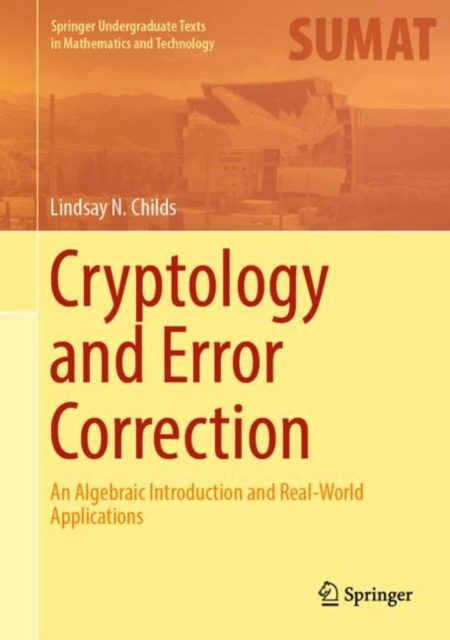
This text presents a careful introduction to methods of cryptology and error correction in wide use throughout the world and the concepts of abstract algebra and number theory that are essential for understanding these methods.
The power and properties of numbers, from basic addition and sums of squares to cutting-edge theoryWe use addition on a daily basis-yet how many of us stop to truly consider the enormous and remarkable ramifications of this mathematical activity?
In the earlier monograph Pseudo-reductive Groups, Brian Conrad, Ofer Gabber, and Gopal Prasad explored the general structure of pseudo-reductive groups.
A look at one of the most exciting unsolved problems in mathematics todayElliptic Tales describes the latest developments in number theory by looking at one of the most exciting unsolved problems in contemporary mathematics-the Birch and Swinnerton-Dyer Conjecture.
Written by experts in both mathematics and biology, Algebraic and Discrete Mathematical Methods for Modern Biology offers a bridge between math and biology, providing a framework for simulating, analyzing, predicting, and modulating the behavior of complex biological systems.
Ordinary differential equations (ODEs) and differential-algebraic equations (DAEs) are widely used to model control systems in engineering, natural sciences, and economy.
Ordinary differential equations (ODEs) and differential-algebraic equations (DAEs) are widely used to model control systems in engineering, natural sciences, and economy.
Lectures on NX(p) deals with the question on how NX(p), the number of solutions of mod p congruences, varies with p when the family (X) of polynomial equations is fixed.