The book attempts to point out the interconnections between number theory and algebra with a view to making a student understand certain basic concepts in the two areas forming the subject-matter of the book.
The book attempts to point out the interconnections between number theory and algebra with a view to making a student understand certain basic concepts in the two areas forming the subject-matter of the book.
This book is devoted to efficient pairing computations and implementations, useful tools for cryptographers working on topics like identity-based cryptography and the simplification of existing protocols like signature schemes.
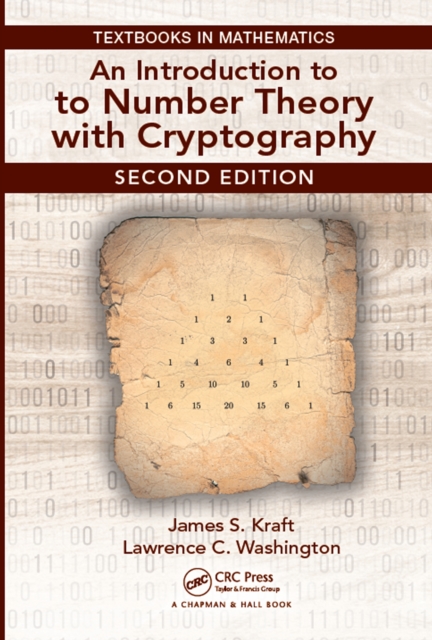
Building on the success of the first edition, An Introduction to Number Theory with Cryptography, Second Edition, increases coverage of the popular and important topic of cryptography, integrating it with traditional topics in number theory.
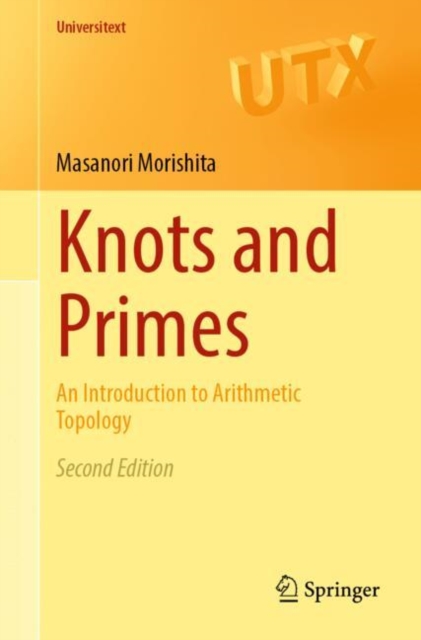
This book provides a foundation for arithmetic topology, a new branch of mathematics that investigates the analogies between the topology of knots, 3-manifolds, and the arithmetic of number fields.
This book is unique in that its stress is not on the mastery of a programming language, but on the importance and value of interactive problem solving.
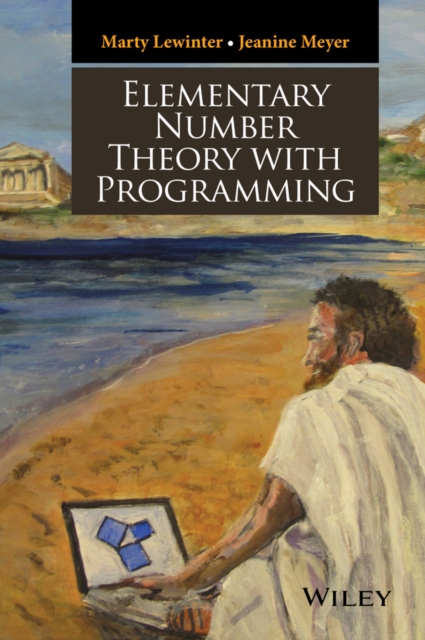
A highly successful presentation of the fundamental concepts of number theory and computer programming Bridging an existing gap between mathematics and programming, Elementary Number Theory with Programming provides a unique introduction to elementary number theory with fundamental coverage of computer programming.
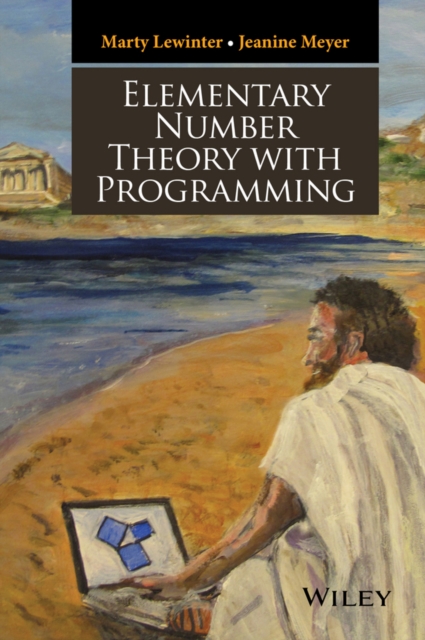
A highly successful presentation of the fundamental concepts of number theory and computer programming Bridging an existing gap between mathematics and programming, Elementary Number Theory with Programming provides a unique introduction to elementary number theory with fundamental coverage of computer programming.
Volume II provides an advanced approach to the extended gibonacci family, which includes Fibonacci, Lucas, Pell, Pell-Lucas, Jacobsthal, Jacobsthal-Lucas, Vieta, Vieta-Lucas, and Chebyshev polynomials of both kinds.
Volume II provides an advanced approach to the extended gibonacci family, which includes Fibonacci, Lucas, Pell, Pell-Lucas, Jacobsthal, Jacobsthal-Lucas, Vieta, Vieta-Lucas, and Chebyshev polynomials of both kinds.
Praise for the First Edition beautiful and well worth the reading with many exercises and a good bibliography, this book will fascinate both students and teachers.
Praise for the First Edition beautiful and well worth the reading with many exercises and a good bibliography, this book will fascinate both students and teachers.
The only book to provide a unified view of the interplay between computational number theory and cryptography Computational number theory and modern cryptography are two of the most important and fundamental research fields in information security.
A complete, self-contained introduction to a powerful and resurging mathematical discipline Combinatorial Geometry presents and explains with complete proofs some of the most important results and methods of this relatively young mathematical discipline, started by Minkowski, Fejes T th, Rogers, and Erd's.
This volume contains research papers in mathematical logic, particularly in model theory and its applications to algebra and formal theories of arithmetic.