Discrete mathematics is quickly becoming one of the most important areas of mathematical research, with applications to cryptography, linear programming, coding theory and the theory of computing.
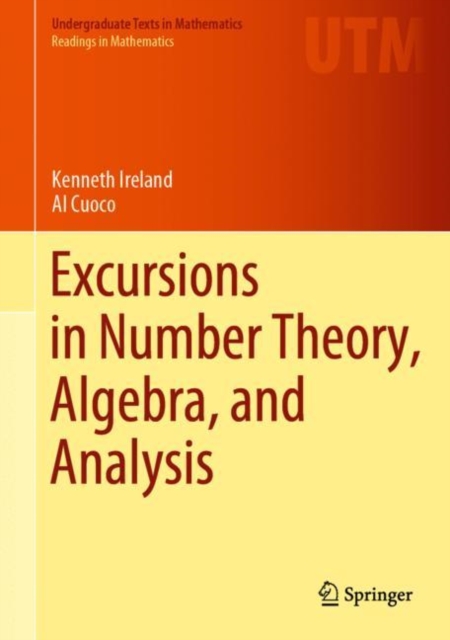
Gauss created the theory of binary quadratic forms in "e;Disquisitiones Arithmeticae"e; and Kummer invented ideals and the theory of cyclotomic fields in his attempt to prove Fermat's Last Theorem.
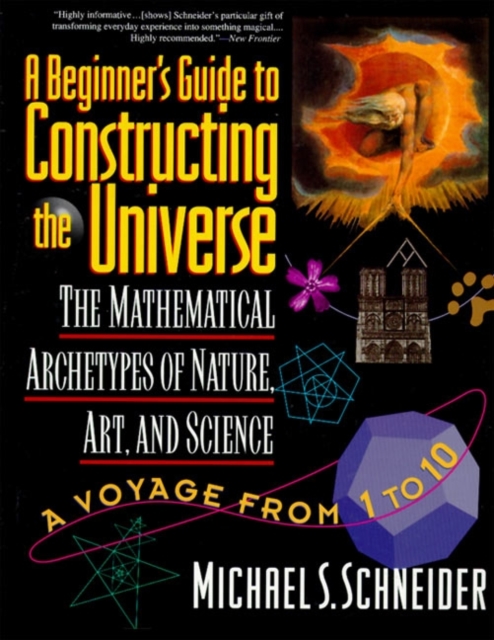
Reveals how the number science found in ancient sacred monuments reflects wisdom transmitted from the angelic orders Explains how the angels transmitted megalithic science to early humans to further our conscious development Decodes the angelic science hidden in a wide range of monuments, including Carnac in Brittany, the Great Pyramid in Egypt, early Christian pavements, the Hagia Sophia in Istanbul, Stonehenge in England, and the Kaaba in Mecca Explores how the number science behind ancient monuments gave rise to religions and spiritual practices The angelic mind is founded on a deep understanding of number and the patterns they produce.
This is an invaluable book that presents the original work published in French, in 1904, by Henry Leon Lebesgue, the creator of the theory of integration.
This is an invaluable book that presents the original work published in French, in 1904, by Henry Leon Lebesgue, the creator of the theory of integration.
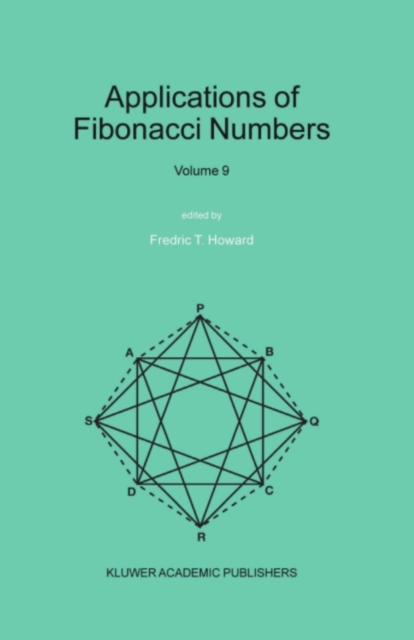
This book contains 28 research articles from among the 49 papers and abstracts presented at the Tenth International Conference on Fibonacci Numbers and Their Applications.
A gentle introduction to the highly sophisticated world of discrete mathematics, Mathematical Problems and Proofs presents topics ranging from elementary definitions and theorems to advanced topics -- such as cardinal numbers, generating functions, properties of Fibonacci numbers, and Euclidean algorithm.
Number Systems: A Path into Rigorous Mathematics aims to introduce number systems to an undergraduate audience in a way that emphasises the importance of rigour, and with a focus on providing detailed but accessible explanations of theorems and their proofs.
This definitive synthesis of mathematician Gregory Margulis's research brings together leading experts to cover the breadth and diversity of disciplines Margulis's work touches upon.
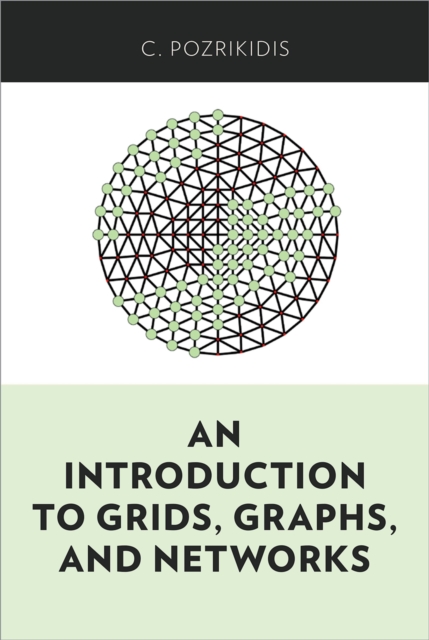
An Introduction to Grids, Graphs, and Networks aims to provide a concise introduction to graphs and networks at a level that is accessible to scientists, engineers, and students.
In 1875, Elwin Bruno Christoffel introduced a special class of words on a binary alphabet linked to continued fractions which would go onto be known as Christoffel words.
Complex analysis is a classic and central area of mathematics, which is studies and exploited in a range of important fields, from number theory to engineering.
This book is a general introduction to the theory of schemes, followed by applications to arithmetic surfaces and to the theory of reduction of algebraic curves.
In 2013, a little known mathematician in his late 50s stunned the mathematical community with a breakthrough on an age-old problem about prime numbers.
In 2013, a little known mathematician in his late 50s stunned the mathematical community with a breakthrough on an age-old problem about prime numbers.
Complex analysis is a classic and central area of mathematics, which is studies and exploited in a range of important fields, from number theory to engineering.
Generating function (GF) is a mathematical technique to concisely represent a known ordered sequence into a simple continuous algebraic function in dummy variable(s).
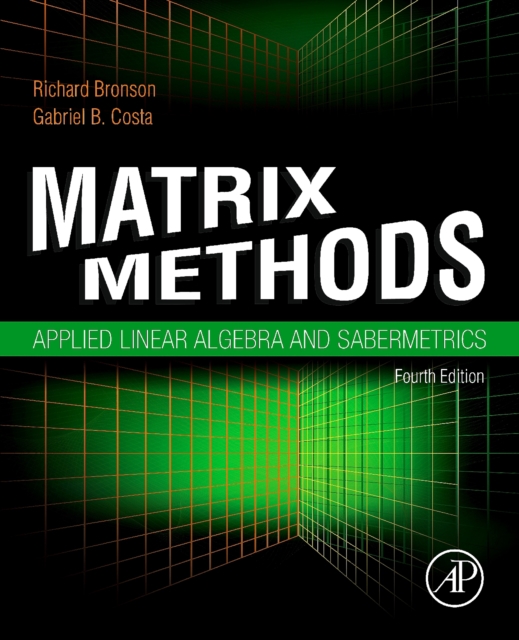
Matrix Methods: Applied Linear Algebra and Sabermetrics, Fourth Edition, provides a unique and comprehensive balance between the theory and computation of matrices.
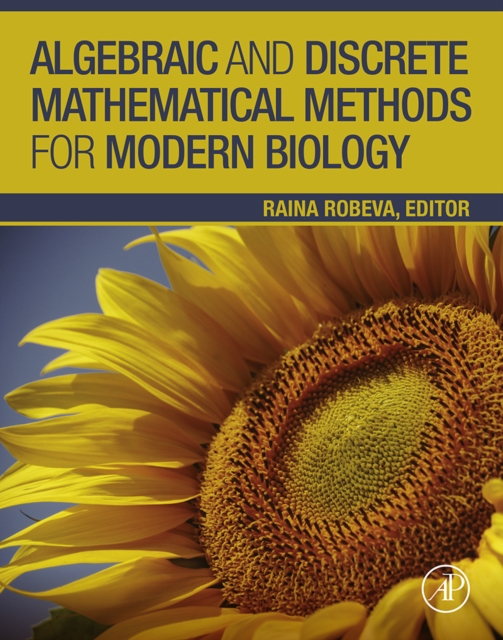
Written by experts in both mathematics and biology, Algebraic and Discrete Mathematical Methods for Modern Biology offers a bridge between math and biology, providing a framework for simulating, analyzing, predicting, and modulating the behavior of complex biological systems.
The Linear Algebra Survival Guide offers a concise introduction to the difficult core topics of linear algebra, guiding you through the powerful graphic displays and visualization of Mathematica that make the most abstract theories seem simple - allowing you to tackle realistic problems using simple mathematical manipulations.
In this appealing and well-written text, Richard Bronson starts with the concrete and computational, and leads the reader to a choice of major applications.
Advances in Domain Adaptation Theory gives current, state-of-the-art results on transfer learning, with a particular focus placed on domain adaptation from a theoretical point-of-view.
A Concrete Approach to Abstract Algebra presents a solid and highly accessible introduction to abstract algebra by providing details on the building blocks of abstract algebra.