An international Summer School on: "e;Modular functions of one variable and arithmetical applications"e; took place at RUCA, Antwerp University, from July 17 to - gust 3, 1972.
Cyclotomic fields have always occupied a central place in number theory, and the so called "e;main conjecture"e; on cyclotomic fields is arguably the deepest and most beautiful theorem known about them.
One of the most remarkable and beautiful theorems in coding theory is Gleason's 1970 theorem about the weight enumerators of self-dual codes and their connections with invariant theory.
For the most part, this book is the translation from Japanese of the earlier book written jointly by Koji Doi and the author who revised it substantially for the English edition.
Eugene Charles Catalan made his famous conjecture - that 8 and 9 are the only two consecutive perfect powers of natural numbers - in 1844 in a letter to the editor of Crelle's mathematical journal.
This book provides an accessible introduction to the theory of L-functions, emphasising their central role in number theory and their direct applications to key results.
Our intention in writing this book is to give an elementary introduction to number theory which does not demand a great deal of mathematical back- ground or maturity from the reader, and which can be read and understood with no extra assistance.
This book is the result of research initiatives formed during the workshop "e;Low Dimensional Topology and Number Theory XIII"e; at Kyushu University in 2022.
This book provides an accessible introduction to the theory of L-functions, emphasising their central role in number theory and their direct applications to key results.
This book is the first volume of proceedings from the joint conference X International Symposium "e;Quantum Theory and Symmetries"e; (QTS-X) and XII International Workshop "e;Lie Theory and Its Applications in Physics"e; (LT-XII), held on 19-25 June 2017 in Varna, Bulgaria.
This book continues the applications of mathematics, more specifically of theta, eta, and zeta functions, and modular forms, to various areas of theoretical physics.
Number Systems: A Path into Rigorous Mathematics aims to introduce number systems to an undergraduate audience in a way that emphasises the importance of rigour, and with a focus on providing detailed but accessible explanations of theorems and their proofs.
This is a book for an undergraduate number theory course, senior thesis work, graduate level study, or for those wishing to learn about applications of number theory to data encryption and security.
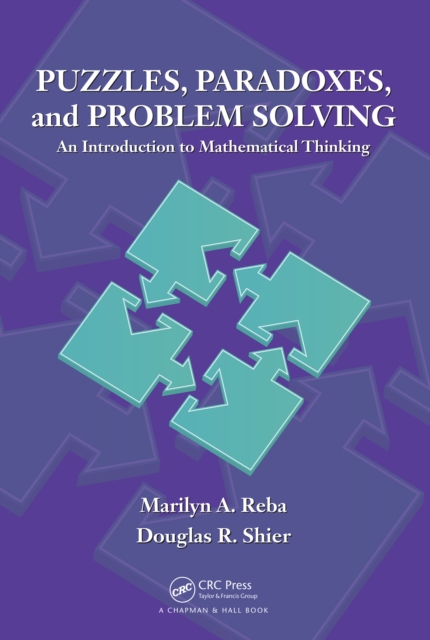
A Classroom-Tested, Alternative Approach to Teaching Math for Liberal Arts Puzzles, Paradoxes, and Problem Solving: An Introduction to Mathematical Thinking uses puzzles and paradoxes to introduce basic principles of mathematical thought.
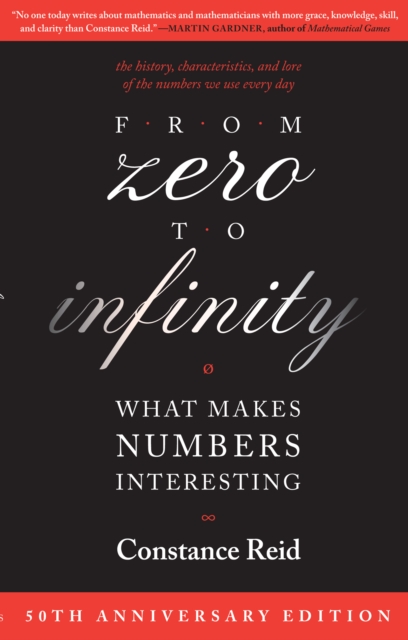
From Zero to Infinity is a combination of number lore, number history, and sparkling descriptions of the simply stated but exceedingly difficult problems posed by the most ordinary numbers that first appeared in 1955 and has been kept in print continuously ever since.
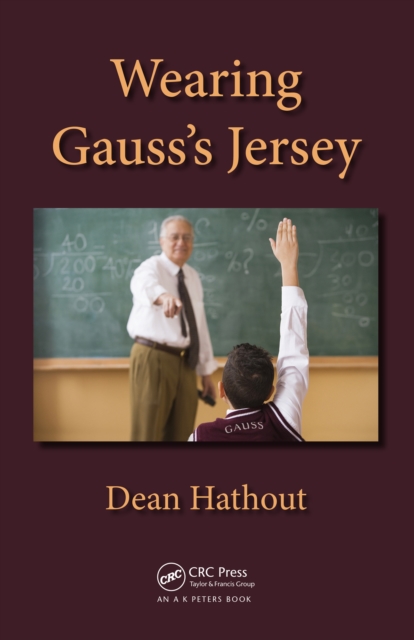
Wearing Gauss's Jersey focuses on "e;Gauss problems,"e; problems that can be very tedious and time consuming when tackled in a traditional, straightforward way but if approached in a more insightful fashion, can yield the solution much more easily and elegantly.
Bridging the gap between procedural mathematics that emphasizes calculations and conceptual mathematics that focuses on ideas, Mathematics: A Minimal Introduction presents an undergraduate-level introduction to pure mathematics and basic concepts of logic.
This volume, based on fourteen papers from the Millennial Conference on Number Theory, represents surveys of topics in number theory and provides an outlook into the future of number theory research.