Wer Analysis lernt, fragt sich irgendwann: Wie und warum kamen all diese merkwürdigen Begriffe zustande – Zahl, Funktion, Stetigkeit, Konvergenz, Differenzial, Integral?
Klaus Mainzer legt in diesem essential dar, dass die Zukunft von KI und Digitalisierung eine nüchterne Analyse erfordert, die Grundlagenforschung mit Anwendung verbindet.
Philosophen und Mathematiker hat das Nachsinnen über das Wesen des Unendlichen buchstäblich den Verstand geraubt – und dennoch ist es ein Konzept, das immer wieder unser Leben bestimmt.
Unter Physikern und Mathematikern sind sie legendär geworden, die Spaziergänge über den Campus von Princeton, die den fast 70-jährigen Albert Einstein und den 25 Jahre jüngeren Ausnahme-Mathematiker Kurt Gödel verbanden.
A new approach to understanding nonlinear dynamics and strange attractors The behavior of a physical system may appear irregular or chaotic even when it is completely deterministic and predictable for short periods of time into the future.
Die auf vier Bände angelegten "Ausgewählten Schriften" von Max Bense bieten einen repräsentativen Querschnitt durch dessen umfangreiches philosophisches und essayistisches Werk, das nach wie vor ungeschmälerte Aufmerksamkeit beanspruchen darf.
This book, presented in two parts, offers a slow introduction to mathematical logic, and several basic concepts of model theory, such as first-order definability, types, symmetries, and elementary extensions.
This book offers a historical explanation of important philosophical problems in logic and mathematics, which have been neglected by the official history of modern logic.
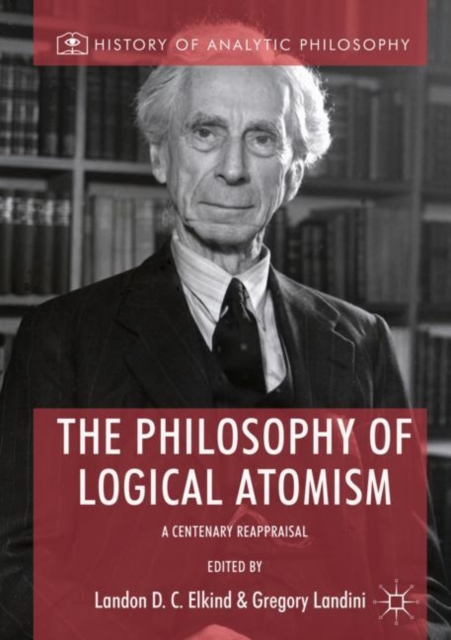
This book offers a comprehensive critical survey of issues of historical interpretation and evaluation in Bertrand Russell's 1918 logical atomism lectures and logical atomism itself.
This volume contains thirteen papers that were presented at the 2017 Annual Meeting of the Canadian Society for History and Philosophy of Mathematics/Societe canadienne d'histoire et de philosophie des mathematiques, which was held at Ryerson University in Toronto.
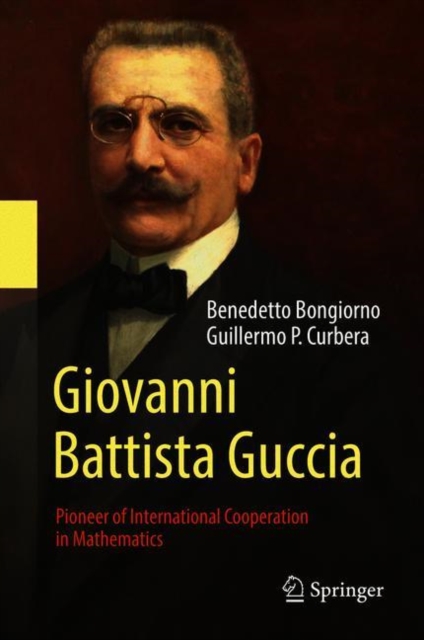
This book examines the life and work of mathematician Giovanni Battista Guccia, founder of the Circolo Matematico di Palermo and its renowned journal, the Rendiconti del Circolo matematico di Palermo.
This book offers an up-to-date overview of the research on philosophy of mathematics education, one of the most important and relevant areas of theory.
This book approaches work by Gilles Deleuze and Alain Badiou through their shared commitment to multiplicity, a novel approach to addressing one of the oldest philosophical questions: is being one or many?
This broad and insightful book presents current scholarship in important subfields of philosophy of science and addresses an interdisciplinary and multidisciplinary readership.
This volume contains fourteen papers that were presented at the 2016 Annual Meeting of the Canadian Society for History and Philosophy of Mathematics/La Societe Canadienne d'Histoire et de Philosophie des Mathematiques, held at the University of Calgary in Alberta, Canada.
This book uses Ludwig Wittgenstein's philosophical methodology to solve a problem that has perplexed thinkers for thousands of years: 'how come (abstract) mathematics applies so wonderfully well to the (concrete, physical) world?
This collection documents the work of the Hyperuniverse Project which is a new approach to set-theoretic truth based on justifiable principles and which leads to the resolution of many questions independent from ZFC.
This is a collection of new investigations and discoveries on the theory of opposition (square, hexagon, octagon, polyhedra of opposition) by the best specialists from all over the world.
This book presents a philosophical approach to probability and probabilistic thinking, considering the underpinnings of probabilistic reasoning and modeling, which effectively underlie everything in data science.