Essays on Existence and Essence presents a series of writings--including several previously unpublished--by Bob Hale on the topics of ontology and modality.
Essays on Existence and Essence presents a series of writings--including several previously unpublished--by Bob Hale on the topics of ontology and modality.
How to Free Your Inner Mathematician: Notes on Mathematics and Life offers readers guidance in managing the fear, freedom, frustration, and joy that often accompany calls to think mathematically.
How to Free Your Inner Mathematician: Notes on Mathematics and Life offers readers guidance in managing the fear, freedom, frustration, and joy that often accompany calls to think mathematically.
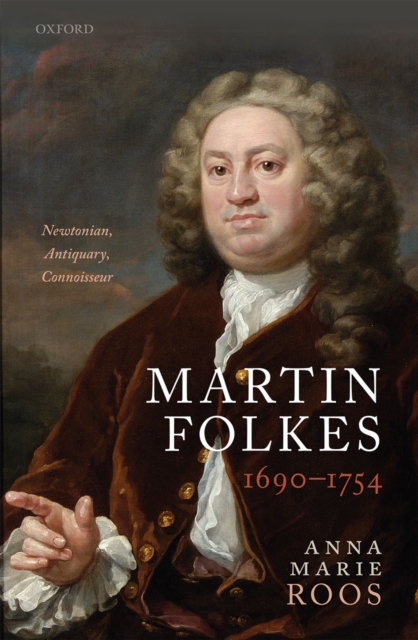
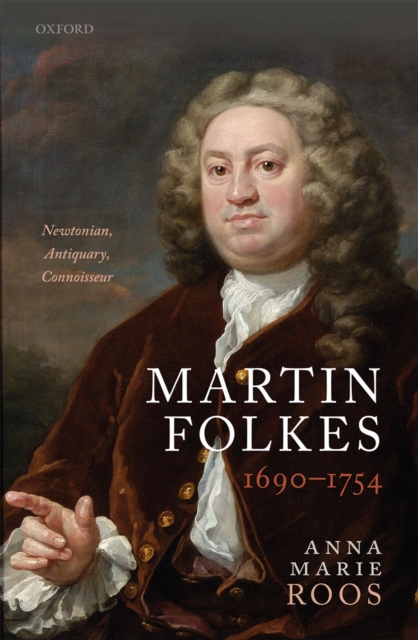
Martin Folkes (1690-1754): Newtonian, Antiquary, Connoisseur is a cultural and intellectual biography of the only President of both the Royal Society and the Society of Antiquaries.
Martin Folkes (1690-1754): Newtonian, Antiquary, Connoisseur is a cultural and intellectual biography of the only President of both the Royal Society and the Society of Antiquaries.
The Scholarship of Teaching and Learning: A Guide for Scientists, Engineers, and Mathematicians shows college and university faculty members how to draw on their disciplinary knowledge and teaching experience to investigate questions about student learning.
The Scholarship of Teaching and Learning: A Guide for Scientists, Engineers, and Mathematicians shows college and university faculty members how to draw on their disciplinary knowledge and teaching experience to investigate questions about student learning.
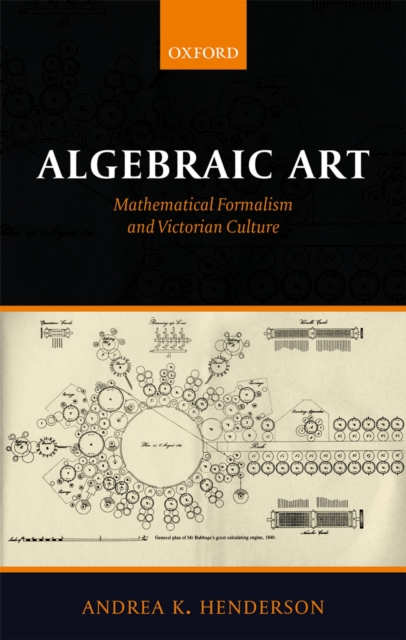
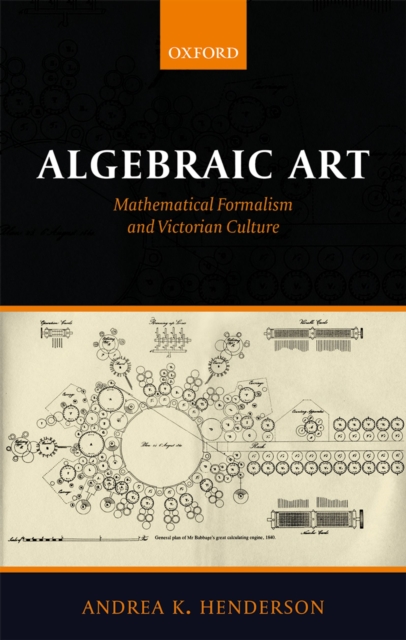
Algebraic Art explores the invention of a peculiarly Victorian account of the nature and value of aesthetic form, and it traces that account to a surprising source: mathematics.
Algebraic Art explores the invention of a peculiarly Victorian account of the nature and value of aesthetic form, and it traces that account to a surprising source: mathematics.
Model theory is used in every theoretical branch of analytic philosophy: in philosophy of mathematics, in philosophy of science, in philosophy of language, in philosophical logic, and in metaphysics.
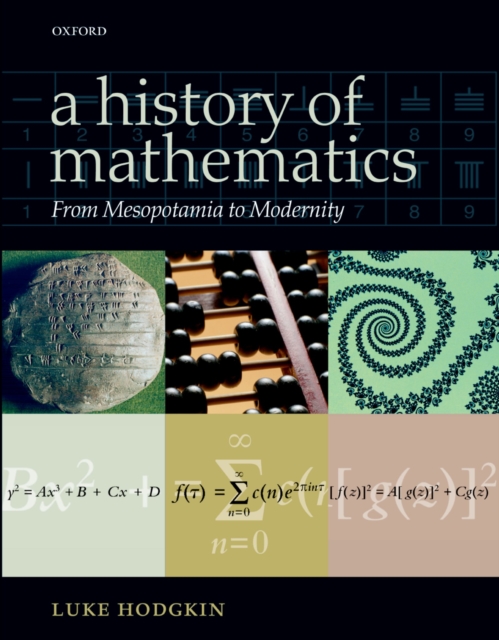
A History of Mathematics: From Mesopotamia to Modernity covers the evolution of mathematics through time and across the major Eastern and Western civilizations.
Gottlob Frege's Grundgesetze der Arithmetik, or Basic Laws of Arithmetic, was intended to be his magnum opus, the book in which he would finally establish his logicist philosophy of arithmetic.
Roy T Cook examines the Yablo paradox--a paradoxical, infinite sequence of sentences, each of which entails the falsity of all others later than it in the sequence--with special attention paid to the idea that this paradox provides us with a semantic paradox that involves no circularity.
David Bostock presents a critical appraisal of Bertrand Russell's philosophy from 1900 to 1924--a period that is considered to be the most important in his career.
The interplay between computability and randomness has been an active area of research in recent years, reflected by ample funding in the USA, numerous workshops, and publications on the subject.
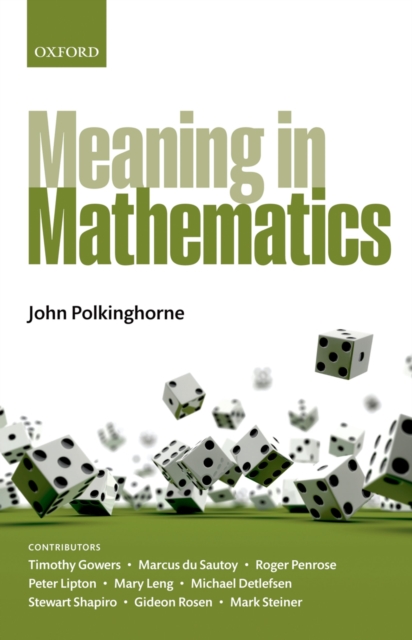
Is mathematics a highly sophisticated intellectual game in which the adepts display their skill by tackling invented problems, or are mathematicians engaged in acts of discovery as they explore an independent realm of mathematical reality?
Is mathematics a highly sophisticated intellectual game in which the adepts display their skill by tackling invented problems, or are mathematicians engaged in acts of discovery as they explore an independent realm of mathematical reality?