Applied Data Mining for Forecasting Using SAS, by Tim Rey, Arthur Kordon, and Chip Wells, introduces and describes approaches for mining large time series data sets.
Statisticians and researchers will find Categorical Data Analysis Using SAS, Third Edition, by Maura Stokes, Charles Davis, and Gary Koch, to be a useful discussion of categorical data analysis techniques as well as an invaluable aid in applying these methods with SAS.
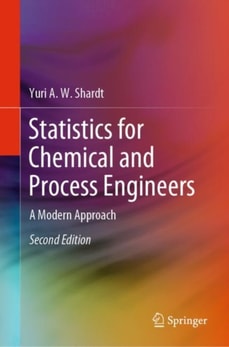
A coherent, concise, and comprehensive course in the statistics needed for a modern career in chemical engineering covers all of the concepts required for the American Fundamentals of Engineering Examination.
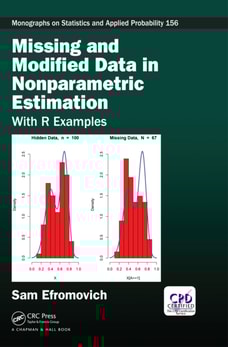
This book presents a systematic and unified approach for modern nonparametric treatment of missing and modified data via examples of density and hazard rate estimation, nonparametric regression, filtering signals, and time series analysis.
A fun and fact-filled AZ treasury for anyone with a head on their shouldersNeuropedia journeys into the mysteries and marvels of the three pounds of tissue between your earsthe brain.
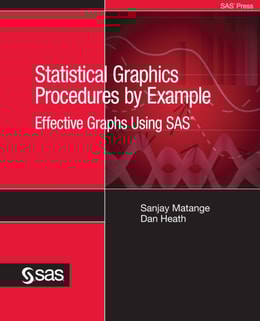
Sanjay Matange and Dan Heath's Statistical Graphics Procedures by Example: Effective Graphs Using SAS shows the innumerable capabilities of SAS Statistical Graphics (SG) procedures.
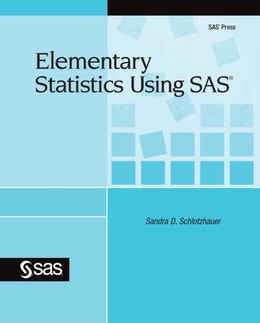
Bridging the gap between statistics texts and SAS documentation, Elementary Statistics Using SAS is written for those who want to perform analyses to solve problems.
Mathematics of Networks: Modulus Theory and Convex Optimization explores the question: "e;What can be learned by adapting the theory of p-modulus (and related continuum analysis concepts) to discrete graphs?
Statistical and Probabilistic Methods in Actuarial Science covers many of the diverse methods in applied probability and statistics for students aspiring to careers in insurance, actuarial science, and finance.
Broadening its scope to nonstatisticians, Bayesian Methods for Data Analysis, Third Edition provides an accessible introduction to the foundations and applications of Bayesian analysis.
Due to the tremendous accumulation of data for genetic markers, pharmacogenomics, the study of the functions and interactions of all genes in the overall variability of drug response, is one of the hottest areas of research in biomedical science.
Making obscure knowledge about matrix decompositions widely available, Understanding Complex Datasets: Data Mining with Matrix Decompositions discusses the most common matrix decompositions and shows how they can be used to analyze large datasets in a broad range of application areas.
Examines Critical Decisions for Transitioning Lab Science to a Clinical SettingThe development of therapeutic pharmaceutical compounds is becoming more expensive, and the success rates for getting such treatments approved for marketing and to the patients is decreasing.
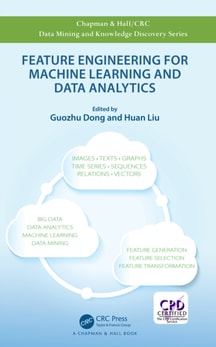
Due to increasing demands for dimensionality reduction, research on feature selection has deeply and widely expanded into many fields, including computational statistics, pattern recognition, machine learning, data mining, and knowledge discovery.
Collecting information previously scattered throughout the vast literature, including the author's own research, Stochastic Relations: Foundations for Markov Transition Systems develops the theory of stochastic relations as a basis for Markov transition systems.
Now viewed as its own scientific discipline, clinical trial methodology encompasses the methods required for the protection of participants in a clinical trial and the methods necessary to provide a valid inference about the objective of the trial.
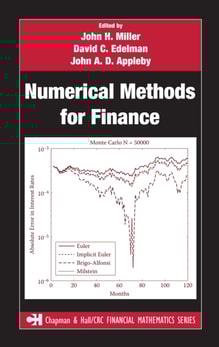
Featuring international contributors from both industry and academia, Numerical Methods for Finance explores new and relevant numerical methods for the solution of practical problems in finance.
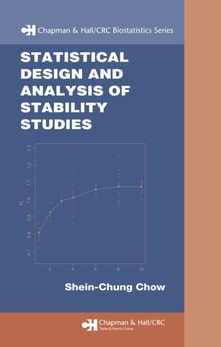
The US Food and Drug Administration's Report to the Nation in 2004 and 2005 indicated that one of the top reasons for drug recall was that stability data did not support existing expiration dates.
Providing a basic tool for studying nonlinear problems, Spectral Theory for Random and Nonautonomous Parabolic Equations and Applications focuses on the principal spectral theory for general time-dependent and random parabolic equations and systems.
Integrating interesting and widely used concepts of financial engineering into traditional statistics courses, Introduction to Probability and Statistics for Science, Engineering, and Finance illustrates the role and scope of statistics and probability in various fields.
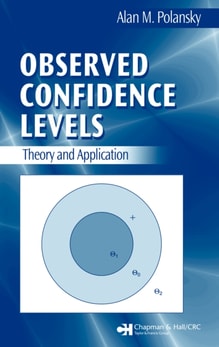
Illustrating a simple, novel method for solving an array of statistical problems, Observed Confidence Levels: Theory and Application describes the basic development of observed confidence levels, a methodology that can be applied to a variety of common multiple testing problems in statistical inference.
Useful Statistical Approaches for Addressing Multiplicity IssuesIncludes practical examples from recent trials Bringing together leading statisticians, scientists, and clinicians from the pharmaceutical industry, academia, and regulatory agencies, Multiple Testing Problems in Pharmaceutical Statistics explores the rapidly growing area of multiple comparison research with an emphasis on pharmaceutical applications.
Drawing on the authors' varied experiences working and teaching in the field, Analysis of Multivariate Social Science Data, Second Editionenables a basic understanding of how to use key multivariate methods in the social sciences.
Since the development of the first intelligence test in the early 20th century, educational and psychological tests have become important measurement techniques to quantify human behavior.
Emphasizing concepts rather than recipes, An Introduction to Statistical Inference and Its Applications with R provides a clear exposition of the methods of statistical inference for students who are comfortable with mathematical notation.