Recursive Identification and Parameter Estimation describes a recursive approach to solving system identification and parameter estimation problems arising from diverse areas.
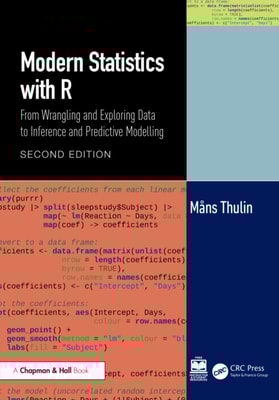
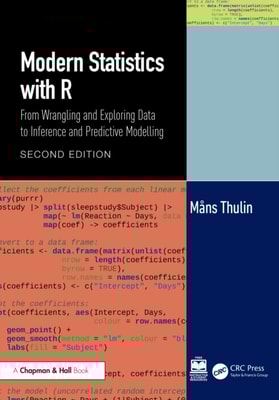
Unlike other books about R, written from the perspective of statistics, this book is written from the perspective of programmers, providing a channel for programmers with expertise in other programming languages to quickly understand R.
Suitable for a compact course or self-study, Computational Statistics: An Introduction to R illustrates how to use the freely available R software package for data analysis, statistical programming, and graphics.
This book represents a compilation of experience from a slate of experts involved in developing and deploying Bayesian Networks (BN) for corrosion management.
This book represents a compilation of experience from a slate of experts involved in developing and deploying Bayesian Networks (BN) for corrosion management.
Full of biological applications, exercises, and interactive graphical examples, this text presents comprehensive coverage of both modern analytical methods and statistical foundations.
Starting with the Shannon-Wiener approach to mathematical information theory, allowing a mathematical "e;measurement"e; of an amount of information, the book begins by defining the terms message and information and axiomatically assigning an amount of information to a probability.
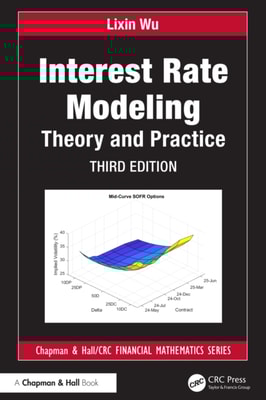
Containing many results that are new, or which exist only in recent research articles, this thoroughly revised third edition of Interest Rate Modeling: Theory and Practice, Third Edition portrays the theory of interest rate modeling as a three-dimensional object of finance, mathematics, and computation.
The second edition of this bestseller provides a practical and accessible introduction to the main concepts, foundation, and applications of Bayesian networks.
This book helps readers bridge the gap between school-level mathematical skills and the quantitative and analytical skills required at the professional level.
This is one of the first parallel computing books to focus exclusively on parallel data structures, algorithms, software tools, and applications in data science.
The game of Dots-and-Boxes, the popular game in which two players take turns connecting an array of dots to form squares, or boxes has long been considered merely a child's game.
This book offers a broad selection of statistical applications to everyday situations, illustrating how exciting and diverse statistical analysis can be.
Power Analysis of Trials with Multilevel Data is a valuable reference for anyone who wants to perform power calculations on trials with hierarchical data.
Analysis of queues is used in a variety of domains including call centers, web servers, internet routers, manufacturing and production, telecommunications, transportation, hospitals and clinics, restaurants, and theme parks.
Originally written to define the relation between the theories of transfinite numbers and mathematical games, the resulting work is a mathematically sophisticated but eminently enjoyable guide to game theory.
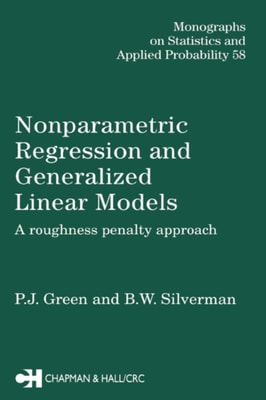
Nonparametric Regression and Generalized Linear Models focuses on the roughness penalty method of nonparametric smoothing and shows how this technique provides a unifying approach to a wide range of smoothing problems.
Statistics for Social Understanding introduces statistics as it's used in the social sciences-as a tool for advancing understanding of the social world.
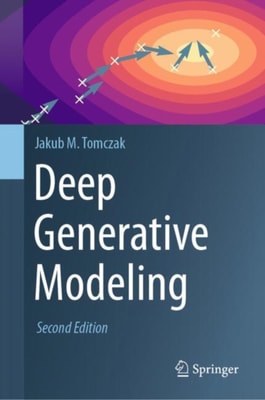
This first comprehensive book on models behind Generative AI has been thoroughly revised to cover all major classes of deep generative models: mixture models, Probabilistic Circuits, Autoregressive Models, Flow-based Models, Latent Variable Models, GANs, Hybrid Models, Score-based Generative Models, Energy-based Models, and Large Language Models.
Gaussian Integrals form an integral part of many subfields of applied mathematics and physics, especially in topics such as probability theory, statistics, statistical mechanics, quantum mechanics and so on.
Drawing on a comprehensive theoretical foundation encompassing socio-constructivism, social learning, and motivation, this book offers a new theoretical contribution and sheds light on the transformative power of acumenous game-based learning to reengage learners with Mathematics and Statistics Education.
Incorporating more than 20 years of the editors' and contributors' statistical work in mixed membership modeling, this handbook shows how to use these flexible modeling tools to uncover hidden patterns in modern high-dimensional multivariate data.