In 1979 I gave graduate courses at the University of Zurich and lectured in the 'Troisieme Cycle de la Suisse Romande' (a consortium offour uni- versities in the french-speaking part of Switzerland), and these lectures were the basis of the 'Springer Lecture Notes in Physics', Volume 150, published in 1981.
In this book we summarize the essential results of our efforts over the years to calculate energies, wave functions, and electromagnetic transitions of atoms as functions of the magnetic field strength from laboratory fields up to neutron star magnetic fields.
The International Scientific Spring Meeting of the Astronomische Ge- sellschaft (AG) held at Bamberg in April 1991 was devoted to "e;Vari- abilities in Stars and Galaxies"e;.
The yearbook series Reviews in Modern Astronomy of the Astronomische Gesell- three years ago in order to bring the scientific events schaft (AG) was established of the meetings of the society to the attention of the worldwide astronomical community.
The last two subjects mentioned in the title "e;Wavelets, Time Frequency Methods and Phase Space"e; are so well established that they do not need any explanations.
In order to bring the scientific events of the meetings of the Astronomische Gesellschaft (AG) to the attention of the worldwide astronomical community, an annual publication, Reviews in Modern Astronomy, was established.
Apart from Hotine's work on Mathematical Geodesy, several previously unpublished reports are collected in this monograph, complemented by extensive comments on these contributions and a complete bibliography of Hotine by the editor.
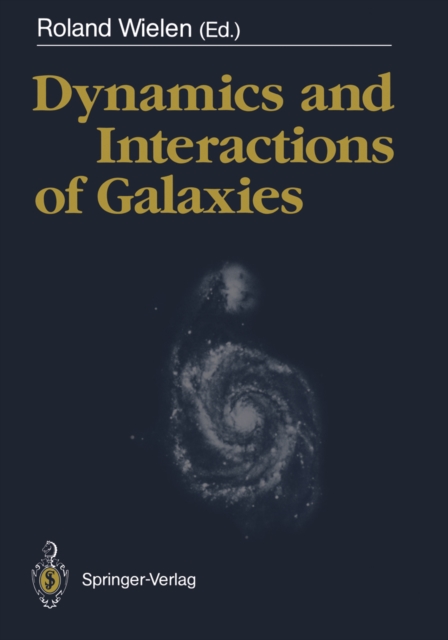
Progress towards an understanding of the dynamics and interactions of galaxies has been spurred on more than ever by a wealth of new observations and numerical experiments.
The annual meeting of the Astronomische Gesellschaft in Cologne, June 1988, featured extensive reviews of the chemical processes relevant to astrophysics.
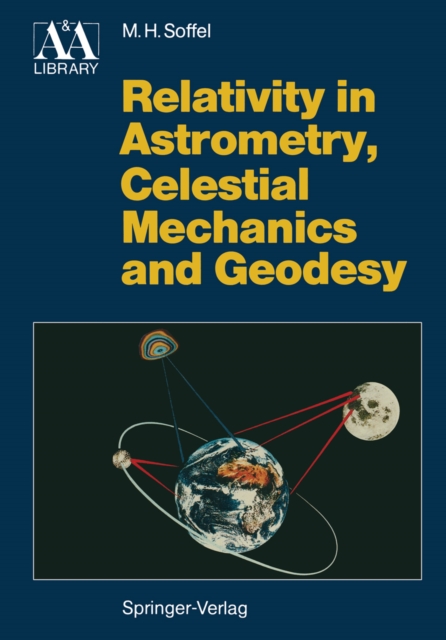
The book "e;Relativity in Astrometry, Celestial Mechanics and Geodesy"e; repre- sents a significant contribution to modern relativistic celestial mechanics and astrometry.
In May 1986 a two-day workshop on Physical Processes in Comets, Stars and Active Galaxies was held at the Ringberg Castle near Lake Tegernsee, and this rather unusml.
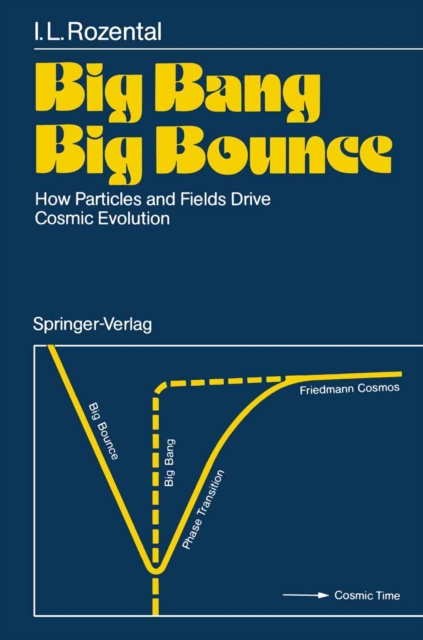
Since the first French edition of the book emphasized rather the solid facts of Cosmology than the detailed discussions of controversial results, relatively few revisions were necessary for the English edition.
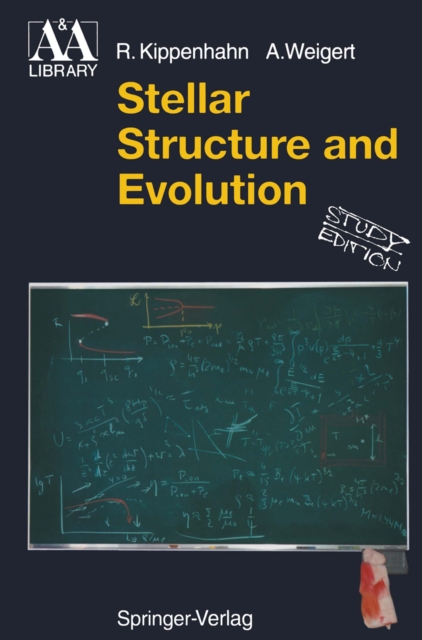
The attempt to understand the physics of the structure of stars and their change in time - their evolution - has been bothering many physicists and astronomers ever since the last century.
Der bekannte Astronom Karl Schwarzschild (1873-1916) gilt als der Begründer der Astrophysik und als hervorragender Forscher mit einer erstaunlichen Bandbreite seiner Interessen.
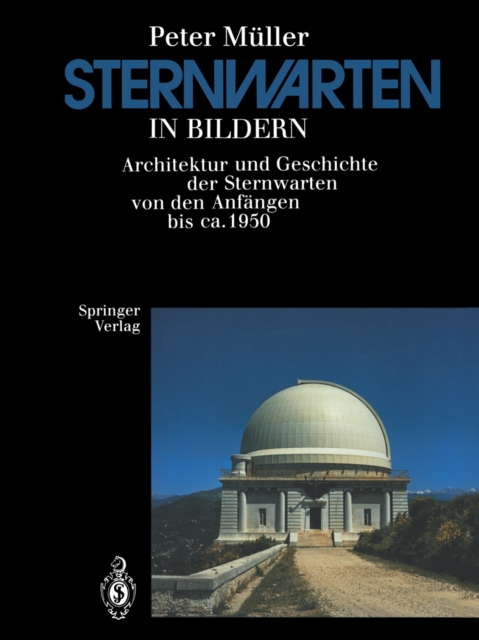
Seit den alten Hochkulturen vor etwa 4000 Jahren haben die Sterne die Menschen fasziniert und diese sich bemüht, durch den Bau von Sternwarten mehr über den Sternhimmel herauszufinden.
Labor Erde ist eine brillante Einführung in das Studium des Planeten Erde, von den kosmischen Ursprüngen ihrer Elemente bis hin zu der Beeinflussung der Atmosphäre durch die Menschheit und den klimatischen Änderungen, die uns bevorstehen.
Dieser Buchtitel ist Teil des Digitalisierungsprojekts Springer Book Archives mit Publikationen, die seit den Anfängen des Verlags von 1842 erschienen sind.
Dieser Buchtitel ist Teil des Digitalisierungsprojekts Springer Book Archives mit Publikationen, die seit den Anfängen des Verlags von 1842 erschienen sind.
In the past two decades a succession of direct observations by satellites, and of extensive computer simulations, has led to the realization that the polar ionosphere plays a principal role in large-scale magnetospheric processes - a manifestation of the physics linkage involved in solar-terrestrial interactions.