This book is a Weekend Pocketbook on Everything You Should Know About the Shape of the Universe, the story of one of cosmology's oldest and biggest questions: what does the whole cosmos look like?
The Distance Ladder – Climbing from Earth to the Edge of the Observable Universe is a guided exploration of cosmic scale unlike anything most readers have ever encountered.
The aim of this book is to teach undergraduate college or university students the basic physics concepts needed to understand the mathematics which describes the evolution of the universe, and based on this to teach the astrophysical theories behind evolution from very early times to the present.
The aim of this book is to teach undergraduate college or university students the basic physics concepts needed to understand the mathematics which describes the evolution of the universe, and based on this to teach the astrophysical theories behind evolution from very early times to the present.
Graduate students in the natural sciences-including not only geophysics and space physics but also atmospheric and planetary physics, ocean sciences, and astronomy-need a broad-based mathematical toolbox to facilitate their research.
Today's standard textbooks treat the theoretical structure of electric and magnetic fields, but their emphasis is on electromagnetic radiation and static-electric and magnetic fields.
This book provides a comprehensive, self-contained introduction to one of the most exciting frontiers in astrophysics today: the quest to understand how the oldest and most distant galaxies in our universe first formed.
A graduate-level textbook on the astrophysics of binary star systems and their evolutionPhysics of Binary Star Evolution is an up-to-date textbook on the astrophysics and evolution of binary star systems.
A short, graduate-level synthesis of recent developments in theoretical physics, from a pioneer in the fieldLectures on the Infrared Structure of Gravity and Gauge Theory presents an accessible, graduate-level synthesis of a frontier research area in theoretical physics.
Bewildering features of modern physics, such as relativistic space-time structure and the peculiarities of so-called quantum statistics, challenge traditional ways of conceiving of objects in space and time.
Newton's laws of motion and his universal law of gravitation described mathematically the motion of two bodies undergoing mutual gravitational attraction.
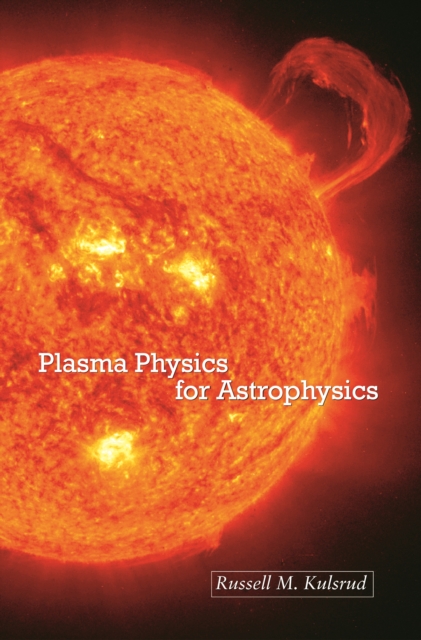
In this book, a distinguished expert introduces plasma physics from the ground up, presenting it as a comprehensible field that can be grasped largely on the basis of physical intuition and qualitative reasoning, similar to other fields of physics.
Studies of stars and stellar populations, and the discovery and characterization of exoplanets, are being revolutionized by new satellite and telescope observations of unprecedented quality and scope.
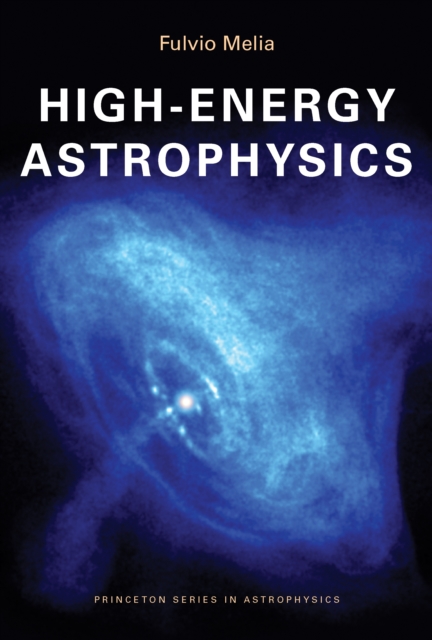
High-energy astrophysics involves the study of exceedingly dynamic and energetic phenomena occurring near the most extreme celestial objects known to exist, such as black holes, neutron stars, white dwarfs, and supernova remnants.
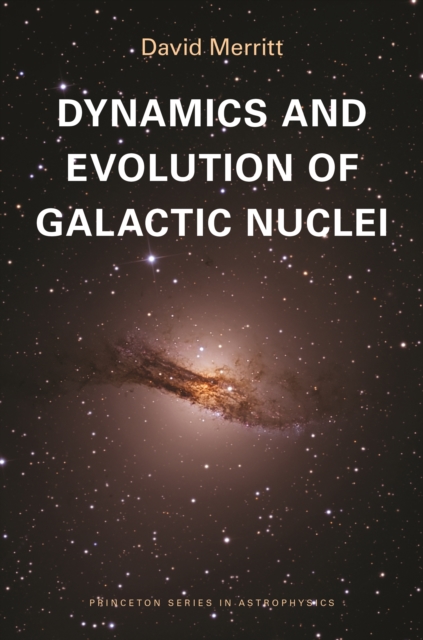
Deep within galaxies like the Milky Way, astronomers have found a fascinating legacy of Einstein's general theory of relativity: supermassive black holes.
A cosmic perspective on carbonits importance in the universe and our livesWhen we think of carbon, we might first think of a simple element near the top of the periodic table: symbol C, atomic number 6.
A cosmic perspective on carbonits importance in the universe and our livesWhen we think of carbon, we might first think of a simple element near the top of the periodic table: symbol C, atomic number 6.
This book is a Weekend Pocketbook on Everything You Should Know About the Inevitable Milky Way's Collision with Andromeda, the story of how galaxies crash, merge, ignite, and transform across cosmic time.
Astronomy 101, 2nd Edition is an easy-to-understand guide to astronomy for beginners, covering groundbreaking discoveries from the past decadelike the detection of gravitational waves, the imaging of black holes, and the James Webb Space Telescopes revelations about early galaxies and exoplanet atmospheres.
Big Science, Innovation, and Societal Contributions offers a connection between Big Science and its societal impacts from a multidisciplinary perspective, drawing on physics and astrophysics scholars to explain the reasoning behind their work, and how such knowledge can be applied to everyday life.
The physics of vortices in classical fluids has been a highly important subject for many years, both in fundamental science and in engineering applications.
The 34th Saas-Fee advanced course of the Swiss Society of Astronomy and Astrophysics (SSAA) took place from March 15 to 20, 2004, in Davos, on the subject of The Sun, Solar Analogs and the Climate.
Astronomy and Astrophysics Abstracts aims to present a comprehensive documen- tation of the literature concerning all aspects of astronomy, astrophysics, and their border fields.
Astronomy and Astrophysics Abstracts aims to present a comprehensive documen- tation of the literature concerning all aspects of astronomy, astrophysics, and their border fields.
From June 7-9, 1995, the European Southern Observatory (ESO) and the Max Plank Institut fiir Astrophysik (MPA) jointly held the Workshop on Spiral Galaxies in the Near-IR.
This volume is the result of the dedicated effort undertaken by an international group of scientists and administrators, who have contemplated the challenge of the future of space-based earth science for the next decade.