This book is a course-tested primer on the thermodynamics of strongly interacting matter - a profound and challenging area of both theoretical and experimental modern physics.
This book highlights a major advance in low-energy scattering theory: the Multi-Channel Algebraic Scattering (MCAS) theory, which represents an attempt to unify structure and reaction theory.
This textbook introduces the current astrophysical observations of black holes, and discusses the leading techniques to study the strong gravity region around these objects with electromagnetic radiation.
Dieses Buch bietet eine ausführliche Darstellung der Astroteilchenphysik und der kosmischen Strahlung mit den dazugehörigen Messmethoden in der Forschung.
This thesis describes the experimental work that finally led to a successful measurement of coherent elastic neutrino-nucleus scattering-a process proposed forty-three years ago.
This book focuses on the non-traditional branches of physics and mechanics of shock waves that have arisen recently in connection with the intensive study of these waves in a wide variety of phenomena - from nuclear matter to clusters of galaxies.
Written by a leading expert, this monograph presents recent developments on supernova remnants, with the inclusion of results from various satellites and ground-based instruments.
This interesting book provides the physical and mathematical background for a theory describing the universe as a quantum superfluid, and how dark energy and dark matter arise.
The first edition of the monumental book Diseases from Space by Sir Fred Hoyle and N Chandra Wickramasinghe appeared some 40 years ago, encapsulating the key principles of Panspermia, and it has been the guiding principle in the new scientific field of Astrobiology.
This book provides extended versions of the talks given at the memorial Pomeranchuk-100 Conference, June 5-6, held in the Institute of Theoretical and Experimental Physics, Moscow, Russia and the review of the 2013 Pomeranchuk Prize Winner - Mikhail Shifman.
A concise and accessible introduction to exoplanets that explains the cutting-edge science behind recent discoveriesFor centuries, people have speculated about the possibility of planets orbiting distant stars, but only since the 1990s has technology allowed astronomers to detect them.
A brief guide to the real science of interstellar travelWith known exoplanets now numbering in the thousands and initiatives like 100 Year Starship and Breakthrough Starshot advancing the idea of interstellar travel, the age-old dream of venturing forth into the cosmos and perhaps even colonizing distant worlds may one day become a reality.
This book treats the subject of gravitational waves (GWs) production in binary stars or black-holes and in the early universe, using tools of quantum field theory which are familiar to graduate students and researchers in particle physics.
Very Short Introductions: Brilliant, Sharp, Inspiring Almost everything we know about the Universe has come from studying the messages carried by light from outer space.
This book treats the subject of gravitational waves (GWs) production in binary stars or black-holes and in the early universe, using tools of quantum field theory which are familiar to graduate students and researchers in particle physics.
Popular science readers embrace epics-the sweeping stories that claim to tell the history of all the universe, from the cosmological to the biological to the social.
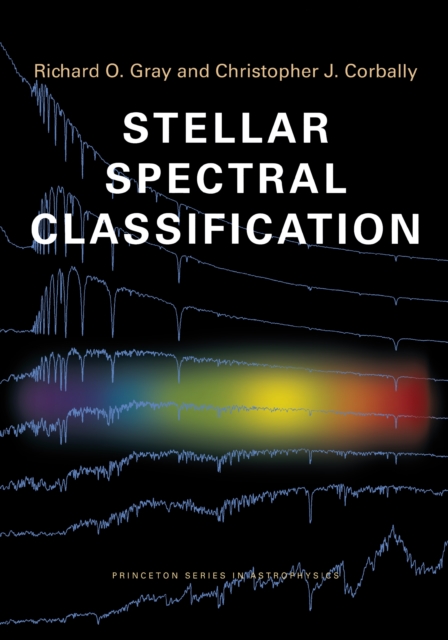
Written by leading experts in the field, Stellar Spectral Classification is the only book to comprehensively discuss both the foundations and most up-to-date techniques of MK and other spectral classification systems.
The aim of this book is to present, on the one hand various topics in theoretical physics in depth - especially topics related to electrodynamics - and on the other hand to show how these topics find applications in various aspects of astrophysics.
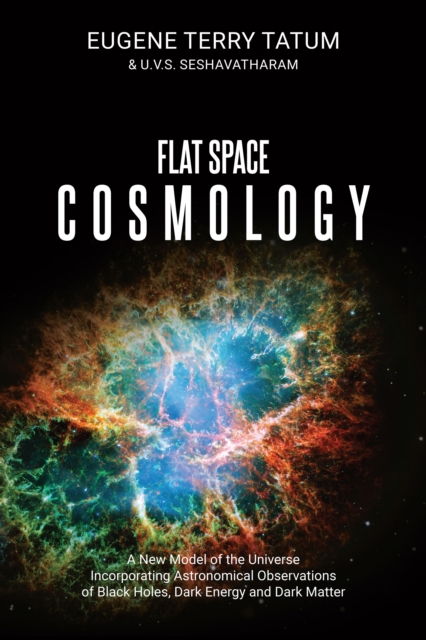
This compilation based upon recent peer-reviewed journal publications encapsulates how the Flat Space Cosmology model (FSC) has become the primary competitor to the inflationary standard model of cosmology.
This book serves as both a primer to astronomical polarimetry and an authoritative overview of its application to various types of astronomical objects from AGN, compact stars, binary systems, stars across the HR diagram, transients, the interstellar medium and solar system bodies.
These peer-reviewed NIC XV conference proceedings present the latest major advances in nuclear physics, astrophysics, astronomy, cosmochemistry and neutrino physics, which provide the necessary framework for a microscopic understanding of astrophysical processes.
It is now clear that a binary evolutionary pathway is responsible for a significant fraction of all planetary nebulae, with some authors even going so far as to claim that binarity may be a near requirement for the formation of an observable nebula.
This book reports on the extraordinary observation of TeV gamma rays from the Crab Pulsar, the most energetic light ever detected from this type of object.
Based on a Simons Symposium held in 2018, the proceedings in this volume focus on the theoretical, numerical, and observational quest for dark matter in the universe.
Written by a leading expert on comets, this textbook is divided into seven main elements with a view to allowing advanced students to appreciate the interconnections between the different elements.
This book addresses the peculiarities of nonlinear wave propagation in waveguides and explains how the stratification depends on the waveguide and confinement.
This book addresses three "e;hot"e; topics concerning the general problem of the origin of Galactic cosmic rays, namely (1) the acceleration, propagation, and radiation of particles in supernova remnants; (2) very high energy neutrinos from the Galactic Center; and (3) the potential held by the next-generation gamma-ray and neutrino detectors CTA and KM3NeT for studying extended non-thermal sources in the Galaxy.