This book gives an exposition of both the old and new results of spin and torsion effects on gravitational interactions with implications for particle physics, cosmology etc.
This volume of important papers by one the world's leading astrophysicists provides a sweeping survey of the incisive and exciting applications of nuclear and particle physics to a wide range of problems in astrophysics and cosmology.
The series of Oskar Klein Memorial Lectures is a must-read for those keenly involved or simply interested in exploring the many fascinating aspects of Physics.
Ultrahigh energy cosmic rays carry information about their sources and the intervening medium apart from providing a beam of particles for studying certain features of high energy interactions currently inaccessible at man-made accelerators.
This book gives an account of the creative work of theorists at the largest Soviet secret laboratory, now the Russian Federal Nuclear Center at Arzamas-16, and concrete situations where some famous results on the essentials of theoretical physics emerged, so to speak, in the intermissions of the quest for bombs.
Since the 1980s the cross-disciplinary, multidimensional field of links between cosmology and particle physics has been widely recognised by theorists, studying cosmology, particle and nuclear physics, gravity, as well as by astrophysicists, astronomers, space physicists, experimental particle and nuclear physicists, mathematicians and engineers.
This volume, marking the 20th Anniversary of the International School of Cosmic Ray Astrophysics, provides a wide-ranging overview of modern astrophysics - from the infra-red to X-rays and y-rays, from neutrinos to galactic cosmic rays, and from shock wave acceleration to cosmology.
This unique volume is a collection of papers on various problems in astrophysics and cosmology - from planetary motion to the arrow of time - that are closely linked by the common spirit, technique and methodology of chaos.
This book provides an up-to-date understanding of the progress and current problems of the interplay of nonlocality in the classical theories of gravitation and quantum theory.
This book introduces needed theoretical instruments and offers an up-to-date discussion on fundamental physics as well as the experimental tools used and developed for the construction and exploitation of gravitational wave antennae (resonant bars, ground-based and space interferometric detectors).
The problem of time is a central feature of quantum cosmology: differing from ordinary quantum mechanics, in cosmology there is nothing "e;outside"e; the system which plays the role of clock, and this makes difficult the obtention of a consistent quantization.
This book presents reviews and new findings in the field of the very early universe, where the interests of particle theorists and astrophysicists meet.
This is the proceedings of an international conference on the evolution of matter in the Universe, with emphasis on the following topics: big bang nucleosynthesis, cosmic ray nucleosynthesis, stellar nucleosynthesis, galactic chemical and dynamical evolution, and evolution with redshift and cosmic chemical evolution in general.
It is generally felt in the cosmology and particle astrophysics community that we have just entered an era which later can only be looked back upon as a golden age.
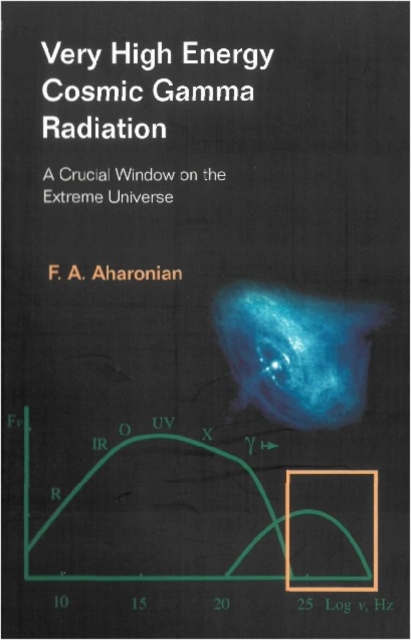
Gamma ray astronomy, the branch of high energy astrophysics that studies the sky in energetic y-ray photons, is destined to play a crucial role in the exploration of nonthermal phenomena in the Universe in their most extreme and violent forms.
The objective of the workshop series "e;The Identification of Dark Matter"e; is to assess critically the status of work attempting to identify what constitutes dark matter; in particular, to consider what techniques are currently being used, how successful they are, and what new techniques are likely to improve the prospects for identifying dark matter candidates in the future.
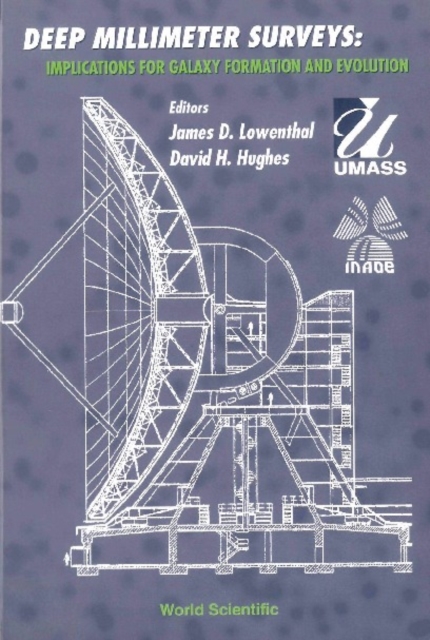
A group of leading experts in the field of starbursts and active galactic nuclei have joined hands to produce this review volume which covers the starburst-AGN connection, and the tests to be carried out with the upcoming new astronomical facilities to ascertain the relevance of both components to the formation and evolution of galaxies.
This book presents a series of delightful interviews in which natural objects such as an electron, a black hole, a galaxy, and even the vacuum itself, reveal their innermost secrets - not only what they are but also how they feel.
This volume is dedicated to Riccardo Giacconi for his sixty-fifth birthday, on the occasion of his being awarded a "e;Laurea Honoris Causa"e; in physics at the University of Rome "e;La Sapienza"e;.
The PASCOS (International Symposium on Particles, Strings and Cosmology) series brings together the leading experts and most active young researchers in the closely related fields of elementary particle physics, string theory and cosmology/astrophysics.
This book constitutes the proceedings of a very topical workshop aimed at understanding the shapes of the baryonic and dark matter components of galaxies.