This third edition of The Physics of the Interstellar Medium continues to introduce advanced undergraduates to the fundamental processes and the wide range of disciplines needed to understand observations of the interstellar medium and its role in the Milky Way galaxy.
This third edition of The Physics of the Interstellar Medium continues to introduce advanced undergraduates to the fundamental processes and the wide range of disciplines needed to understand observations of the interstellar medium and its role in the Milky Way galaxy.
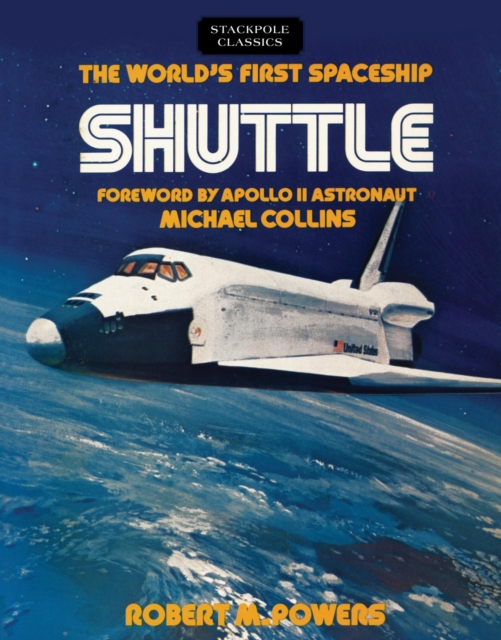
This insider's account, a penetrating view of science policy and politics during two presidencies, captures the euphoria that characterized the space program in the late seventies and early eighties and furnishes an invaluable perspective on the Challenger tragedy and the future of the United States in space.
The prospectus of humans living, working, and establishing communities in space can no longer be dismissed as the romantic notions of science fiction writers and space buffs.
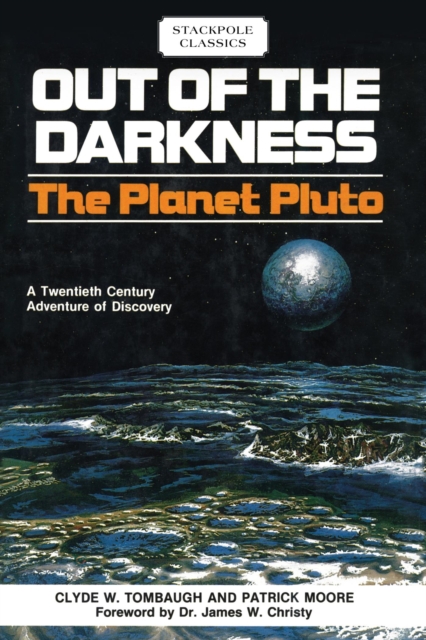
An adventure in scientific discovery Pluto, the farthermost planet in the solar system, some 3,673 million mites from the Sun, was discovered by Clyde Tombaugh at the Lowell Observatory in 1930.
The prospectus of humans living, working, and establishing communities in space can no longer be dismissed as the romantic notions of science fiction writers and space buffs.
An adventure in scientific discovery Pluto, the farthermost planet in the solar system, some 3,673 million mites from the Sun, was discovered by Clyde Tombaugh at the Lowell Observatory in 1930.
A brief guide to the real science of interstellar travelWith known exoplanets now numbering in the thousands and initiatives like 100 Year Starship and Breakthrough Starshot advancing the idea of interstellar travel, the age-old dream of venturing forth into the cosmos and perhaps even colonizing distant worlds may one day become a reality.
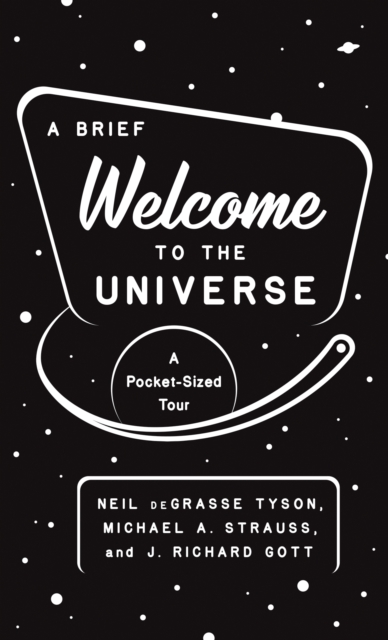
A pocket-style edition based on the New York Times bestsellerA Brief Welcome to the Universe offers a breathtaking tour of the cosmos, from planets, stars, and galaxies to black holes and time loops.
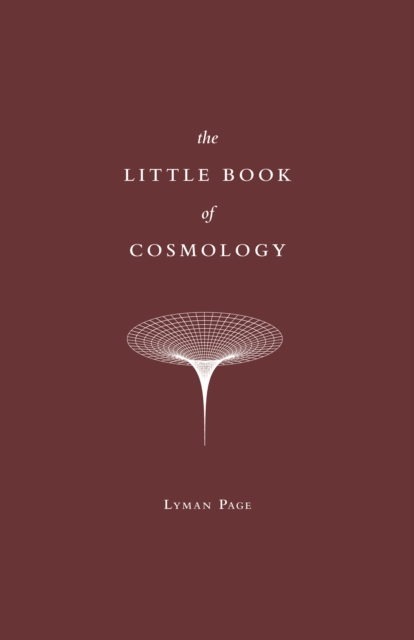
The cutting-edge science that is taking the measure of the universeThe Little Book of Cosmology provides a breathtaking look at our universe on the grandest scales imaginable.
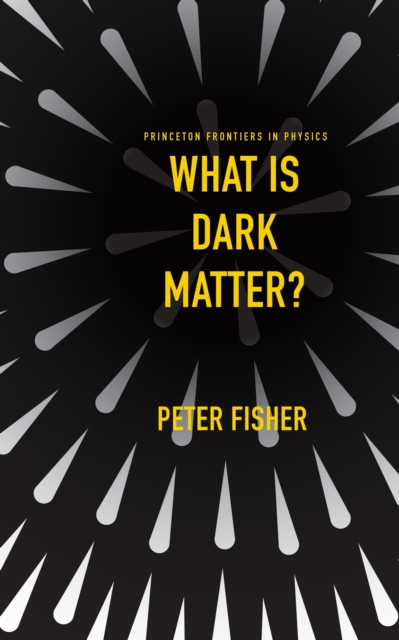
What we know about dark matter and what we have yet to discoverAstronomical observations have confirmed dark matter's existence, but what exactly is dark matter?
Written for amateur physicists, SlipString Drive takes you through the basics of string and M-theories so that you can embark on a faster than light voyage without violating physics.
As the astronauts' home base and the site of Mission Control, the Johnson Space Center has witnessed some of the most triumphant moments in American history.
Created by NASA for high school students interested in space science, this collection of worked problems covers a broad range of subjects, including mathematical aspects of NASA missions, computation and measurement, algebra, geometry, probability and statistics, exponential and logarithmic functions, trigonometry, matrix algebra, conic sections, and calculus.
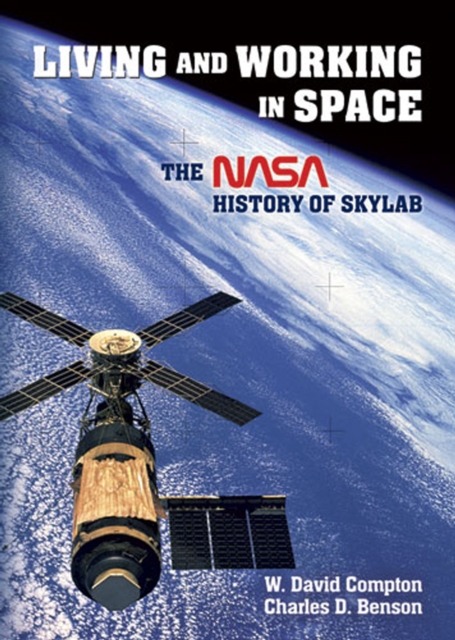
The official record of America's first space station, this thorough and highly readable book from the NASA History Series chronicles the Skylab program from its planning during the 1960s through its 1973 launch and its conclusion in 1979.
Everything in the universe rotates: the meteors, the asteroids, the planets and their satellites, the sun, the stars, the clusters and nebulae, even the galaxies themselves.
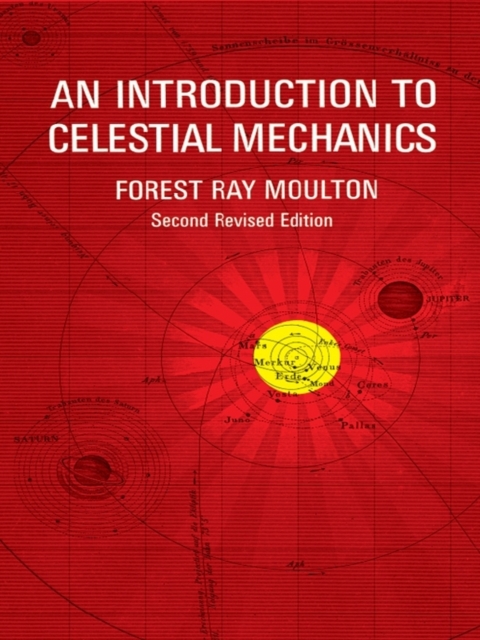
An unrivaled text in the field of celestial mechanics, Moulton's theoretical work on the prediction and interpretation of celestial phenomena has not been superseded.
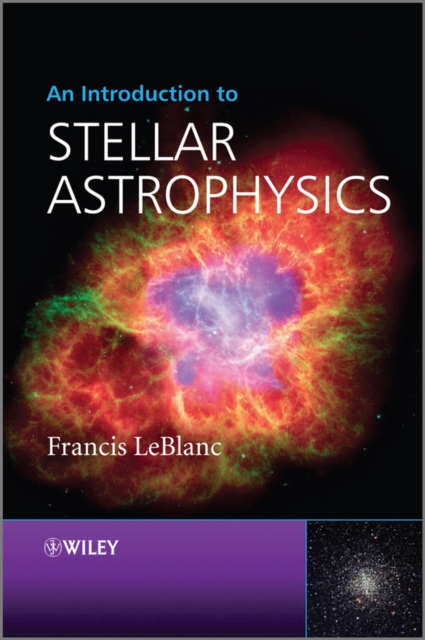
An Introduction to Stellar Astrophysics aspires to provide the reader with an intermediate knowledge on stars whilst focusing mostly on the explanation of the functioning of stars by using basic physical concepts and observational results.
It has always been assumed that an Electric field shines from out the charge of an Electron, that Electrons are thus creating the Electric field, when in fact it is the other way around, it is a Universal field that is projecting Electrons.
Recent research on the theory of perturbations, the analytical approach and the quantitative analysis of the three-body problem have reached a high degree of perfection.
In this volume the physics involved in various astrophysical processes like the synthesis of light and heavier elements, explosive burning processes, core collapse supernova etc have been critically addressed with minimum mathematical derivations so as to suit all faculties of the readers.