From the world-renowned physicist and bestselling author of The Elegant Universe and The Fabric of the Cosmos, a captivating exploration of deep time and humanity's search for purposeIn both time and space, the cosmos is astoundingly vast, and yet is governed by simple, elegant, universal mathematical laws.
This book highlights stories of the most important 13 ground-based observatories and 14 space probes in human history, leading readers through each significant step of human's astronomical observation journey.
Written by one of today's most highly respected astrophysicists, Foundations of High-Energy Astrophysics is an introduction to the mathematical and physical techniques used in the study of high-energy astrophysics.
Popular science readers embrace epics-the sweeping stories that claim to tell the history of all the universe, from the cosmological to the biological to the social.
With over 150 alphabetically arranged entries about key scientists, concepts, discoveries, technological innovations, and learned institutions, the Oxford Guide to Physics and Astronomy traces the history of physics and astronomy from the Renaissance to the present.
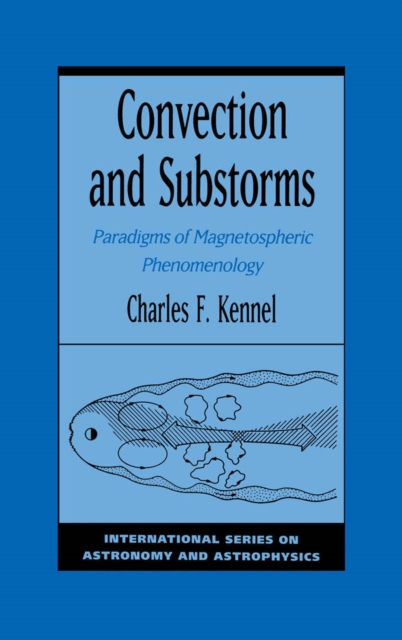
The magnetosphere is the region where cosmic rays and the solar wind interact with the Earth's magnetic field, creating such phenomena as the northern lights and other aurorae.
A Modern Primer in Particle and Nuclear Physics provides a cohesive introduction to the fundamentals of the field and is designed to be accessible to undergraduate students.
'An incredible tour of our universe's greatest mysteries' Professor Dan Hooper This cutting-edge book investigates the extraordinary potential of multimessenger astronomy to revolutionise our understanding of the universe The spectacular advances of modern astronomy have opened our horizon on an unexpected cosmos: a dark, mysterious universe, populated by enigmatic entities we know very little about, like black holes, or nothing at all, like dark matter and dark energy.
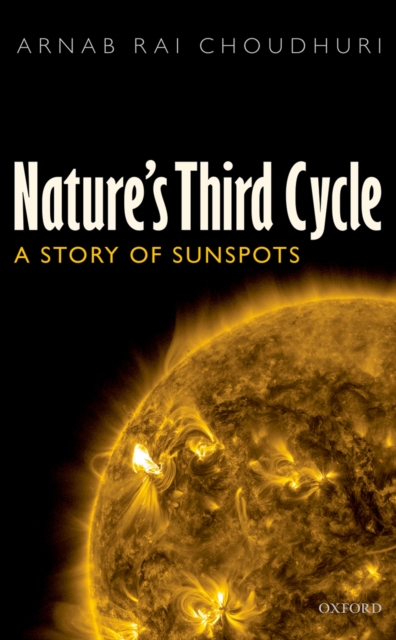
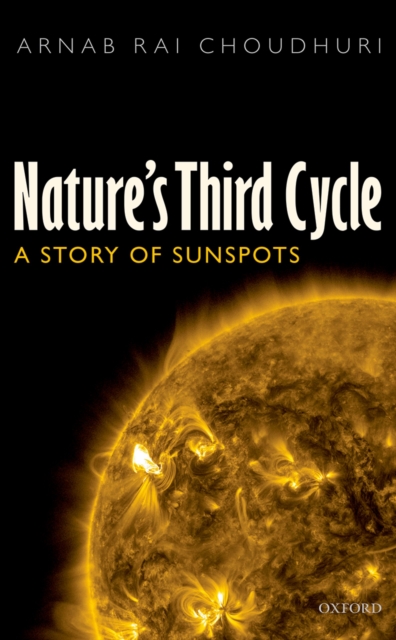
The Sun, as our nearest star, is of enormous importance for life on Earth - providing the warm radiation and light which allowed complex life to evolve.
The Sun, as our nearest star, is of enormous importance for life on Earth - providing the warm radiation and light which allowed complex life to evolve.
The Cosmic Mystery Tour takes us on a lightning tour of the mysteries of the universe enlivened by brief stories of the colourful characters who created modern science.
Since humans first looked up at the stars, astronomy has had a particular ability to stir the imagination and challenge the thinking of scientists and non-scientists alike.
Scientific and popular literature on modern cosmology is very extensive; however, scholarly works on the historical development of cosmology are few and scattered.
Einstein's general theory of relativity -- currently our best theory of gravity -- is important not only to specialists, but to a much wider group of physicists.
This graduate textbook on optimal spacecraft trajectories demonstrates the theory and applications of using the minimum amount of propellant possible to reach a target destination.
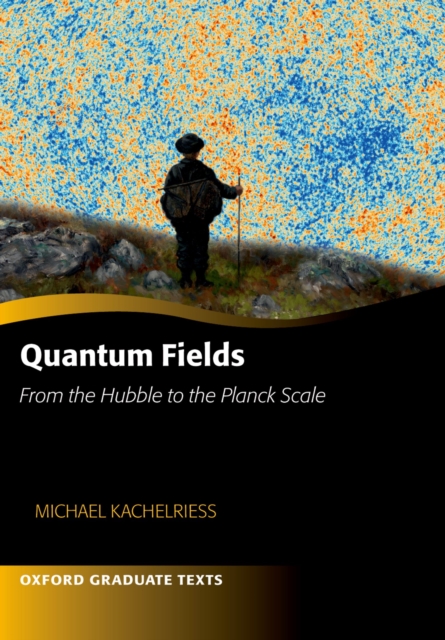
This book introduces quantum field theory, together with its most important applications to cosmology and astroparticle physics, in a coherent framework.
This textbook on the nature of space and time explains the new theory of Space Dynamics, which describes the dynamics of gravity as the evolution of conformal 3-dimensional geometry.
Relativity Made Relatively Easy presents an extensive study of Special Relativity and a gentle (but exact) introduction to General Relativity for undergraduate students of physics.
Relativity Made Relatively Easy presents an extensive study of Special Relativity and a gentle (but exact) introduction to General Relativity for undergraduate students of physics.
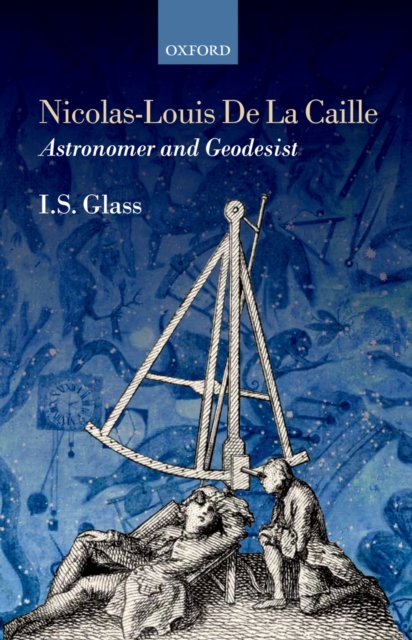
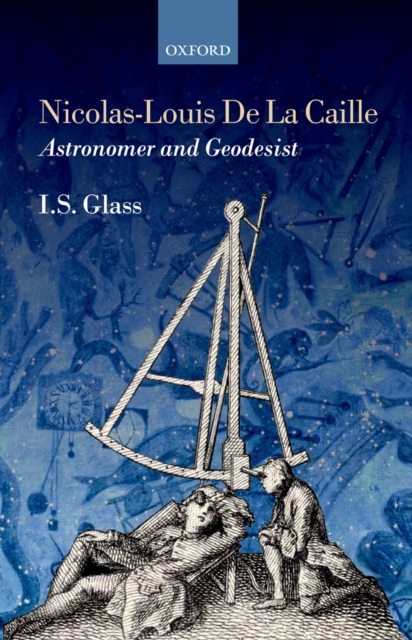
La Caille was one of the observational astronomers and geodesists who followed Newton in developing ideas about celestial mechanics and the shape of the earth.
La Caille was one of the observational astronomers and geodesists who followed Newton in developing ideas about celestial mechanics and the shape of the earth.
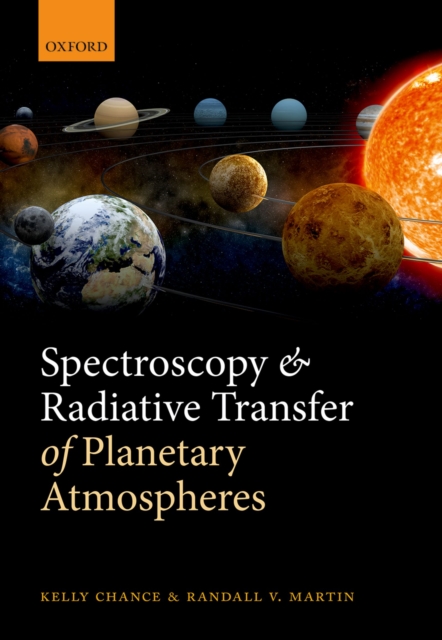
Spectroscopy and radiative transfer are rapidly growing fields within atmospheric and planetary science with implications for weather, climate, biogeochemical cycles, air quality on Earth, as well as the physics and evolution of planetary atmospheres in our solar system and beyond.